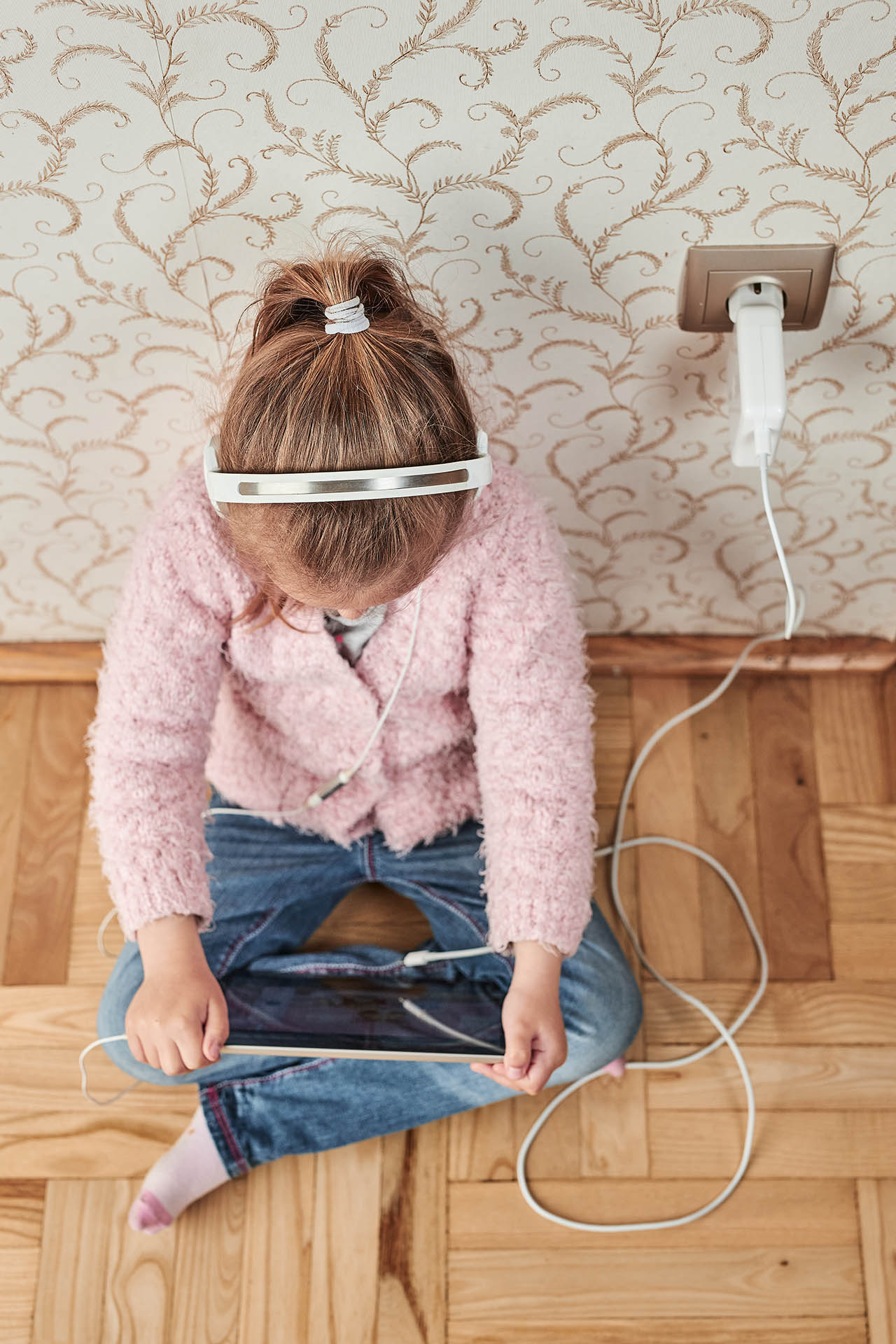

The Attention Trainer is a free tool for parents. It takes 5 minutes a week and shows you how to give it back.
This is not an accident. It is engineering. The unpredictable rewards, the infinite scroll, the notification sounds. Every feature is designed by psychologists to make your child's brain choose the screen. Every time.
The result is not laziness. It is neurological. Cal Newport's research in Deep Work confirmed it: every time a child relieves boredom with a screen, the brain learns to need constant stimulation. Over time, concentration becomes impossible. Even when they want to focus, they cannot.
You have probably noticed this. A homework task that should take 20 minutes takes two hours. They start things and do not finish them. They fall apart the moment something gets difficult. You have tried removing the screen, setting limits, making rules. It helps for a day.
You are not failing as a parent. You are fighting a system designed by professionals with billions of dollars and decades of research behind it.

The Attention Trainer is a free weekly planning tool and takes 5 minutes to set up.
Each week it gives your child four activities. One involves making something with their hands. One involves physical movement with a skill goal. One involves structured thinking. One involves doing something with another person, in the same room, with no screens.
Each activity has a target focus duration. Week by week, that target increases by a few minutes. That is how concentration is built. The same way a muscle is built.
The tool also tracks boredom tolerance. Newport is specific about this. If a child never sits with boredom, the brain loses the ability to concentrate even when it wants to. The tool includes six short daily situations where your child practises doing nothing. Waiting without a screen. Sitting without input. Small moments that change the brain's defaults over weeks.
A child who reaches 14 unable to sit with difficulty, unable to focus on something hard, unable to tolerate boredom. That child will struggle through school not because they are not intelligent, but because they cannot concentrate long enough to show what they know. They will quit things. They will find every challenge an excuse to reach for something easier.
This is not inevitable. But it will not fix itself.
You have tried other activities. Some lasted a few weeks. Some lasted a month. The child was interested and then they were not, and you spent money and time and emotional energy on something that did not stick.
We are not a martial arts gym that promises discipline and delivers a badge system. We are a structured development programme that uses Brazilian Jiu-Jitsu to build behaviour. The difference is measurable.
At Origami Factory, every class tracks confidence, focus, skill progression, and the ability to handle difficulty. Parents do not have to guess whether their child is improving. They see it in a report, in behaviour at home, and eventually in every area of their child's life.
We have seen it happen with hundreds of children in Dubai. The child who cried at every class becomes the one who drags their parents to training. The child who quit everything finishes their first competition. The child who could not sit still for 10 minutes learns to solve problems under physical pressure.
That change is real. It is measurable. And it starts with one class.

Not because you found the magic screen time app. Not because you downloaded another parenting book. Because you gave them a structured environment that demanded something from them every week, with coaches who know how to make difficulty feel worthwhile.
Parents who do not try to explain why their child is different. They just notice, one day, that something has shifted. The homework gets done. The meltdowns happen less. The child starts things and finishes them. They talk about their class like it is the best part of their week.
That is not a coincidence. That is a system working.
Your child's attention is being competed for by some of the most sophisticated technology ever built. You are not going to win that competition with rules and screen limits alone.
Give them something better to do. Something that demands focus, builds skill, and proves to them, week by week, that they are capable of hard things.