
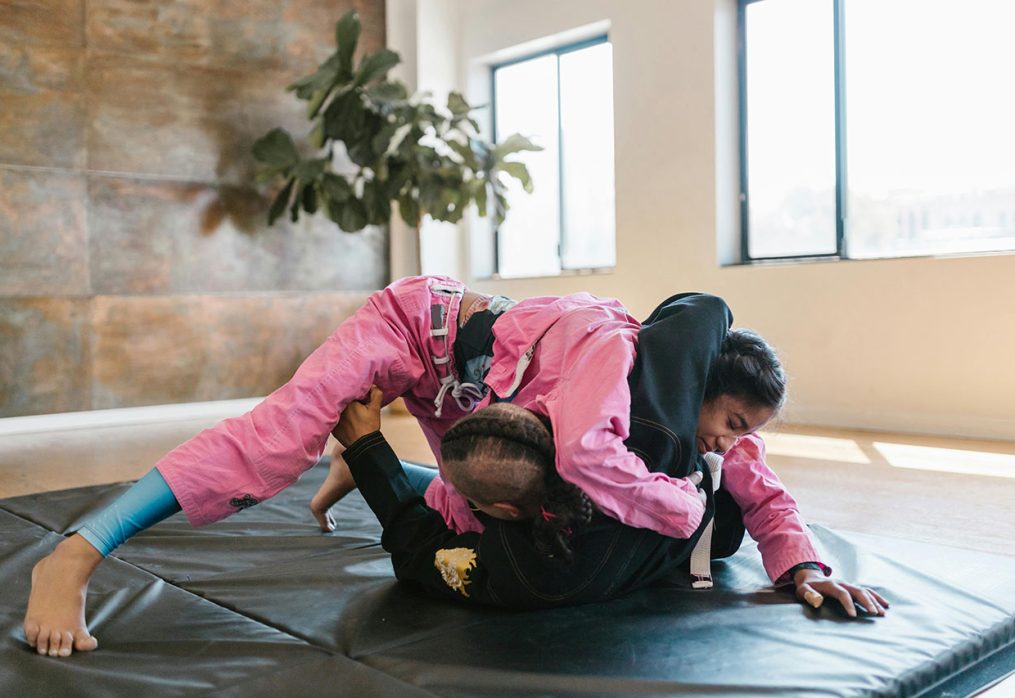

How to Build Confidence at Home Using Simple Jiu Jitsu Ideas
 Most parents want the same thing. You want your child to feel capable. You want them to try new things, speak up, and recover when they get it wrong. You do not want “fake confidence”. You want the real kind that shows up at school, with friends, and when life feels a bit heavy.
This guide shows you how to build confidence at home using simple jiu jitsu ideas. You do not need to teach jiu jitsu. You do not need to know techniques. You just need a few repeatable habits that match what good training environments already do well.
If you want context on how we approach confidence through training at Origami Factory, start here:
https://origamifactory.co/about/
And if you want to see how programmes are structured by age group, this page is the best place to begin:
https://origamifactory.co/programmes/
Why “build confidence at home” matters as much as training
Jiu jitsu gives children structured challenge. Home life decides whether that challenge turns into confidence, or turns into stress.
In class, children learn to:
- try even when they feel unsure
- stay calm when something feels difficult
- recover after mistakes
- keep going without needing constant reassurance
When your home environment supports those same behaviours, it becomes much easier to build confidence at home in a way that sticks.
If you want a practical overview of kids training in Dubai, this article connects the dots well:
https://origamifactory.co/blog/kids-jiu-jitsu-in-dubai/
What confidence really is, and what it is not
Confidence is not being loud. It is not being fearless. It is not “always being positive”. Confidence is the belief that “I can handle this”.
Children develop that belief through experience. In jiu jitsu, they experience challenge on purpose, in a safe environment. To build confidence at home, you recreate the same pattern in everyday life, in smaller ways, more often.
Jiu jitsu idea 1. Use small, repeatable challenges
If you want to build confidence at home, start with challenges that are small enough to complete, but real enough to feel meaningful.
Good examples:
- your child orders their own food when you are out
- they greet the coach or receptionist themselves
- they pack their own school bag and training kit
- they ask for help directly instead of you doing it for them
- they finish a simple task even when they complain
These are confidence “reps”. They look boring, but they work. The key is repetition. The faster route is not bigger challenges. It is consistent, manageable ones.
If you want to book a trial session so your child experiences structured challenge in the right environment, you can do that here:
https://origamifactory.co/bjj-trial/
Jiu jitsu idea 2. Replace rescue with recovery
Parents rescue because they care. The problem is that constant rescue teaches a child that they cannot cope without you.
Jiu jitsu teaches recovery. A child gets stuck, then learns what to do next. That is how they build belief in themselves.
To build confidence at home, practise recovery language:
- “What could you try next?”
- “Show me your first step.”
- “Try again, slower.”
- “It’s okay to feel frustrated, keep going.”
Also, give them a short window to struggle before you step in. Not hours. Just long enough that they experience effort and adjustment.
Jiu jitsu idea 3. Confidence needs boundaries, not comfort
A lot of parents accidentally chase comfort. Comfort feels kind. Comfort also removes the conditions that create confidence.
In a good kids programme, the environment is supportive, but not soft. Children are expected to listen, try, and reset after mistakes. You can do the same at home.
To build confidence at home, set simple boundaries you actually enforce:
- a clear bedtime and a predictable wind-down routine
- limited negotiation around basic responsibilities
- consistent consequences for disrespect
- stable routines around school and training
Boundaries create stability. Stability makes challenge feel safer. That is where confidence grows.
Jiu jitsu idea 4. Use process language, not pressure language
Pressure language sounds like:
- “You should be better at this.”
- “Why can’t you just do it?”
- “Stop being shy.”
Process language sounds like:
- “Try again.”
- “What did you notice?”
- “That was better than last time.”
If you want to build confidence at home, use language that encourages effort and learning. Not identity labels. Not comparisons. Not threats.
This aligns closely with how we structure coaching and feedback:
https://origamifactory.co/about/

Jiu jitsu idea 5. Build body confidence, not just “mindset”
Some confidence struggles are not mental. They are physical. Children who feel awkward in their bodies often feel awkward socially. Jiu jitsu improves coordination, balance, and comfort with movement.
To build confidence at home, do simple body awareness games:
- balance challenges, like “stand on one leg for 20 seconds”
- slow crawling races
- controlled rolling on a soft surface
- getting up from the floor without using hands
- “freeze and breathe” games when they get excited
This is not technical training. It is physical competence. Physical competence often shows up as social confidence later.
If your child is younger, these age-based pages help you match expectations:
- Ages 4–6:
https://origamifactory.co/blog/collection/kids-bjj-classes-4-6/ - Ages 7–9:
https://origamifactory.co/collection/kids-bjj-classes-7-9/ - Ages 10–12:
https://origamifactory.co/?collection=kids-bjj-classes-10-12 - Ages 13+:
https://origamifactory.co/?collection=kids-bjj-classes-13
Jiu jitsu idea 6. Teach calm resets after frustration
One of the most useful jiu jitsu habits is resetting quickly. You try, you fail, you breathe, you try again. No drama. No spiralling.
To build confidence at home, practise a simple reset routine:
- pause
- two slow breaths
- name the problem in one sentence
- choose the next step
Use it for homework, chores, social worries, and sibling conflict. You are teaching your child that stress is survivable and manageable. That belief becomes confidence.
If focus is part of your child’s challenge, this article will help:
https://origamifactory.co/blog/jiu-jitsu-and-focus-why-it-helps-children/
Jiu jitsu idea 7. Build social confidence through responsibility
Confidence shows up socially. A child who feels capable at home tends to carry themselves differently with peers.
To build confidence at home, give your child small social responsibilities:
- they greet guests when they arrive
- they speak for themselves when ordering food
- they explain a game to a younger sibling
- they ask the coach a question directly
- they handle a minor mistake without you stepping in
If bullying is one of your concerns, this article is worth reading:
https://origamifactory.co/blog/how-jiu-jitsu-prevents-bullying/
How to build confidence at home on training days
Training days are already demanding. Your job is to support recovery and consistency, not turn class into an interrogation.
To build confidence at home on training days:
- keep the pre-class routine calm and predictable
- avoid last-minute rushing where possible
- ask one simple question after class, then leave it
- prioritise food, hydration, and sleep
Two good questions to ask after class:
- “What felt tricky today?”
- “What did you do when it got tricky?”
That second question matters. It directs attention to coping, not performance.
To plan consistency, you can check the timetable here:
https://origamifactory.co/schedule/
How to build confidence at home on non-training days
Non-training days are where the habits land. If you want to build confidence at home, keep responsibility steady even when motivation drops.
Good non-training day habits:
- a small daily chore that is non-negotiable
- a short reading or homework routine, even if it is imperfect
- simple movement, even 10 minutes
- limits around endless snacking and late screens
If screen habits are part of the problem in your home, read:
https://origamifactory.co/blog/screen-time-vs-martial-arts/
Common mistakes that slow progress
Most parents do not fail because they do not care. They fail because they accidentally send the wrong message.
If you want to build confidence at home, try to avoid these patterns:
- speaking for your child too often
- removing difficulty the moment they complain
- over-praising outcomes, rather than effort
- comparing siblings or comparing to classmates
- expecting confidence to appear quickly
Confidence is built through repetition and recovery. Not through perfect weeks.
How long does it take to build confidence at home?
It varies, but here is the honest version.
- In 2 to 4 weeks, you may see small behavioural shifts, more willingness, less avoidance.
- In 2 to 3 months, you often see stronger follow-through, calmer reactions, and more independence.
- In 6 months, the changes tend to look “real”, because they show up across school, friendships, and routines.
Consistency matters more than intensity. Two training sessions per week, plus steady home habits, tends to work well for most families.
If you want to explore how to choose the right academy environment in Dubai, this guide helps:
https://origamifactory.co/blog/how-to-choose-a-jiu-jitsu-academy-in-dubai/
Build confidence at home without becoming a “coach”
You do not need to correct techniques. You do not need to run drills. In fact, doing that often creates tension.
Your role is to create the environment where confidence can grow. If you apply even a few of these ideas, you will build confidence at home in a way that supports what your child learns on the mats.
If you want to speak to the team about the best next step for your child, contact us here:
https://origamifactory.co/contact/
FAQ. How to build confidence at home using simple jiu jitsu ideas
Can I really build confidence at home without teaching jiu jitsu?
Yes. You are not teaching techniques. You are reinforcing principles, effort, recovery, calm under pressure, and problem solving. That is enough to build confidence at home in a practical way.
How long does it take to build confidence at home?
Small changes can appear in weeks if you stay consistent. Bigger changes often take months. Think repetition, not big moments.
What if my child resists challenges at home?
That is normal. Start small, keep it predictable, and reduce negotiation. Confidence grows when the challenge is achievable, and the boundary is steady.
Should I praise my child more to build confidence at home?
Praise helps when it focuses on effort, persistence, and trying again. Avoid praise that creates pressure or identity labels. “You kept going” is usually better than “You’re amazing”.
Does jiu jitsu training make it easier to build confidence at home?
Yes. Jiu jitsu gives regular, structured exposure to challenge and recovery. When your home routines match that approach, progress tends to feel faster and more stable.
What if my child is shy or anxious?
Shy children can do very well with gradual exposure and calm repetition. Focus on small wins, predictable routines, and steady language. Avoid forcing “big brave” moments too early.
Can building confidence at home help with school and friendships?
Often, yes. Confidence built at home shows up as better participation, calmer behaviour, and stronger social boundaries. It is rarely instant, but it is common over time.
What mistakes should I avoid if I want to build confidence at home?
Avoid rescuing too quickly, speaking for your child constantly, comparing them to others, and expecting fast results. Those patterns teach dependence, not confidence.
Is there evidence that martial arts can support confidence and self-control?
Some research suggests structured martial arts programmes can support self-regulation and psychosocial outcomes when taught with strong values and supervision. Here is one review:
https://www.frontiersin.org/articles/10.3389/fpsyg.2018.00001/full
Next step
If you want your child to experience structured challenge in the right environment, start with a trial:
https://origamifactory.co/bjj-trial/