

5 Activities to Build Confidence in Children, Ranked by Evidence.
Your child comes home and says they were rubbish at it, again. Or they refuse to go at all. You want to find activities to build confidence in children, but every list online says the same thing: sign them up for something. Which thing, though? And how will you know it is working?
We run a character development academy for children in Dubai, so we watch this question play out on the mat every week. This article ranks five activities to build confidence in children, explains why we ordered them the way we did, and gives you steps to take this week. We teach BJJ, so we are biased. We will tell you where that bias might show.
What the Best Activities to Build Confidence in Children Have in Common
Here is the short answer. The best activities to build confidence in children give them a skill they can improve at, honest feedback from a calm adult, and regular contact with the same group of peers. Confidence comes from doing something hard, struggling, and then getting better. Praise on its own does not produce it.
The research is less dramatic than most parenting articles suggest. The Moving Medicine evidence summary on physical activity and self-esteem concludes that interventions using physical activity can improve self-esteem in children and adolescents, but the effects are small. That matches what we see. No single one of the activities to build confidence in children transforms a child in a month. The right activity, attended every week for a year, changes how a child talks about themselves.
So when you compare activities to build confidence in children, ignore the marketing and ask four questions. Can my child see progress? Will they fail safely? Will an adult notice effort? Will they go back next week? If the answer to all four is yes, you have a good candidate. If you want the wider picture first, our article on whether sport builds confidence in children goes through the research in more detail.
Why Confidence Is Not the Same as Being Good at Something
Many parents assume a confident child is a talented child. We see the opposite often. Some of our most capable students are anxious, and some of our least coordinated students walk in like they own the place.
Confidence is a belief about what you can handle. A child who has lost a round, felt awful, and come back anyway has evidence that they can handle it. That evidence is what we want to build. If you want to understand the difference between this and self-esteem, we explain it in confidence vs self-esteem in children. It changes which activities to build confidence in children you should pick.
The 5 Activities to Build Confidence in Children, Ranked
This ranking is our judgement, not a laboratory result. We scored each activity on the four questions above: visible progress, safe failure, adult feedback, and a stable peer group. No study has ranked these activities against each other, and we would be wary of anyone who claims otherwise.
1. Brazilian Jiu-Jitsu
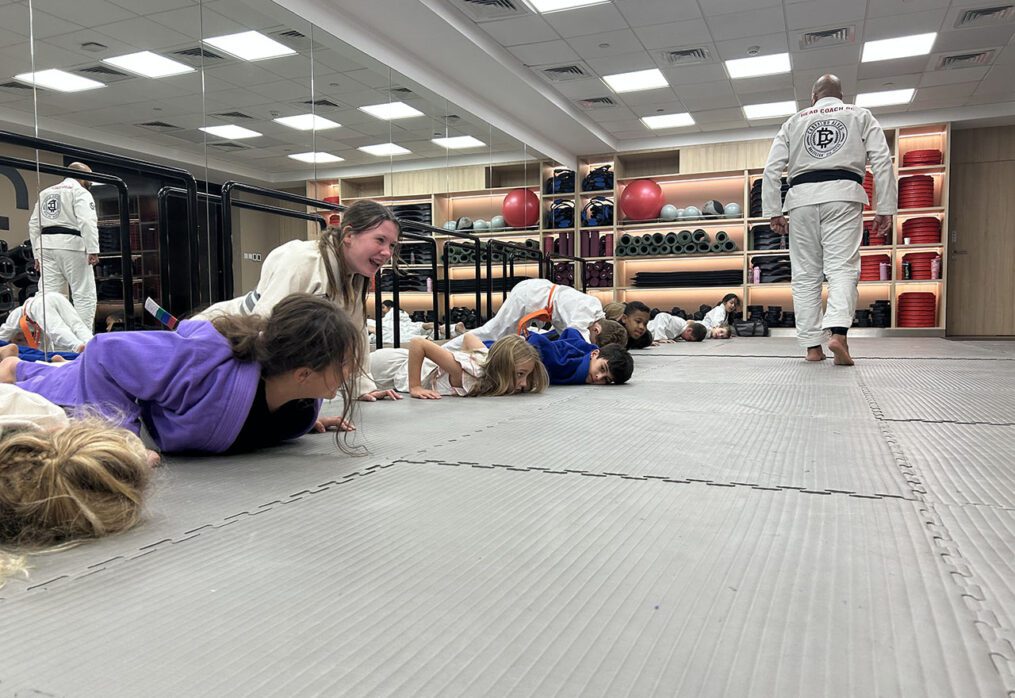
You expected us to say this, and yes, we have a reason to. But the features are real. Progress is visible through belts and stripes. Failure is built in, because every child gets caught, tapped and sent back to try again, and nobody laughs. Coaches give specific feedback every class. The group stays the same for months.
BJJ also asks a child to work with a partner who is resisting them. That is an unusual thing for a seven-year-old to practise. They learn that discomfort passes, and that asking for help is allowed. In our view, this is one of the most direct activities to build confidence in children who are hesitant, because there is nowhere to hide and nothing to win by being loud. The bias warning applies here: if your child hates physical contact, this will not be the right start.
2. Swimming
Swimming scores well on visible progress. Distances, strokes and badges give a child clear proof that they improved. In Dubai it is also the default activity, so most children already have some skill and some history with it. We compare the two directly in BJJ vs swimming for kids in Dubai.
The weakness is social. Many swim lessons are one child, one lane, one instructor. That suits a child who needs calm. It gives less practice at dealing with other children, which is where much confidence is tested.
3. Team sport
Football, netball, basketball and similar sports score high on peer contact. Children learn to belong to a group, take a role, and recover from a mistake that other people saw. That last part matters a great deal.
The risk is the sideline. A child who is weaker than the others can spend a season on the bench, and that teaches the wrong lesson. If you pick a team sport, ask how much game time every child gets. Rotation policies tell you more than trophies do.
4. Climbing
Climbing gives clear, personal goals. A route is either completed or it is not, and a child can try it again straight away. Fear of heights is a gentle challenge here, with a rope and a person holding it. Children often surprise themselves.
As one of the activities to build confidence in children, it ranks fourth because the peer group tends to be loose, with children coming and going. Look for a club with a fixed weekly group and a coach who sets progressive goals.
5. Drama or music
Performing is a direct test of nerves. A child who stands up in front of an audience and gets through it learns something no worksheet can teach. Among activities to build confidence in children, we rank it fifth only because the feedback can be vague and the progress hard to see. A good teacher fixes this by setting small, clear targets.
For a quieter child, we think it is worth trying. Our guide to activities for shy children in Dubai covers how to match an activity to a temperament.

Mistakes Parents Make When Choosing Activities to Build Confidence in Children
We hear the same four mistakes from new parents who are weighing activities to build confidence in children.
The first is picking what the child is already good at. It feels safe, and it builds very little. A child who wins easily has nothing to learn about losing. The second is switching too soon. Most activities feel bad around week three, when the novelty ends and the work begins. Quitting at that point teaches a child that discomfort means stop.
The third is rescuing. When your child says they hate it, you want to fix it. Sometimes you should. Often the better move is to listen, say you believe them, and ask them to come back once more. The fourth is judging by results. Medals and grades measure performance. Confidence is the quiet change in how a child talks about trying.
Keep these in mind when you test any of the activities to build confidence in children listed above. A trial class tells you very little about week three, so plan to give any activity at least a term.
A Composite Example From the Mat
This is a composite, not one real child. It combines patterns we see often, with details changed so nobody can be identified.
A seven-year-old joins one of our Foxes classes. His parents say he gives up as soon as something is hard. In week one he stays near the wall. In week three he gets pinned in a practice round, goes quiet, and asks to sit out. The coach does not push. She tells him he can watch for two minutes and then join the next round with a different partner.
He rejoins. Over the next weeks, the coach names one specific thing each class: you stayed calm when you were underneath, you asked a question, you tried the escape twice. By week ten he is the one asking if he can go again. His parents tell us he now says “I can’t do it yet” at home, where before he said “I can’t.”
That small word change is what we look for. It is not a medal. It is a child who has started to treat difficulty as temporary. This is the pattern behind the best activities to build confidence in children: a hard thing, a safe place to fail, and an adult who notices effort.
What to Do This Week
You do not need to enrol in any of these activities to build confidence in children today. Start with three small steps.
First, watch your child for two days and write down what they avoid. Avoidance tells you where confidence is thin. Second, choose two activities from the list above that match what you saw. A child who avoids groups may need a small class. A child who avoids physical risk may need a gentle, graded start. Third, ask each provider the same four questions: how do you show progress, what happens when a child struggles, how does the coach give feedback, and is the group the same each week?
At home, change one habit. When your child says they cannot do something, add the word “yet” and ask what the first small step would be. Also check whether you are filling every gap for them. If you tie their shoes, answer for them in shops, and fix every problem, you are taking away the practice that activities to build confidence in children depend on. Our article on the signs of low confidence in children can help you spot where to start.
If you want a low-pressure way to see one of these activities, you can book a trial class at our academy for AED 99 and watch how your child responds in the room, not on the sofa.
How Our 3D Method Applies
We built our approach around three steps, which we call the 3D Method: Discover, Develop, Demonstrate. In Discover, a child tries something new in a safe room and finds out what they like. In Develop, they practise it week after week with specific coaching. In Demonstrate, they show what they can do to their peers and coaches, and we make a note of it.
This matters because most activities to build confidence in children skip the last step. The child learns, but nobody asks them to show it. Showing a skill to others is where the belief becomes real.
We also group children by age. Penguins are 4 to 6, Foxes 7 to 9, Cranes 10 to 12, and Dragons are 13 and over. A five-year-old needs short games and constant encouragement. A twelve-year-old needs real responsibility and honest feedback. You can see how each cohort works on our programmes page.
Finally, we track character, not only belts. Coaches note things like focus, resilience and how a child handles losing. We describe the method in how we measure character development. If you try any of the other activities to build confidence in children in this article, ask the provider whether they track anything beyond skill.
How to Tell Whether an Activity Is Working
Do not expect a big moment from activities to build confidence in children. Look for quieter signs over six to twelve weeks. Your child talks about the activity without being asked. They describe a mistake without shame. They volunteer for something small, like ordering their own food or greeting an adult. They stop asking whether they have to go.
Give it a full term before deciding. This applies to every one of the activities to build confidence in children we have listed. If after that your child is dreading it, still anxious, or coming home worse, change something. Perhaps the group is wrong, or the coach, or the activity itself. That is a reasonable outcome, and it is better than a year of quiet misery. Our post on how to raise a confident child has more on the habits at home that support whichever activity you choose.
Frequently Asked Questions
What are the best activities to build confidence in children?
Activities with visible progress, safe failure, regular feedback and a stable group tend to work best. Our ranking puts BJJ first, then swimming, team sport, climbing and drama or music. The right choice for your child depends on their temperament, so treat the ranking as a starting point.
How long do activities to build confidence in children take to work?
Plan on one full term, around three months, before you judge. Early weeks are often awkward. Changes in how a child talks about difficulty usually show up between week six and week twelve.
What if my child wants to quit after a few weeks?
Listen first. Then ask them to attend a few more sessions and set a small goal for each one. If the unhappiness continues, or you suspect bullying or a poor fit with the coach, change the activity. Quitting because of a bad fit is different from quitting because it got hard.
Are team sports better than individual activities for confidence?
Not always. Team sports give more peer practice, but a child who rarely plays can lose confidence. Individual activities give clear personal progress. Many children do best with one of each from our list of activities to build confidence in children, and the best activities to build confidence in children are those where every child actually participates.
Is BJJ suitable for a shy or anxious child?
Often yes, if the academy is patient. Children work one-on-one with a partner, in a structured way, with clear rules. Shy children can find that easier than a loud team game. A child who strongly dislikes physical contact may want to begin with another option from our list of activities to build confidence in children.
At what age should I start activities to build confidence in children?
Most children can start organised activities from around four. Younger children need short, play-based sessions. Older children can handle longer classes with more feedback, so the best activities to build confidence in children change as they grow. It is never too late, and a teenager who starts a new skill gets many of the same benefits.
The Origami Factory exists for parents who want more than a sports club for their child. If you would like to see how our classes work, read about our programmes for each age group, then book your child’s trial class and see it for yourself.