
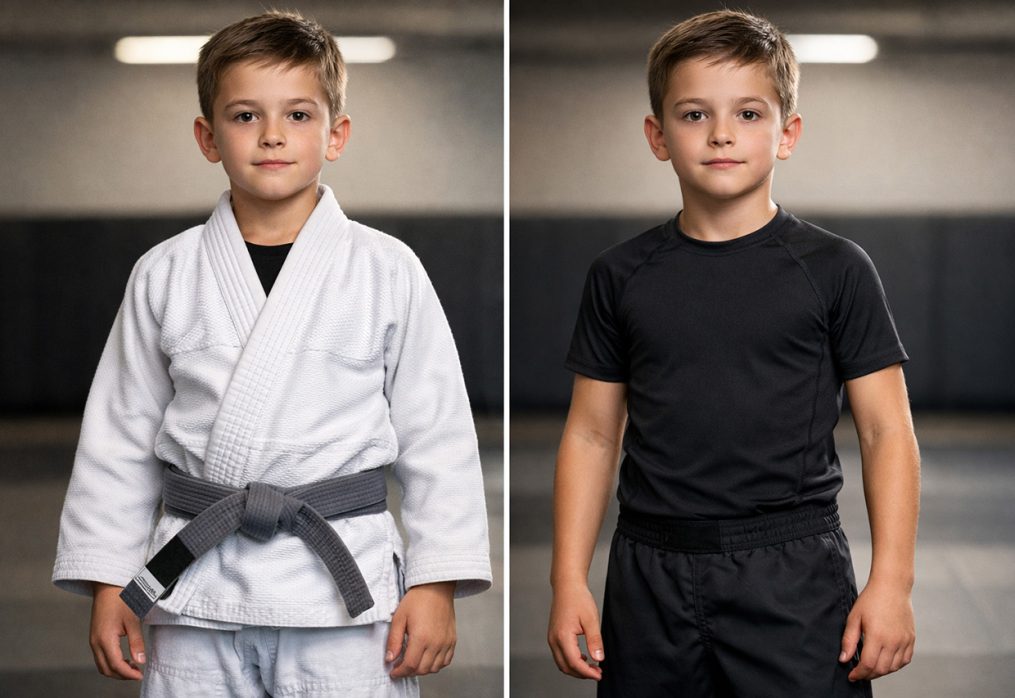

Gi vs No Gi in Dubai. Which One Should Your Child Start With?
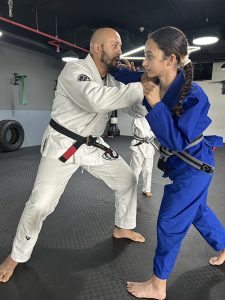 We get asked this a lot, usually right after a parent has Googled a few academies, seen a mix of white pyjamas and rashguards, and realised they have no idea what they are looking at.
Gi vs No Gi is one of those topics that sounds technical, but for kids, it is usually a simple decision. You want the option that helps your child stay consistent, feel comfortable, and build the right habits early.
This guide breaks down Gi vs No Gi in Dubai for children. It covers what changes on the mat, what stays the same, what matters for confidence and safety, and how to choose without overthinking it.
If you want to see how our kids programmes are structured at Origami Factory, start here:
https://origamifactory.co/programmes/
First, what does “Gi vs No Gi” actually mean?
In Brazilian Jiu Jitsu, “gi” refers to the traditional uniform, jacket and trousers, usually white, blue, or black. It has a collar and sleeves that can be gripped. “No gi” means training without the jacket and trousers, normally in a rashguard and shorts or spats. You can still grip the body, but you cannot grab fabric the same way.
So, Gi vs No Gi is mainly about what you can hold on to. That changes how certain positions feel and how some techniques work, but the core skills stay the same. Your child still learns balance, control, escaping, and problem solving under pressure.
Why this question shows up so much in Dubai
Dubai has a big jiu jitsu scene. Some academies lean heavily towards gi, some run a big no gi schedule, and some mix both. Parents then see different uniform rules, different photos, and different “best for kids” claims.
To make it more confusing, kids do not always train the same way adults do. A competitive adult might choose Gi vs No Gi based on rulesets, competitions, and game planning. For a child, the decision is usually about comfort, safety, coaching quality, and whether the environment keeps them coming back.
If you are still in the “search phase”, this also helps:
https://origamifactory.co/blog/jiu-jitsu-near-me-in-dubai/
Gi vs No Gi for kids. The real differences that matter
1) Grip and control
Gi gives kids something to hold. That sounds small, but it often makes learning control easier early on. A sleeve grip, a collar grip, even holding the jacket can help a child understand “connection” to their partner.
No gi forces control through body positioning and pressure. That is great too, but for some beginners it feels slippery and fast at the start.
In plain terms, Gi vs No Gi often feels like “more handles” vs “fewer handles”. For kids who are unsure, the gi can make the first months feel less chaotic.
2) Pace and movement
No gi can move faster. Less fabric means more slipping, more scrambling, and quicker transitions. Some kids love that. Others get overwhelmed and start reacting instead of thinking.
Gi can slow things down a bit. That slower pace can help a child focus on decision making. It can also reduce the feeling of panic when they end up underneath someone for the first time.
This links closely to focus and attention. If you want the deeper version of that conversation:
https://origamifactory.co/blog/jiu-jitsu-and-focus-why-it-helps-children-pay-attention/
3) Uniform comfort and heat
Dubai is hot. Even with AC, kids can feel the gi is heavier. Some children do not mind at all. Others hate the feeling of thick fabric and want to train in rashguards from day one.
Gi vs No Gi here becomes a practical parenting question. If your child is sensitive to clothing, the “best” choice might simply be the one they will wear without drama.
4) Skin contact and hygiene
Parents sometimes worry that no gi means more skin contact. In reality, most kids no gi classes still require rashguards, and often spats or shorts with proper coverage. A well-run academy has clear uniform rules, cleaning standards, and mat hygiene either way.
Gi can absorb sweat and can feel “safer” to parents because it is more covered, but it also needs proper washing and drying after every session. No shortcuts, especially in Dubai humidity.
5) How it affects confidence
Confidence is not about gi or no gi. It is about repeated experiences of challenge, recovery, and progress.
That said, Gi vs No Gi can influence how quickly a child feels in control early on. Some kids feel more capable in a gi because grips help them slow things down. Other kids feel more capable in no gi because the uniform feels easier and less restrictive.
If you want to see how we think about confidence development across kids training, this article is useful:
https://origamifactory.co/blog/how-jiu-jitsu-builds-confidence-in-children/
Gi vs No Gi and safety for children
This is where parents often have the wrong fear. The uniform is not the main safety factor. The programme is.
A safe kids programme has:
- Age-appropriate class structure
- Clear behavioural rules
- Partner matching that makes sense
- Controlled sparring progression
- Coaches who stop unsafe behaviour immediately
Gi vs No Gi does change a few safety details, though:
- In the gi, kids can grip collars and sleeves. That means coaches must teach safe gripping and prevent yanking or cranking habits.
- In no gi, things can get slippery. That means coaches must control pace and teach kids not to “fling” themselves around to escape.
Done well, both are safe. Done badly, both are a problem. That is why we always bring parents back to programme quality.
This is also closely linked to bullying prevention, because the same coaching standards that keep training safe also build calmer confidence:
https://origamifactory.co/blog/how-jiu-jitsu-prevents-bullying/
Which one should your child start with?
If you want the honest answer, most children can start with either. The better answer is that your child should start with the environment they will attend consistently.
Still, if we are forced to choose a default, many kids do well starting in the gi. It can slow things down, gives clearer grips, and often makes early learning less messy. It also helps kids build patience and control.
But there are clear cases where no gi is the better starting point:
- Your child hates thick uniforms and will resist wearing a gi.
- Your child needs less friction and fewer “rules” around clothing to stay consistent.
- Your child is very active and enjoys faster movement, as long as the class is structured.
Gi vs No Gi is not a moral decision. It is a practical one. You are choosing the entry point that makes training stick.

Gi vs No Gi by age group. What we tend to see
Ages 4 to 6
For very young kids, attention span and emotional regulation matter more than technical detail. Many do well in the gi because it provides structure and helps keep pace calmer. That said, if a child melts down because of the uniform, it is not worth forcing it.
If you want to see what kids classes look like at this stage, this page covers the Penguins programme:
https://origamifactory.co/blog/collection/kids-bjj-classes-4-6/
Ages 7 to 9
This is where many kids start to “get it”. They can follow rules, work with partners, and begin to solve problems. Gi vs No Gi becomes less about “handles” and more about what the timetable supports and what keeps them engaged.
Ages 10 to 12
Kids here can handle more complexity. Either format works well if the coaching is good. If your child is sporty and enjoys intensity, no gi can be a great fit. If your child is more thoughtful and benefits from slower movement, the gi can help them build confidence through control.
Teens
Teens often have stronger preferences. Some want the gi because it feels traditional and goal-based. Others want no gi because it feels more “athletic”. Again, Gi vs No Gi matters less than culture, coaching, and whether they feel supported.
This is where emotional intelligence becomes part of the conversation too, because teens respond badly to environments that shame them or push ego. This article explains what to look for:
https://origamifactory.co/blog/how-jiu-jitsu-builds-emotional-intelligence/
What parents should look for during a trial class
If you are still deciding Gi vs No Gi, a proper trial class will answer most questions fast.
During the class, look for:
- Is the room calm, or chaotic?
- Do coaches correct behaviour early, or ignore it?
- Do kids feel safe to make mistakes?
- Is sparring introduced carefully, or thrown in too early?
- Is the class structured, or random?
Then ask one simple question: “Will my child come back next week without a battle?”
If you want to book a trial with us:
https://origamifactory.co/bjj-trial/
And if you want to see the timetable before you decide:
https://origamifactory.co/schedule/
Do kids need both Gi vs No Gi long term?
They do not need both immediately. They also do not need to specialise too early. Kids benefit most from steady training that builds habits.
Over time, training both can be helpful. Gi builds patience, grips, and control. No gi builds movement, reaction speed, and strong body positioning. Together, it creates a rounded skill set.
But if your child only does one for a long stretch, that is still fine, as long as they are improving and enjoying it.
Competitions in Dubai. Does that change Gi vs No Gi?
Sometimes, yes. Some local events and school competitions lean one way or the other. A competitive pathway can influence Gi vs No Gi later, but it should not drive the first few months for a child who is still learning to love training.
If you want a neutral way to compare academies in the UAE, the UAE Jiu Jitsu Federation has an academies listing. It is not a guarantee of quality or fit, but it can help you map the landscape:
https://events.uaejjf.org/en/federation/1/academies
Common mistakes parents make with Gi vs No Gi
- Choosing based on what looks coolest in photos, rather than what the child will attend consistently.
- Over-prioritising “self-defence” and under-prioritising structure, safety, and coaching standards.
- Switching formats every week because the child has a bad day. Kids need time to settle.
- Assuming gi equals disciplined and no gi equals rough. That is culture-based, not uniform-based.
Most of these problems disappear when parents judge the actual class experience instead of the label.
If you want more parent-focused guidance like this, our Academy Insights section is here:
https://origamifactory.co/blog/category/academy-insights/
How Origami Factory approaches Gi vs No Gi for kids
We keep the focus on development, not drama. We care about:
- Confidence built through controlled challenge
- Focus trained through structure and repetition
- Safety systems that are obvious when you watch a class
- Progress that parents can actually understand
If a parent is unsure about Gi vs No Gi, we usually recommend they book a trial, watch a full class, and see how their child responds. That beats guessing.
If you want the bigger picture of what the academy is and why it exists:
https://origamifactory.co/about/
If you want to speak to the team first:
https://origamifactory.co/contact/
Frequently Asked Questions
Is Gi vs No Gi better for complete beginners?
For many children, the gi is a slightly easier starting point because grips slow things down and make early control simpler. But the best choice is the one your child will attend consistently.
Does Gi vs No Gi change what my child learns?
The fundamentals stay the same. Your child still learns balance, control, escapes, and problem solving. Gi vs No Gi mainly changes grip options and pacing.
Is no gi too rough for kids?
No, not when the class is structured and coaches control the room. No gi can be faster and more slippery, but good coaching makes it safe and age-appropriate.
Will the gi make my child too hot in Dubai?
Some children find the gi warm, even with AC. Others do not care. If uniform comfort becomes a barrier, no gi can be a better entry point.
Should my child do both Gi vs No Gi each week?
They do not need both immediately. Starting with one is fine. Over time, training both can help build a more rounded skill set.
How do we decide quickly?
Book a trial and watch a full class. You will see how coaches manage safety, structure, and pace. You can book a trial here:
https://origamifactory.co/bjj-trial/
What matters more than Gi vs No Gi?
Coaching quality and class structure. A good programme builds confidence, focus, and calm behaviour. A weak programme creates chaos, regardless of uniform.
Can parents ask questions before joining?
Yes. Parents can contact the team here:
https://origamifactory.co/contact/