

How Safe Is Jiu Jitsu for Children
 It is probably the first thing you ask when you start looking into martial arts for your child. And it is a fair question. You are handing your child over to a coach, putting them on a mat with other children, and watching them learn to grapple. Of course you want to know how safe it is.
The short answer is: jiu jitsu is one of the safer contact sports your child can train in. But that answer needs some context, because safety in jiu jitsu depends on a few specific things. The academy, the coach, the structure of the class, and the culture on the mat all play a role. Get those right, and the risk is genuinely low. Get them wrong, and you have a problem regardless of which sport your child is doing.
This article walks through what the research actually says, what parents should look for, and why how safe is jiu jitsu for children is a question worth asking carefully rather than just accepting a blanket yes or no.
What Makes Jiu Jitsu Different from Other Contact Sports
Jiu jitsu, and specifically Brazilian Jiu Jitsu (BJJ), is a grappling art. There is no striking. No punching, no kicking, no elbows. Children learn to control, pin, and move their partners on the ground. Compared to boxing, Muay Thai, or even rugby, the absence of striking immediately removes one of the biggest sources of injury in youth sport: blows to the head.
That matters more than people realise. Concussions in youth sport are a genuine concern, and sports that involve regular head contact carry a different risk profile to grappling arts. A 2019 study published in the American Journal of Sports Medicine found that BJJ injuries were predominantly sprains and strains to the fingers, upper extremities, and neck, rather than head trauma. That is consistent with what you see in judo and wrestling.
Research published on PubMed Central looking at 1,140 BJJ athletes found that the majority of injuries occurred during sparring, and most were to the extremities. Importantly, the research noted that injury risk drops significantly with experience, which points to something important: the early months of training, and how they are structured, matter a great deal.
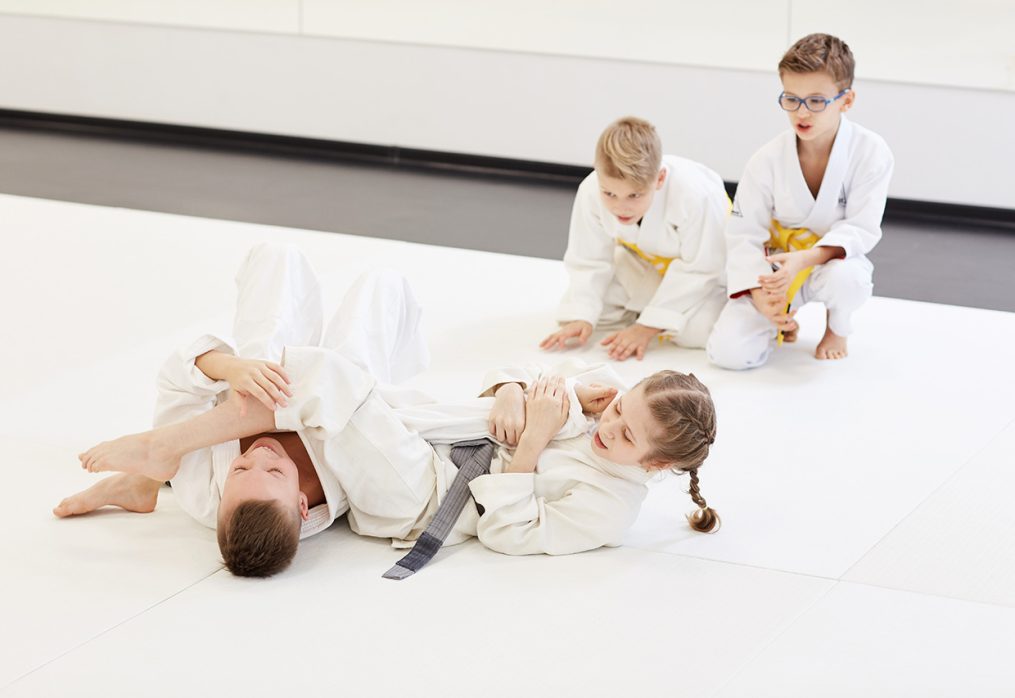
For children specifically, well-run academies modify the curriculum considerably. Our kids programme at Origami Factory removes joint locks and chokes entirely from the younger age groups. Children focus on movement, positioning, and takedowns. Tapping, the practice of signalling to your partner to stop, is taught from day one and treated as non-negotiable.
How Safe Is Jiu Jitsu for Children Compared to Football and Rugby
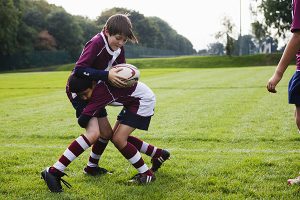 Parents sometimes compare jiu jitsu to football or rugby and assume the latter are safer because they are more familiar. The data does not really support that. Rugby has one of the highest youth injury rates of any team sport. Football carries ongoing concerns about heading and cumulative head impacts at the youth level.
Jiu jitsu does carry injury risk. We would not pretend otherwise. But in a structured kids class, the risk is well within what most parents accept in other sports. The key difference is that jiu jitsu classes are designed to teach control, not power. Children learn how to fall safely. They learn to stop when a partner taps. They learn that there is no value in forcing a technique. That culture, when it is genuinely embedded in the academy, is itself a safety mechanism.
It is also worth noting that the injury profile in children differs from adults. A 2025 study looking at paediatric BJJ-related emergency department visits noted that upper extremity fractures were the most common injury type in children, often from bracing a fall with an outstretched hand. This is the same mechanism you see in children falling in the playground. Proper falling technique, which good academies teach early, reduces this risk considerably.
What to Look for in a Safe Kids Programme
How safe is jiu jitsu for children at any given academy depends heavily on how that academy structures its children’s programme. Not all academies are the same. Here is what genuinely matters.
Coaches who specialise in working with children
A great adult BJJ coach is not automatically a great kids coach. Working with children requires a different set of skills: patience, the ability to explain concepts clearly, an understanding of child development, and a genuine interest in the wellbeing of young students. Ask the academy who teaches the kids classes and what their background is, both in jiu jitsu and in working with children.
Age-appropriate curriculum
Children under ten, and in many cases under thirteen, should not be drilling chokes or arm locks in regular training. Good academies separate the curriculum by age group. Younger children focus on movement, balance, takedown safety, and positional games. Submissions are introduced gradually and only when a child has the maturity and self-control to practise them safely with a partner.
You can read more about how we structure progression in our gi vs no gi article, which covers how different training formats suit different stages of a child’s development.
A culture where tapping is respected
This is perhaps the single most important safety feature in any jiu jitsu class. Tapping is the signal that stops a technique. If children are taught from the start that tapping is not weakness, that it is how the sport works and how training partners protect each other, then the risk of injury from submissions drops sharply. A good kids class treats a tap as immediate and absolute. There is no grey area.
Mat space and equipment
Children need room to move. Overcrowded classes increase collision risk. The mats themselves should be thick enough to absorb falls, and the training area should be free from obstacles. These are basic but important things to check when you visit an academy for the first time.
Warm-ups that actually prepare the body
A proper warm-up reduces muscle strain and gets children’s bodies ready for contact. Good academies build warm-up routines into every class and use them to reinforce movement patterns and falling technique. If a class skips this or treats it as optional, that is a sign worth paying attention to.

The Mental Side of Safety in Jiu Jitsu for Children
When parents ask how safe is jiu jitsu for children, they usually mean physical safety. But there is a mental component worth discussing too. Jiu jitsu asks children to confront discomfort, to be put in difficult positions, to tap when things get hard, and to come back the next class and try again. Done well, this is genuinely valuable. Done poorly, it can be intimidating or even harmful.
The best children’s classes manage this carefully. Coaches watch for children who are struggling, who are being matched with unsuitable partners, or who are showing signs of anxiety or distress. The class should feel challenging and fun, not overwhelming. A child who dreads coming to class is a sign that something is not right, and a good coach will pick up on that quickly.
We write about this in more depth in our article on how jiu jitsu builds emotional intelligence in children. The short version is that the mental skills jiu jitsu teaches, regulation, resilience, the ability to stay calm under pressure, are closely linked to the physical safety culture of the sport. A child who learns to breathe through a difficult position on the mat learns something genuinely useful.
Competition Safety for Children in Jiu Jitsu
Competition is optional, and most children who train jiu jitsu never compete at all. But if your child does want to compete, it is worth knowing how it is structured at the kids level.
Children’s jiu jitsu competitions, particularly those run by established organisations, are carefully divided by age, weight, and experience level. Submissions are typically restricted or banned entirely for younger age groups. Referees are experienced and stop matches quickly when a child is in difficulty. The ruleset at kids’ competitions is meaningfully safer than adult competition.
That said, competition does carry more risk than regular training. If your child is interested in competing, make sure they are genuinely ready, that your coach agrees they are ready, and that the event is well-organised with clear safety rules. Our classes page has details on how we approach competition preparation here in Dubai.
Common Injuries in Children’s Jiu Jitsu and How to Reduce Risk
It would not be honest to say there are no injuries in children’s jiu jitsu. The most common ones we see are minor, and they are similar to what you would see in any youth sport.
- Finger sprains, often from gripping the gi during drilling
- Minor bruising, particularly on the arms and shins
- Occasional ankle or knee tweaks from takedown practice
- Skin abrasions if the mats are not maintained properly
Fractures are less common but do happen, most often in the wrists and forearms when a child falls and reaches out instinctively to break the fall. This is why falling technique is taught early and reinforced consistently. A child who learns to roll out of a fall correctly is far less likely to fracture a wrist than one who does not.
The most effective way to reduce injury risk is simple: train at an academy that takes safety seriously, ensure your child is placed in an age-appropriate class, and encourage them to communicate with their coach if something hurts. Children who feel safe telling their coach they are in pain get injuries addressed early rather than late.
How Safe Is Jiu Jitsu for Children with Pre-Existing Conditions
Parents sometimes ask whether jiu jitsu is appropriate for children with specific health conditions, including asthma, hypermobility, ADHD, or autism spectrum conditions.
In most cases, jiu jitsu can be adapted to suit a wide range of children. Children with asthma generally manage well in jiu jitsu classes because the exertion is intermittent rather than sustained. Children with hypermobility need coaches who understand the condition and can modify drilling to avoid putting joints into positions that could cause harm. Children with ADHD often thrive in jiu jitsu because the structure, the direct physical engagement, and the immediate feedback of the sport suit how they learn.
If your child has a pre-existing condition, the right approach is to speak with the academy directly before enrolment and ask how they handle it. A good academy will take the time to understand your child’s needs. If they dismiss the question or seem unprepared to adapt, that tells you something useful.
You are also always welcome to get in touch with us before booking a trial class. We would rather have that conversation upfront and make sure we are the right fit for your child than have you find out later that we are not.
The Question Parents Should Actually Be Asking
How safe is jiu jitsu for children is the right question, but perhaps the more useful question is: what does a safe jiu jitsu programme look like, and does this academy have one?
The sport itself has a reasonable safety profile relative to other contact sports. The real variable is the quality and culture of the specific academy your child attends. Two children can train jiu jitsu at two different academies and have entirely different experiences, not just in terms of skill development, but in terms of physical safety, emotional wellbeing, and enjoyment.
Visit the academy. Watch a kids class before you enrol. Ask who coaches the session, what the curriculum looks like for your child’s age group, and what the policy is on sparring for beginners. Those questions will tell you more than any general article can.
If you are based in Dubai and considering jiu jitsu for your child, book a free trial class with us. You can watch the session first, meet the coaches, and see how we run things before you commit to anything.
Frequently Asked Questions: How Safe Is Jiu Jitsu for Children
At what age can children start jiu jitsu?
Most academies accept children from age 4 or 5. At this age, classes focus on movement, coordination, and basic mat games rather than technique. Proper jiu jitsu training, with structured drilling and positional work, typically begins around ages 6 to 7. Some academies, including ours, have specific programmes for different age groups to ensure the training is appropriate to where a child is developmentally.
Are chokes and joint locks allowed in children’s classes?
In a well-run academy, no. Younger children’s classes should not include submission techniques. Most reputable academies and competition organisations restrict or ban joint locks and chokes for children under a certain age, and introduce them gradually as children get older and more experienced.
What should my child wear to their first class?
For a trial class, comfortable sports clothes are fine. A rash guard and shorts or leggings work well. If your child continues training, you will need to invest in a gi, which is the traditional jiu jitsu uniform. Our gi vs no gi article explains the difference and helps you understand which format might suit your child best.
How do I know if an academy is running a safe kids programme?
Visit and watch a class before you enrol. A safe programme has qualified coaches who interact positively with children, structured warm-ups, age-appropriate drilling, and a clear culture around tapping and partner safety. If the class feels chaotic or the coach seems disengaged from how the children are training together, trust that instinct.
Is jiu jitsu good for children who have been bullied?
Yes, in our experience it is. Jiu jitsu teaches children that size and strength are not the only things that matter, which is a powerful realisation for a child who has felt physically powerless. It also builds the kind of quiet confidence that tends to change how children carry themselves. We go into this in more detail in our piece on jiu jitsu and emotional intelligence.
What if my child gets hurt in class?
Minor bumps and scrapes are part of any contact sport and are generally nothing to worry about. If your child reports pain that does not go away, or something specific happens in class, speak with the coach immediately. Good academies take this seriously and will adapt training accordingly. If something more significant happens, the academy should have first aid provision on site and a clear protocol for more serious injuries.