
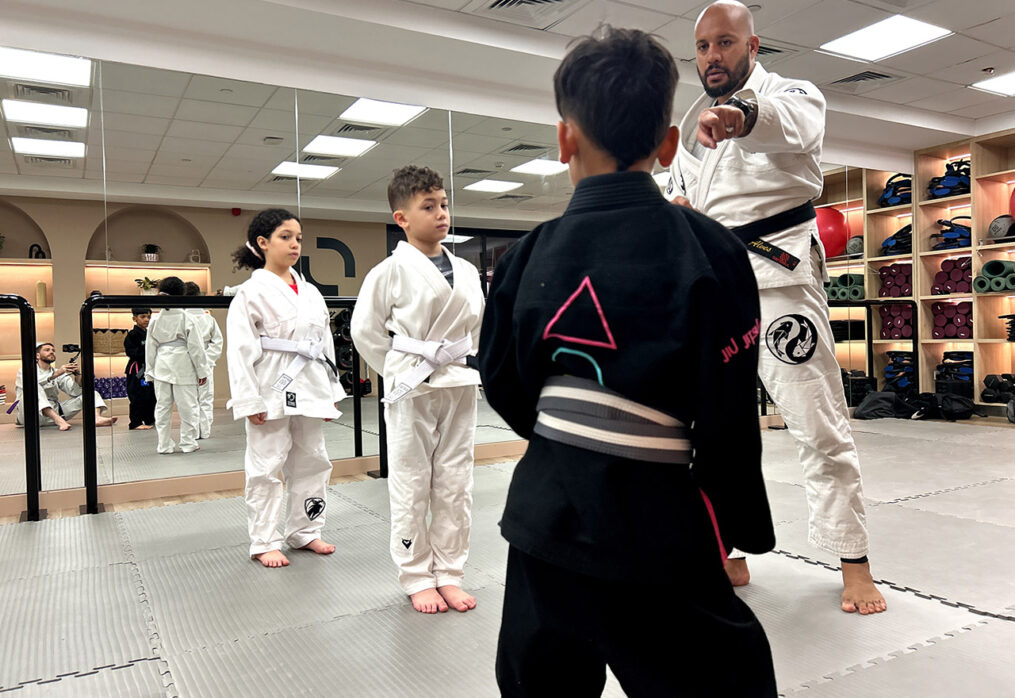

Does Sport Build Confidence In Children?
You signed your child up for a sport hoping it would toughen them up a little, get them more comfortable in their own skin, maybe even make them a bit braver at school. Eighteen months in, and you’re wondering if it actually worked, or if you just spent a lot of Saturday mornings sitting in a car park. It’s a fair question, and it’s one we hear from parents in Dubai every week: does sport build confidence in children, or is that just something coaches say to sell more classes?
The honest answer is that it depends entirely on what kind of sport, and how it’s run. Some children walk off the mat taller than when they walked on. Others do the same activity for years and stay exactly as anxious as they started. If you’re trying to work out which one your child’s activity is likely to produce, the research on does sport build confidence in children gives you a clearer answer than most parenting forums will.
What “Confidence” Actually Means Before We Talk About Sport
Before we get into whether does sport build confidence in children holds up under research, it helps to agree on what confidence actually is. Parents often use it interchangeably with self-esteem, but they’re not the same thing. Self-esteem is a general sense of “I am worthwhile.” Confidence is narrower: it’s “I can handle this specific thing.” A child can have solid self-esteem and still freeze on the first day of a new class. A child can also have shaky self-esteem generally but be genuinely confident inside a controlled environment, like a mat, a court, or a pool. We wrote a longer piece on the difference between confidence and self-esteem in children if you want the full breakdown. For the purposes of does sport build confidence in children, what matters here is this: confidence is built through repeated, specific evidence that you can do hard things and recover from doing them badly.
Does Sport Build Confidence in Children? What the Research Actually Shows
So does sport build confidence in children, according to the research rather than the marketing? A 2024 study published in the journal Sports followed more than a thousand adolescents and found that sports participation was linked to higher self-esteem, largely because it built emotional intelligence along the way, not just physical skill. Researcher Helder Fernandes and colleagues found the effect held for both team and individual sports, though the pathway ran through how well children learned to read and regulate their own emotions during training, not through how many medals they won. You can read the full study here. That detail matters. It means the answer to does sport build confidence in children isn’t simply yes or no, it’s “yes, when the sport is teaching emotional skills alongside physical ones.”
That’s a useful filter for judging any activity your child is already in. If the coaching only ever talks about winning, technique, or results, does sport build confidence in children in that setting? Probably not much. If the coaching also talks about effort, recovery from mistakes, and how a child handled a hard moment, the answer tips firmly toward yes.
Why Some Sports Build Confidence and Others Just Build Skill
This is the part most parents miss. A child can become genuinely excellent at a sport, technically, and still not grow in confidence, because skill and confidence are not the same output. We see this constantly with children who join us after years in an activity that only ever measured them against other children. They arrive skilled but brittle; one bad session and they want to quit entirely. That’s usually a sign the previous activity was building performance, not the kind of does sport build confidence in children outcome most parents are actually hoping for, which is a child who can handle setbacks calmly and try again without needing to be talked into it.
That’s the practical starting point for does sport build confidence in children: not the sport’s name, but its structure. The activities that reliably build confidence tend to share a few features: they give a child regular, small, achievable challenges; they treat failure as a normal and expected part of the process rather than something to be avoided; and they give the child a way to track their own progress that isn’t just “did you win today.” We’ve compared this directly in BJJ vs football for building confidence in children, and the pattern holds up: individual, skill-tracked activities tend to outperform team sports on this specific measure, even though team sports have their own real benefits. It’s part of why does sport build confidence in children shows up so consistently in the feedback we get from parents here at The Origami Factory.
A Story We See a Lot on the Mat
We had a seven-year-old join us last year, we’ll call him Ali, who’d spent two years in team football and hated every Saturday of it. He wasn’t unskilled. He just never touched the ball enough to feel like he mattered, and when he did make a mistake, ten teammates and a crowd of parents all seemed to notice at once. His mum’s question when she called us was the same one most parents ask: does sport build confidence in children, because right now it’s doing the opposite for mine.
Six months into BJJ, Ali wasn’t just calmer about training, he was calmer generally. Every round on the mat is one-on-one. Every mistake is his to fix, not something ten other kids watch him make. He started asking to go early to warm up, which is a small thing, but it’s not nothing. That’s not a dramatic transformation story; it’s what specific, private, repeatable challenge does for a child’s nervous system over time, and you can read a similar pattern in how jiu jitsu builds confidence in children more generally. It’s also a fairly clean answer to does sport build confidence in children: yes, but usually only the kind of sport that puts the child, not the scoreboard, at the centre of the experience.
The Difference Between “Good At It” and Genuinely Confident
Parents sometimes tell us their child is “already confident” because they’re good at a sport. It’s worth separating those two things clearly, because they lead to different advice. A child who is good at something but only feels good about themselves when winning has a fragile setup: their confidence rises and falls with results, and results are unreliable by definition. A child whose sense of self isn’t tied to winning, but to showing up and trying, is far more resilient, and that resilience is the actual mechanism behind does sport build confidence in children, according to both the research and what we watch happen on the mat week to week.
This is also where a lot of well-meaning praise goes wrong. If you tell a child “you’re so talented” every time they win, you’re reinforcing the fragile version. If you praise the effort and the recovery from a bad round instead, you’re reinforcing the resilient version. We go into this in more depth in our piece on whether praise helps or hurts a child’s confidence, but it’s worth flagging here because it directly changes whether does sport build confidence in children for your particular child, or just makes them good at a sport while leaving their underlying self-belief untouched.
Common Misconceptions Parents Have About Sport and Confidence
A few beliefs come up again and again when parents ask us does sport build confidence in children, and most of them don’t hold up well once you look closely. The first is that any physical activity will do the job, as long as the child is moving and out of the house. Movement matters for plenty of reasons, but confidence specifically needs structured, escalating challenge, not just activity for its own sake. The second is that winning is what builds confidence. In our experience, and in the research, it’s closer to the opposite: children who are only rewarded for winning become more anxious about performance over time, not less.
The third misconception is that quiet or naturally shy children don’t need this kind of activity because “they’re just introverted.” That’s often backwards. Shy children tend to benefit the most from a structured, low-pressure environment where they can build competence privately before being asked to demonstrate it in front of others. If that sounds like your child, our guide on how to help a shy child come out of their shell goes into this in more detail, and it’s a useful companion to the question of does sport build confidence in children for kids who find groups genuinely draining.
How the 3D Method Turns Activity Into Actual Confidence
This is exactly the gap our 3D Method is built to close. Discover, Develop, Demonstrate isn’t just a training structure, it’s our answer to does sport build confidence in children in a way that’s trackable rather than assumed. In the Discover phase, a child is introduced to a challenge slightly beyond what they can currently do. In Develop, they work at it with a coach who’s watching how they handle frustration, not just how their technique looks. In Demonstrate, they show what they’ve built, in front of people, which is where the actual confidence gets tested and reinforced.
We track this properly rather than leaving it to feel. Coaches log specific character markers alongside belt progress, so you can see, in writing, whether your child’s resilience, focus, or social confidence has moved, not just whether they’ve learned a new technique. You can read more about how we measure character development, not just belt progress. If you’re asking does sport build confidence in children in the abstract, our answer is: only if someone is actually watching for it and building toward it on purpose. Most sports aren’t set up to do that. Ours is.
What You Can Do This Week, Whatever Sport Your Child Is In
You don’t need to switch activities to start applying any of this. A few things you can do regardless of the sport: ask your child what was hard today, not just what they won or lost. Praise the attempt at the hard part specifically, rather than the general outcome. Notice out loud when they try something again after getting it wrong the first time. These are small shifts, but they change what a child actually takes away from an hour of training, and they’re the real lever behind does sport build confidence in children, far more than the choice of sport itself.
If your child is shy or hangs back in group settings, that’s worth addressing directly rather than hoping the sport fixes it on its own over time. Alongside our shy-child guide above, it’s worth reading the 10 signs your child lacks confidence, because several of them are easy for a busy parent to miss or explain away. In practice, these small home habits are often the fastest route to does sport build confidence in children, faster than switching clubs or coaches.
Confidence Through Sport Looks Different at Every Age
The answer to does sport build confidence in children also depends heavily on age, because what counts as a “hard thing to try” changes as a child grows. Our Penguins group (ages 4 to 6) build confidence through simple, physical wins: balancing, following a sequence, being brave enough to try a new movement in front of others. Our Foxes (7 to 9) start facing more social pressure, so confidence there is often about handling a partner who’s better than them without shutting down. Our Cranes (10 to 12) are usually managing early social comparison and self-consciousness, so the confidence work shifts toward identity, not just skill. Our Dragons (13 and up) are dealing with the most complex version of the question, because teenage motivation and confidence are tightly linked, and does sport build confidence in children at that age depends heavily on whether the activity still feels like theirs, not something imposed on them by a parent or a schedule.
If you want the fuller picture for your child’s stage, our age-specific pages cover this in more depth: Penguins (4-6), Foxes (7-9), Cranes (10-12), and Dragons (13+).
Frequently Asked Questions
Does sport build confidence in children, or does it just build skill?
Both are possible, and they’re not the same thing. Skill grows whenever a child practises consistently. Confidence only grows when the training environment treats mistakes as normal, gives the child specific, achievable challenges, and rewards effort and recovery rather than just results. That’s the real test of does sport build confidence in children in any given activity: watch what the coach praises out loud, not what the scoreboard says at the end of the session.
What age should my child start a confidence-building sport?
Most children can start as young as four, provided the class is genuinely built around that age group rather than a scaled-down adult format. We split our programme into Penguins (4-6), Foxes (7-9), Cranes (10-12), and Dragons (13+) specifically because what builds confidence at five looks completely different to what builds it at thirteen, and that’s often the missing piece in does sport build confidence in children discussions that treat all ages the same.
My child is already good at their sport, why don’t they seem more confident?
This is common, and it usually means the sport is building competence without building resilience. If your child’s mood depends entirely on winning, their confidence is tied to results rather than to their own sense of capability. Shifting the praise toward effort and recovery, at home and from coaches, tends to fix this faster than changing sports altogether, and it’s a clearer example of does sport build confidence in children than the scoreboard ever will be.
Is Brazilian Jiu-Jitsu better than team sports for building confidence?
Not universally, but it does have structural advantages for children who feel exposed by team settings: every round is one-on-one, mistakes are private rather than public, and progress is trackable through belts and stripes rather than a scoreboard. For a child who shuts down under group pressure, that structure often does more for confidence than a team sport would over the same period.
How long does it take to see a confidence change from sport?
Most parents notice something within eight to twelve weeks, though it’s rarely a dramatic shift. It usually looks like a child asking to go early, talking through a hard moment from training without prompting, or trying something new without the usual hesitation. That gradual pattern is a more reliable sign of does sport build confidence in children than any single “confident” moment on its own.
Can sport make a child less confident?
Yes, and this is worth taking seriously. A sport that’s overly competitive, publicly comparative, or coached with heavy criticism can lower a child’s confidence over time, particularly if they’re naturally sensitive to social evaluation. If your child dreads training rather than being mildly reluctant on tired days, that’s worth a proper conversation about whether the activity, or the coaching style within it, is actually the right fit for them.
If you’re still weighing up does sport build confidence in children for your own child, the short version is that it can, but only when the activity is built around specific challenge, honest feedback, and room to fail safely. That’s the whole premise behind what we do at The Origami Factory. Our programmes are built on the 3D Method precisely so confidence isn’t left to chance. If you’d like to see it for yourself, you can book a trial class for AED 99 and watch how your child responds to a single session, before committing to anything further.