
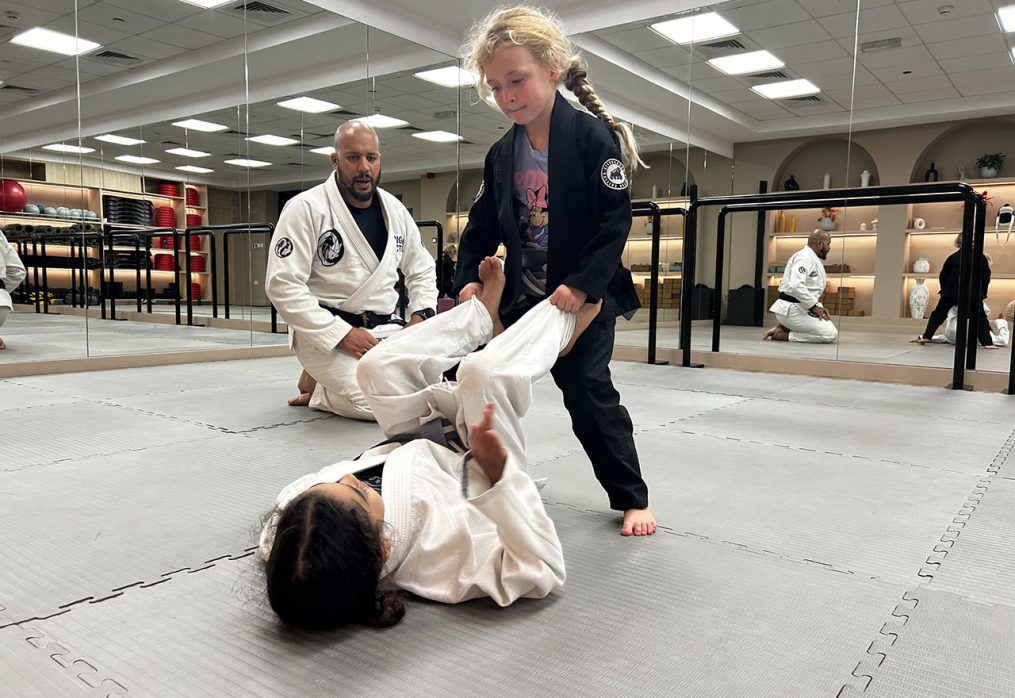

How We Measure Character Development (Not Just Belt Progress)
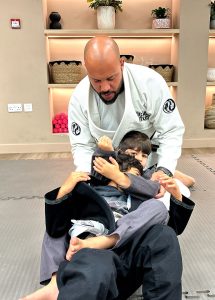 When a parent asks how their child is progressing at Origami Factory, the easy answer is to point to their belt or stripe. Look, they earned a stripe last month. Look, they are close to their next belt. This is not the wrong answer, exactly. It is just the incomplete one. Belts and stripes measure technical skill. They do not fully measure character development. And character development is what most of the parents who bring their children to us actually care about.
The problem is that character is famously slippery to measure. You cannot weigh it. You cannot mark it out of ten. It shows up in small moments across weeks and months, not in the neat outputs of a formal assessment. Which is why so few children’s programmes try to measure character development seriously at all. They talk about it in their marketing, then measure only skills in their assessments.
We wanted to do something different. This article walks through how we actually measure character development at Origami Factory, why the traditional belt system alone falls short, and what parents can look for in their own child regardless of whether they train with us or not.
Why Belt Progress Alone Cannot Measure Character Development
Let us start with what belts and stripes do measure well. They measure a child’s technical BJJ skill. Can they perform the required movements. Do they understand the positions. Are they able to apply techniques against a resisting partner. These are real, valuable measurements, and BJJ has one of the more rigorous progression systems in any sport for children.
What belts do not measure is whether a child is genuinely more resilient than they were six months ago. Whether they handle frustration better. Whether they treat their training partners with more care. Whether they show up to class with a different attitude when things are hard. These are the dimensions of character that parents most want to see change in their child, and they are precisely the dimensions the belt system is not designed to capture.
This matters because a child can technically progress through belts while showing very little character growth, and vice versa. A child can also grow enormously in character over a year while their technical progression looks modest on paper. If belts are the only measurement tool, both of these children will be misread.
The Jubilee Centre for Character and Virtues at the University of Birmingham has written extensively on how character can be assessed. Their framework for character education in schools makes the point that character can and should be measured holistically, drawing on multiple sources of evidence rather than any single test or observation. This is the principle we work from.
The Five Dimensions We Use to Measure Character Development
We work with five specific dimensions when we measure character development in our students. These are not arbitrary. They are the dimensions that the research on character education consistently identifies as the ones most important for children’s long-term flourishing, and they are also the dimensions we see BJJ training uniquely well positioned to develop.
Confidence
Not the loud kind. Not the performative kind. Confidence in the sense we mean it here is the internal, quiet knowledge a child has about what they can handle. A child with genuine confidence walks into difficult situations with a slightly different set of shoulders. They speak up in class when they have something to say. They ask for what they need. They are not knocked sideways by small setbacks. Our article on how to build confidence in a child covers the mechanism in more depth.
Discipline
The ability to do what you said you were going to do, even when you do not feel like it. Turning up to training on a Tuesday evening after a long school day when the sofa would be easier. Completing a full class rather than tapping out early. Staying focused when the drill is repetitive. Discipline is not natural at seven or ten. It is built, one small choice at a time.
Focus
The ability to hold attention on what matters, when it matters, without being pulled off task by distraction. This has become increasingly precious in an era where children’s attention is under constant assault from screens. A child who can pay proper attention through a 60-minute class, retaining information and applying it in real time, is developing something that transfers directly into school and life. Our article on screen time and your child’s attention span covers this connection.
Resilience
The ability to fail without falling apart. To lose a round, be corrected on a technique, or find something genuinely hard, and then to keep going anyway. Resilience is not about avoiding difficulty. It is about processing difficulty without being destroyed by it.
Social development
How a child treats their training partners. Whether they help newer students. Whether they show respect to coaches and to each other. Whether they handle disagreements without escalating them. Social development on the mat spills over into how children handle themselves at school and at home. Our article on how to help a child who struggles socially touches on why this development is so important.
These five dimensions form the framework we use to measure character development in every student across every class. They give us a consistent language for what we are watching, and they give parents a clear vocabulary for what to notice at home.
How We Actually Measure Character Development in Practice
Having a framework is one thing. Applying it in a real class with real children is another. Here is how we actually measure character development in practice, session by session and over time.
Coach observation
Our coaches are trained to notice specific behaviours during class. Not just whether a child performed the technique correctly, but how they responded when it did not work. Whether they helped a struggling partner. Whether they stayed engaged when the drill got hard. These observations are the raw material of everything else. A good coach who knows their students well can measure character development more accurately than any formal test.
Session notes
After each class, coaches log short observations for the children they worked with directly. Not for every child every session, but enough that over a month we have a rich picture of how each child is engaging across the five dimensions. Small notes accumulate into a real record.
Milestone conversations
At key points in the year, we sit down with parents and share what we have been noticing across the five dimensions. These are not marketing conversations. They are honest, specific reports on what we have seen. Where the child is showing growth. Where they are getting stuck. What we are working on with them.
Parent feedback
Character development that only shows up on the mat is not really character development. It is a class-specific behaviour. Real character development shows up at home and at school too. So we ask parents what they are seeing. Are they noticing more patience? More resilience when homework gets hard? More willingness to try new things? Their observations are a crucial input into how we measure character development, because they tell us whether what we are seeing on the mat is transferring into the child’s wider life. Our article on why consistent training helps children behave better at school covers this transfer effect in more depth.
Child self-reflection
Older children are involved in the measurement themselves. We ask them to reflect on what they have found hard, what they have improved at, and what they want to work on next. This is not a formal assessment. It is a short conversation, sometimes just a couple of questions at the end of class. But the act of reflecting deepens the growth. A child who thinks about their own character development is more likely to keep developing it. This connects directly to the Demonstrate stage of our 3D method, which is built around children articulating their own learning.
What Character Development Looks Like Across the Age Groups
How we measure character development changes as children get older, because character itself looks different at different stages.
For our Penguins programme (ages 4 to 6), character development is mostly about basic self-regulation and social behaviour. Can they wait their turn. Can they follow a simple instruction without getting distracted. Can they be kind to a classmate who is struggling. At this age, we watch for tiny moments of change rather than grand transformations. A child who used to melt down every time they lost a game, now able to shake it off after a few seconds, has shown real character development. That is what we are tracking.
In the Foxes programme (ages 7 to 9), we start looking at more sophisticated dimensions. Can they persist through a technique that is not working. Can they receive coaching correction without getting deflated. Can they be gracious in winning and losing. This is the age where character starts to become more visible in behaviour, and we can measure character development with more granularity.
The Cranes programme (ages 10 to 12) introduces the more complex terrain of pre-adolescent character. Can they lead junior classmates. Can they handle disappointment without withdrawing. Can they take responsibility for their own progress rather than looking to the coach for constant validation.
In the Dragons programme (ages 13 and above), we are looking at character as it takes adult shape. Can they show integrity when nobody is watching. Can they mentor younger students. Can they handle the emotional intensity of adolescence without turning it into conflict on the mat. At this age, character development starts to look almost identical to how it does in adults.

Signs Parents Can Watch For at Home
You do not need to be a trained coach to notice character development in your child. If you are looking, the signs are visible in everyday life. Here are some of the things that let you measure character development at home, informally but genuinely.
Notice how they handle small frustrations. A puzzle that is not working. A game they are losing. A shoelace that will not tie. A child whose character is developing well processes these small frustrations differently over time. Not because the frustration goes away, but because their response to it becomes calmer and more capable.
Notice how they treat other children. Younger siblings. Classmates at a party. Random children at the park. Are they patient? Do they include others? Do they defend a child who is being left out? These small behaviours reveal character in ways that no assessment can capture.
Notice how they respond to being told no. A child with developing character does not fall apart at the word no. They may not be happy about it, but they can handle it. This is a huge shift for many children and one of the clearest indicators of genuine growth.
Notice how they behave when they think nobody is looking. Character, ultimately, is what a person does when there is no audience. A child who is helpful when they think a parent will not see, who chooses honesty when a small lie would be easier, who keeps trying when giving up would be simpler, is showing you their real character.
Notice how they talk about themselves. Children whose character is developing well tend to talk about themselves more accurately, less catastrophically, and with more capacity for both self-compassion and self-honesty. Our article on 10 signs of low confidence in children covers what to watch for on the other side of this, when internal talk suggests character is not developing as it should.
Why Measuring Character Development Matters More Than It Might Seem
Some parents might wonder whether it is really necessary to formally measure character development at all. Should it not just happen naturally through good training?
The honest answer is that it does happen naturally in a well-run programme, but it happens more reliably, more visibly, and more transferably when it is measured. The act of measurement changes what is measured. When coaches are trained to look for specific character behaviours, they see them, name them, and reinforce them. When parents are asked to notice specific things at home, they start noticing them and responding differently. The measurement itself becomes part of the mechanism of growth.
There is also the point that character development, unlike physical skills, is easy to overlook. A child who has become more resilient does not necessarily perform their new resilience visibly. They just handle things better than they used to. Without explicit attention to it, this kind of growth can pass unnoticed, and what goes unnoticed often stops developing. Our article on how jiu jitsu builds emotional intelligence touches on similar territory, particularly how naming a skill helps children internalise it.
The Role of Belts in All This
We are not dismissing belts. Belts are useful. They give children a tangible sense of progress. They mark technical milestones. They provide structure for a very long learning journey. What we are saying is that belts are one measurement tool, not the whole picture. When parents ask us how their child is doing, we can tell them about the belt they are working towards, and we can also tell them what we have noticed in how they handle themselves, how they treat their partners, and how they respond when things are hard.
This combination, technical progression alongside character measurement, is what we think good children’s BJJ programmes should provide. Our article on how jiu jitsu builds confidence in children covers why the technical and the character sides reinforce each other, and why neither alone is enough.
What Parents Get From This Approach
Practically speaking, what does it mean for parents that we measure character development this way, rather than just tracking belt progress?
You get a clearer, more honest picture of how your child is doing overall. Not just whether they are getting technically better, but whether they are becoming the kind of person you were hoping training would help them become. That is the point of the whole exercise, after all.
You get a language for talking to your child about their development. When you can point to specific behaviours in specific dimensions, conversations at home become more productive. Instead of vague “how was class” exchanges, you can ask about specific things you know they are working on.
You get an early warning system. If character development stalls, we notice. If a child is stuck in one dimension while progressing in others, we see it and can adjust the coaching. This means we can intervene early, before a small pattern becomes an entrenched one.
You get accountability. We are on the record with you about what we are working on and what we are seeing. This turns training from a black box into a transparent process where you know what we are trying to do and can hold us to it.
Getting Started
If you want to see how we measure character development in practice, the best way is to come and watch a class. See how coaches interact with students. Notice what they name and how they name it. Ask questions about what you see. We are happy to walk parents through our framework in more depth in person than any article can convey.
You can see how we structure our programmes on the programmes page, check current class times on the schedule page, and reach us with any questions via the contact page. If you want to know what a first session looks like from your child’s perspective, our article on what happens at a kids BJJ trial class in Dubai walks through the whole experience.
When you are ready, book your child’s free trial here.
Frequently Asked Questions: How We Measure Character Development
How often will I hear about my child’s character development?
Informally, every time you speak to a coach after class. Formally, at milestone conversations we schedule with you across the year. You are also welcome to ask for an update at any point and we will give you a considered answer, not a generic one.
What if I do not see the character development at home?
This is worth discussing with us. Sometimes character development on the mat takes time to transfer into home behaviour, particularly for children who are used to different rules in different settings. In some cases, we notice things at home that show up differently on the mat, and vice versa. Comparing notes helps us both understand your child better.
How long does it take to see character development?
Small shifts often appear within four to eight weeks of consistent training. More meaningful and durable character development typically takes six to twelve months. Character develops more slowly than technical skill, and the pattern is usually non-linear, periods of visible growth interspersed with plateaus.
Can you measure character development if a child only trains once a week?
Yes, but it is slower and less consistent. Twice-weekly training gives us more data points and gives your child more opportunities to build the underlying capacities. Once weekly is enough to see growth over time, but the pace is different.
What happens if my child is progressing on belts but not on character?
We would flag this to you and adjust our coaching approach. Technical progression without character growth is not what we are aiming for, and if we see the two moving apart, we address it directly with the child. This is one of the reasons we measure character development explicitly rather than assuming it will follow the belt system.
Is this framework based on any specific research?
Yes. Our approach draws on established character education frameworks, particularly the work of the Jubilee Centre for Character and Virtues in the UK, and adapts them for the specific context of children’s BJJ training. Our article on the 3D method covers the underlying teaching philosophy that connects to how we measure character development.