

The 3D Method: Discover, Develop, Demonstrate
 Every child learns differently. Some pick things up quickly and move on. Others need more time, more repetition, more space to make mistakes before things click. We have noticed this in every class we teach. It is why we stopped relying on a single way of instructing and started building something more deliberate.
The result is what we call the 3D method. It is a three-stage learning approach built into every children’s BJJ class at Origami Factory, and it shapes how we plan sessions, introduce new techniques, and measure whether a child has genuinely understood something or just gone through the motions. The 3D method is not a complicated theory. It is a practical structure with a clear purpose: to make sure children actually learn, rather than simply follow along.
This article explains how the 3D method works, why we built it the way we did, and what it looks like in a real class.
Where the 3D Method Came From
We did not invent the ideas behind the 3D method from scratch. The three stages, Discover, Develop, and Demonstrate, draw on well-established thinking in children’s education. Jerome Bruner, the educational psychologist who shaped much of how we understand children’s learning, argued that children retain information more effectively when they identify principles themselves rather than simply receiving them from a teacher. Discovery learning, the approach Bruner pioneered in the 1960s, sits at the heart of the first stage of our 3D method.
What we did was take that thinking and apply it specifically to BJJ instruction for children in Dubai. The result is a method that suits the age groups we teach, the class sizes we run, and the outcomes parents actually care about, which are not just a child who can execute a technique, but a child who is more focused, more resilient, and genuinely proud of what they have built.
You can see how this thinking shapes everything we do by visiting our programmes page, where the 3D method underpins every age group from our youngest students right through to our teens.
Stage One: Discover
The first stage of the 3D method is Discover. This is perhaps the most important stage, and also the one that surprises parents the most when they watch a class for the first time.
In the Discover stage, children are not given a technique and told to copy it. They are given a problem and asked to explore it. Sometimes the coach will set up a simple positional challenge and ask the child to figure out how to solve it. Sometimes it is an open question: what happens if you move here instead of there? The point is not to arrive at the correct answer immediately. The point is to get children actively thinking before formal instruction begins.
This might feel counterintuitive. Surely it is faster to just show children what to do? In the short term, yes. But children who are given space to explore first retain coached instruction far more effectively when it follows. Their curiosity is activated. They have already formed questions, and when the coach provides an answer, it lands because there is a gap to fill.
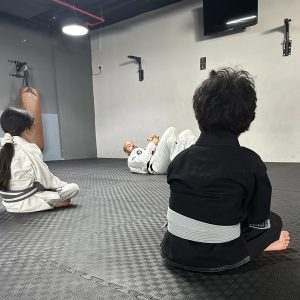
In practice, the Discover stage runs for around five to ten minutes per class. It is structured enough that children stay focused, but open enough that they genuinely explore. Some children find a solution. Some do not. Both are fine. The goal at this stage is engagement, not output.
The 3D method depends on this stage being done properly. Skip it, and what follows feels like rote instruction. Keep it in, and children arrive at the next stage with energy and real context for what they are about to learn.
Stage Two: Develop
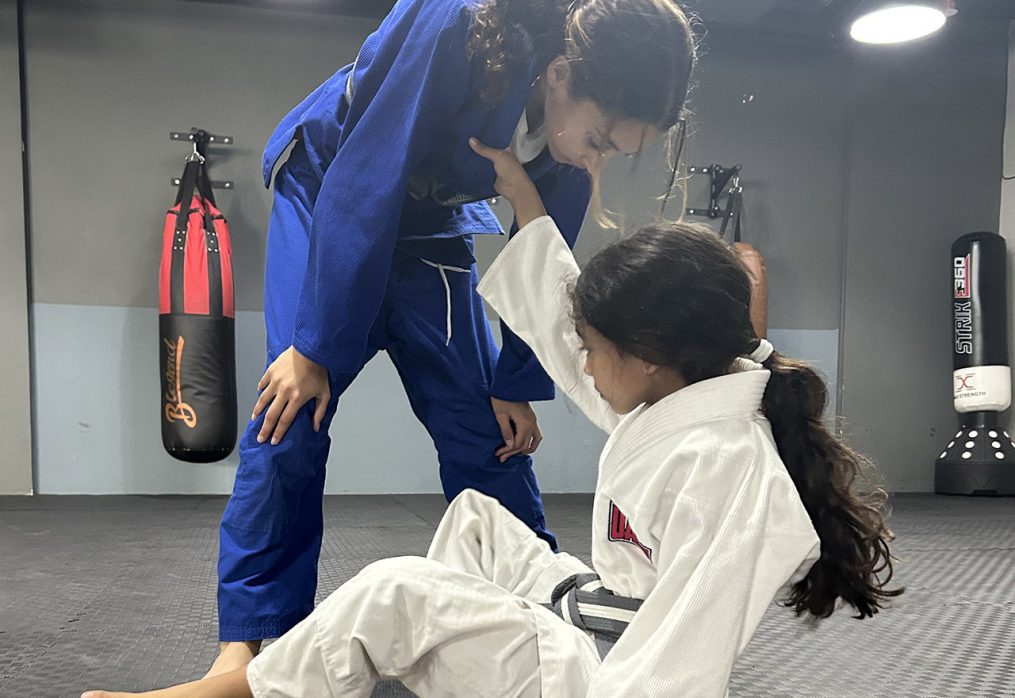
The second stage of the 3D method is Develop. This is where coaching happens in earnest. After children have explored a concept freely, the coach steps in and begins building structured technique. Movements are named. Sequences are broken down. Children practise specific skills with direct guidance and feedback.
What makes the Develop stage work within the 3D method is the order in which it arrives. Because children have already engaged with the problem in Stage One, they are not passive recipients during Stage Two. They bring observations and attempts to the structured coaching. A child who tried and failed to escape a position in the Discover stage is far more receptive to learning the correct technique than a child handed instructions cold.
The Develop stage is also where we adapt to individual children. In any group class, some children will grasp a movement in two repetitions. Others need ten. Our coaches watch for this and adjust, offering different cues, a physical demonstration done slowly, or a simpler version of the same concept that builds towards the full technique. The 3D method does not require every child to move at the same pace. It requires every child to genuinely move through each stage.
This is also where we connect new learning to what children already know. A child who has drilled a basic guard pass will find it referenced when we introduce a more advanced variation. The 3D method builds across sessions, so that each class adds to a developing body of skill rather than starting from scratch.
If you want to understand how we structure this progression for different ages, our kids jiu jitsu in Dubai article goes into detail on what children at different stages are ready to learn and why we sequence things the way we do. You can also read about how we think about jiu jitsu and focus, since the Develop stage depends heavily on a child’s ability to stay present and attend to instruction.
Stage Three: Demonstrate
The third stage of the 3D method is Demonstrate. This is where children show what they have learned, not to prove themselves, but to consolidate their understanding.
There is a reason Demonstrate is the final stage rather than an afterthought. When children explain or show a skill to someone else, their understanding deepens in a way that private repetition does not achieve. A child who can drill a technique perfectly when a coach calls each step does not necessarily understand it. A child who can show it to a partner, explain the key points, or apply it in a live situation does.
In our classes, the Demonstrate stage takes several forms depending on the age group and the complexity of what has been taught. Younger children might show the group what they worked on and say one thing they found difficult. Older children might walk a partner through a sequence they have just learned, or apply the technique in a short, controlled round. In some sessions, children demonstrate to parents at the end of class, which tends to be a highlight for everyone in the room.
The Demonstrate stage of the 3D method also gives coaches an honest read on whether a child has genuinely understood something. A child who followed the motions in Stage Two but did not process the learning will usually show that in Stage Three. When that happens, the coach can return to Stage Two and try a different approach, rather than moving the class forward and leaving that child behind.
There is also something worth saying about confidence. The Demonstrate stage, done well, gives every child a moment to feel capable. It is not a test. It is a chance to show something they have built and share something they know. For children who are quiet, or who lack confidence in more academic settings, this can matter more than you might expect. We write about this directly in our article on how jiu jitsu builds confidence in children.

Why the 3D Method Works for BJJ Specifically
BJJ is a particularly good fit for the 3D method. That is part of why the approach works so well in our classes.
Grappling has an unusual quality as a learning medium: the feedback is immediate and physical. When a technique is wrong, you feel it. When it is right, you feel that too. This makes the Discover stage highly engaging because children receive real feedback from their training partner even without a coach directing them. It makes the Develop stage efficient because mistakes are visible and correctable in real time. And it makes the Demonstrate stage satisfying because there is a tangible outcome, a position held, a technique applied, that both child and coach can see clearly.
The 3D method also addresses something we think about a lot: screen time. Children in Dubai spend a significant portion of their time receiving passive stimulation. The 3D method asks something different of them. It asks them to think, to try, to fail, to adjust, and to show what they have figured out. Our article on screen time vs martial arts explores this tension in more detail and is worth reading if you are weighing up how your child spends their time outside school.
It is also worth reading our piece on how jiu jitsu builds emotional intelligence, which explains how the problem-solving and self-regulation skills children develop through the 3D method connect to broader emotional development.
How the 3D Method Looks Across Our Age Groups
We run BJJ classes for children from age 4 upwards. The 3D method applies across all age groups, but it looks different depending on who is in the room.
Our youngest students, the Penguins (age 4 to 6), experience the 3D method in its most playful form. The Discover stage uses games and movement challenges. The Develop stage focuses on one or two fundamental movements. The Demonstrate stage is kept simple: show the group, describe one thing you noticed.
The Foxes (age 7 to 9) can go deeper in all three stages. The Discover stage starts to involve genuine positional problems. The Develop stage introduces more technical vocabulary and longer sequences. The Demonstrate stage begins to include peer teaching and short live rounds.
For the Cranes (age 10 to 12) and the Dragons (age 13 and above), the 3D method operates much closer to how it would in an adult class. The Discover stage might involve studying a position and attempting a solution before the coach has said anything. The Demonstrate stage involves a structured debrief where students explain their thinking alongside their technique.
Across all four groups, the structure of the 3D method stays consistent. Explore first, develop with guidance, consolidate through demonstration. The variation is in depth and independence, not in the sequence itself.
What the 3D Method Does for Children Beyond the Mat
We hear from parents fairly regularly about what they notice when their child comes home from class. A few things come up again and again.
The first is that children want to teach what they have learned. A child who has been through the Demonstrate stage of the 3D method often arrives home wanting to show someone a technique or explain what they figured out in class. That is probably the clearest sign the method is working. They have not just retained information; they want to share it.
The second thing is patience. Children who have spent time in the Discover stage, working through a problem without being handed the answer, seem to carry that patience into how they approach other challenges. Perhaps that is too much to attribute to a ten-minute exploration exercise. But we hear it often enough to think something genuine is happening.
The third is confidence, and specifically the quiet kind. The Demonstrate stage gives every child a moment to be the person who knows something, rather than the person being taught. For children who struggle to feel capable in other parts of their lives, that distinction matters. Our article on building confidence at home covers practical ways to reinforce what children are building in class.
We also think the 3D method connects to how children handle social difficulty. A child who learns to stay composed when a technique is not working, who tries a different approach instead of giving up or getting frustrated, is building something that transfers directly to how they handle conflict with peers. Our article on how jiu jitsu prevents bullying explores this connection in more depth.
Getting Started
The best way to understand the 3D method is to watch it in action. We offer a free trial class for new students, and parents are welcome to watch the session from start to finish. You will see all three stages in a single class and can ask the coach about how the structure works and why we run things the way we do.
If you want to do more research before coming in, our guide to choosing a jiu jitsu academy in Dubai covers the questions worth asking any academy before you enrol your child. Our jiu jitsu near me article explains what to look for in terms of location, facilities, and programme structure. And if cost is something you want to understand upfront, our jiu jitsu prices in Dubai article covers what you can expect to pay and what good value looks like.
You can check our current class times on the schedule page. If you have specific questions about whether our programme is the right fit for your child, you can reach us on the contact page. We would rather have that conversation before you book than have you arrive unsure of what to expect.
When you are ready, book your child’s free BJJ trial here.
Frequently Asked Questions About the 3D Method
What is the 3D method?
The 3D method is a three-stage teaching approach used in every Origami Factory class. It stands for Discover, Develop, and Demonstrate. Each stage has a specific role: Discover activates curiosity and independent thinking, Develop builds technique through structured coaching, and Demonstrate consolidates understanding by having children show and explain what they have learned.
Is the 3D method used for all age groups?
Yes. The 3D method applies across all our children’s classes, from our Penguins (age 4 to 6) through to our Dragons (age 13 and above). The stages are adapted to suit each group’s age and development level, but the sequence stays consistent throughout.
How long does each stage of the 3D method take in a class?
As a general guide, the Discover stage runs for five to ten minutes, the Develop stage takes up the majority of class time, and the Demonstrate stage closes out the session in the final ten to fifteen minutes. The balance shifts depending on the material and how the class is progressing on a given day.
Does the 3D method work for children with different learning needs?
It is designed to. Discover suits children who learn by doing and exploring. Develop suits children who respond well to structured instruction. Demonstrate suits children who consolidate learning by explaining and showing. Most children benefit from all three stages, and the method naturally accommodates those who are stronger in one stage than another.
How can I see the 3D method in practice?
Come to a class. We offer a free trial session for all new students, and parents are welcome to watch. Book your child’s free trial here and see the three stages for yourself.