

My Child Has No Friends: What Parents Can Actually Do
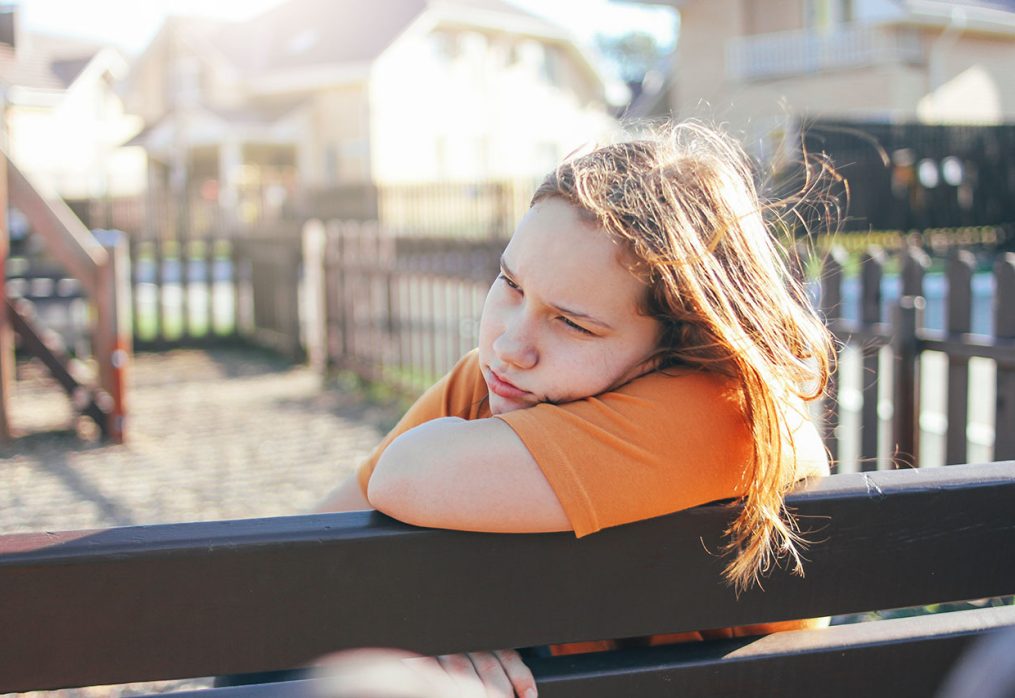
Few things ache quite like watching your child come home from school and know, from the way they drop their bag and the way they answer “fine” too quickly, that something has gone wrong socially again. Or worse, that nothing has happened at all. That they spent break time on their own. That the WhatsApp group they used to be part of has stopped including them. That the birthday party invitations that used to come home in their book bag simply do not any more.
When a parent says my child has no friends, it is one of the more painful sentences a parent can utter. It carries worry, guilt, and often a sense of being unsure whether to intervene or leave it alone. Should you engineer playdates? Should you talk to the school? Should you just trust that it will sort itself out?
This article walks through the real reasons a child has no friends, what tends to help, what tends to make things worse, and what parents can actually do this week and this month to change the picture. Some of it is easier said than done. But there is a lot more you can do than you might think.
Why Recognising That Your Child Has No Friends Matters
Friendship is not a nice-to-have for children. It is a developmental necessity. Children learn empathy, negotiation, conflict resolution, and self-regulation through their friendships. They also build the internal sense of belonging that carries them through the harder parts of childhood and adolescence.
The research is clear about the stakes. Persistent loneliness in childhood is associated with higher risk of anxiety, depression, and mental health difficulties in adolescence and adulthood. This is not a reason to panic if your child has no friends right now. It is a reason to take the situation seriously, act early, and stay patient.
Child psychologist Dr. Eileen Kennedy-Moore, writing for Psychology Today, points out that loneliness in children is not about the number of friends they have, but about whether they feel meaningfully connected to at least one other person. A single close friendship is often all a child needs to be okay. The task is not to give them a popular social life. It is to help them find one meaningful connection.
The Common Reasons a Child Has No Friends
Before you can help, it is worth understanding why. There are several distinct patterns, and the right response depends on which one applies to your child.
They lack the specific social skills
Some children have not yet learned the specific micro-skills that friendship requires. How to start a conversation. How to join a game already in progress. How to take turns without dominating. How to disagree without falling out. These are learned skills, not innate ones, and children who have not learned them often find social situations bewildering rather than hostile. They want friends. They just do not know how to make them.
They are shy or anxious
Some children who have no friends are perfectly socially skilled in low-stakes settings, but freeze in the higher-stakes environments where friendships actually form. School playgrounds, birthday parties, new group activities. Anxiety in these settings prevents them from taking the small risks that friendship requires. Our article on how to help a child who struggles socially covers this in more depth.
They have low confidence
A child who does not feel worth knowing rarely puts themselves forward to be known. Low confidence and social difficulty are two sides of the same coin. Children who quietly assume they are less interesting, less funny, less likeable than their peers pull back from social situations, which produces the outcome they feared. Our article on 10 signs of low confidence in children covers the underlying pattern.
They have a difficult social reputation
Sometimes a child has no friends because something has happened socially that has damaged how they are perceived. A falling-out. A misunderstanding. A moment of embarrassment that has ossified into a story about who they are. Children can be unfair and unforgiving, and once a child has been socially typecast, it can be hard to shift.
They are in the wrong environment
Some children have no friends not because there is anything wrong with them, but because they happen to be in an environment where the other children do not match their interests, temperament, or values. A quiet, thoughtful child in a boisterous class. A creative child in a sports-obsessed school. A neurodivergent child in a mainstream group with no other neurodivergent peers. The right environment can transform a child’s social life almost overnight.
They may have underlying differences
Children with autism, ADHD, or other neurodevelopmental differences often find friendship harder to build for specific reasons, not because they lack the desire. If your child has no friends and you have noticed other patterns that suggest something more, it is worth speaking with your GP or a child psychologist.
What Does Not Work When Your Child Has No Friends
Before we look at what helps, a quick note on what tends to backfire. Well-meaning parents often try these first.
Pushing them into big group settings
Signing a child who has no friends up for a large, noisy group activity in the hope that friendships will emerge is usually counterproductive. The very environments that are hardest for socially struggling children are the ones parents often push them into. Smaller, structured, calmer settings tend to work far better.
Telling them what to do
“Just go and talk to them.” “Just smile and be nice.” “Just be yourself.” These well-intentioned instructions rarely help because they assume the child has the skills to execute them. If they had the skills, they would already be using them. The advice lands as pressure rather than support.
Labelling them
Introducing your child as “shy” or “not really a friend-maker” reinforces the identity you are trying to change. Even loving descriptions can trap children in a version of themselves they might otherwise grow out of.
Solving it for them
Arranging every social interaction for your child, over-managing their friendships, or intervening in every disagreement removes the very experiences they need to build the skills that would eventually let them make friends on their own.
Comparing them to siblings or peers
“Your brother has so many friends.” “When I was your age…” These comparisons produce shame, not motivation. A child who has no friends already knows they are struggling. Comparison confirms their worst fear about themselves.
What Actually Helps When Your Child Has No Friends
The strategies that work share something in common. They build the underlying capacities that make friendships possible, rather than trying to force friendships to appear on demand. Here are the ones that matter most.
Find one structured environment with the right social conditions
The single most useful thing you can do for a child who has no friends is to find a structured setting where the social conditions are right for them to succeed. Not a big free-play environment. Not a competitive team sport. Something smaller, calmer, more predictable, where the interaction with other children happens within a clear structure and where an adult coach is paying attention.
Structured martial arts training is unusually well suited to this. In a BJJ class, children work in pairs on defined tasks. There is no group of loud children racing around a pitch competing for attention. The social interaction is calm and mediated by a coach. Over weeks and months, the same familiar faces reappear. Relationships build gradually, based on shared experience rather than the pressured performance of friendship.
We have seen many children who arrived described as having no friends slowly develop connections in class that then extended into other areas of their life. The first friend often comes from an unexpected direction. Once one exists, it becomes easier to imagine another.
Teach the specific micro-skills
Friendship is a set of skills, and skills can be taught. Practise at home. How to say hello and use someone’s name. How to ask a simple question and follow it up. How to join a group already in play. How to take turns. Role-play these in low-stakes settings until they become automatic. Children who have practised the mechanics of friendship find real friendship easier when the opportunity arrives.
Focus on quality, not quantity
Your child does not need a big social group. They need one meaningful friendship. Help engineer the conditions for that one friendship to form. Notice which other children they mention, even briefly. Arrange a one-to-one playdate, not a group one. Give them repeated exposure to the same one or two children. Friendship almost always requires repeated contact over time.
Build confidence in parallel
A confident child makes friends more easily than an unconfident one. Building confidence through structured challenge is one of the most effective indirect ways to help a child who has no friends. Our article on how to build confidence in a child covers the practical mechanics, and our article on building confidence at home covers what you can do day to day.
Look at their environment honestly
If your child has no friends at school and everything you have tried is not shifting the picture, consider whether the environment is genuinely wrong for them. This is a harder conversation to have, but sometimes a change of school, a change of activity, or a change of peer group is what your child actually needs. A child who has no friends in one environment can flourish socially in another.
Reduce screen time
This one matters more than it might seem. Children who spend heavy time on screens often have less energy, less attention, and less appetite for the effortful work of face-to-face social interaction. They also often replace the discomfort of real social risk with the passive comfort of scrolling. Our article on screen time and your child’s attention span covers the wider effects, and reducing recreational screen use often creates the space for real social connection to develop.

How BJJ Helps a Child Who Has No Friends
We have written a lot on this site about how BJJ training builds confidence, resilience, and emotional regulation. What we have not always spelled out is how well it works for children who arrive with no friends. The reasons are worth explaining.
Every BJJ class involves partner work. Your child does not have to find someone to play with. They are paired up. This removes one of the highest social hurdles: initiating contact. Over weeks, they cycle through the same set of training partners, building familiarity naturally through repetition. The friendships that emerge are grounded in shared experience: they have trained together, struggled together, laughed together. That is a more durable foundation than the surface-level connection of a group activity.
The environment is also unusually calm and safe. There is no shouting, no chaos, no aggressive competition for status. The coach knows every child by name and pays close attention to how they are engaging. Children who freeze in busy, unstructured settings often thrive in this kind of predictable, mediated environment. Our article on how to help a child who struggles socially explores this connection in more depth.
Progression is another underrated factor. Every child in the class is on the same journey, at slightly different points. Older students help younger ones. Younger ones look up to older ones. A shared sense of purpose runs through the room, and children who felt like outsiders elsewhere often find they belong here.
Our programmes are structured by age to make the social conditions right for each stage. The Penguins for ages 4 to 6 introduce partner work in age-appropriate ways. The Foxes for ages 7 to 9 begin to build real training partner relationships. The Cranes for ages 10 to 12 and Dragons for ages 13 and above work with children at the ages where genuine peer friendship becomes most important developmentally.
What to Say to a Child Who Has No Friends
How you talk to your child about this matters. The wrong words can deepen the wound. The right ones can help them feel less alone and more capable of change.
Acknowledge without dramatising. “I’ve noticed you haven’t been mentioning anyone from school lately. Are you feeling a bit on your own at the moment?” This kind of gentle, specific opening gives them permission to talk without piling on pressure.
Listen more than you speak. When they answer, resist the urge to solve, fix, or advise. Ask follow-up questions. “What is that like?” “How does it feel?” “Is there anyone you would like to be closer to?” The point is to understand, not to intervene.
Normalise without dismissing. “Lots of children go through periods of feeling like they do not quite fit. It does not mean anything is wrong with you.” This validates without making the situation seem trivial.
Signal that things can change. “This is not who you have to be. Lots of people who feel this way in childhood find their people later.” A quiet, credible statement that this is not the whole story of their life can matter more than you know.
Avoid grand promises. Do not say you will fix it. Do not say everyone will love them by next term. Do not overpromise. Children can tell when a parent is speaking hopefully rather than honestly, and it costs you credibility.
Timing Matters
If your child has no friends and it has been the case for a term or more, the sooner you act, the better. The reason is not urgency. It is that patterns of social isolation tend to compound over time. A child who is on the edge of the group at age 7 is often more entrenched in that position by age 10. Not because anything has fundamentally changed about who they are, but because the accumulated experience of not-quite-fitting has hardened into an identity.
The good news is that even entrenched patterns can shift. Children are remarkably adaptable when the right conditions are created. Our article on why your child quits everything touches on related territory, particularly the way that repeated failure in one setting can be undone by success in another.
When to Consider Professional Support
For most children, the strategies in this article, done consistently, will produce meaningful change over months. But sometimes more support is needed.
Consider professional help if your child’s isolation is causing them clear distress, if they are refusing to go to school or activities, if they are showing signs of anxiety, depression, or persistent low mood, or if you suspect underlying differences that would benefit from assessment. A good child psychologist or educational psychologist can help identify what is going on and suggest specific interventions.
Professional support pairs well with structured activity rather than replacing it. A child who is working with a therapist and also attending consistent BJJ training is being supported in two complementary ways.
Getting Started
If your child has no friends and you are considering BJJ as part of a broader plan to support them, the best thing to do is come and watch a class. You will see for yourself how the room works, how the coaches handle newer children, and how the structure of the class supports quieter or less confident students. We are used to working with children who are described as having no friends. It does not surprise us, and we know how to give them the right kind of attention without singling them out.
You can see how we run things on our programmes page, check class times on the schedule page, and read about what a first session looks like in our article on what happens at a kids BJJ trial class in Dubai. If you want to have a conversation about your child’s specific situation before booking anything, we welcome that. Reach us on the contact page.
When you are ready, book your child’s free trial here.
Frequently Asked Questions: When Your Child Has No Friends
Is it normal for a child to have no friends?
It is more common than parents realise. Many children go through periods of having no close friends, particularly during transitions like starting a new school, moving house, or growing apart from an old friendship group. It becomes a concern when the pattern persists across settings and time, rather than resolving as circumstances change.
My child says they do not want friends. Should I believe them?
Often no. Children who repeatedly say they do not care about friends are often protecting themselves from the pain of wanting friends they do not have. There are exceptions, particularly for some neurodivergent children who genuinely prefer solitude. But for most children, “I do not want friends” is usually a defence against the discomfort of feeling excluded.
How can I tell if my child has no friends or just prefers their own company?
Look for signs of distress. A child who is genuinely content on their own will seem settled, energetic, and engaged in their own pursuits. A child who has no friends but wishes they did will often seem flat, sad, or overly reactive to small things. Distress is the signal that friendship is missing, not solitude itself.
Should I speak to the school?
Often yes, particularly if your child is showing signs of loneliness at school specifically. Teachers can help by pairing your child strategically with compatible peers, keeping an eye on lunchtime dynamics, and letting you know what they observe. Speak to the class teacher first, and be open to what they share about your child’s social patterns.
How quickly can this change?
It varies. Small shifts often appear within a few months of consistent support. More substantial change typically takes six to twelve months. Be patient and look for incremental signs: your child mentioning a name they had not mentioned before, agreeing to a playdate more readily, seeming lighter after school. Big changes are built on small ones.
Can BJJ specifically help a child who has no friends?
In our experience, yes, for many children. The structure of BJJ training tends to build friendships naturally through consistent partner work, shared experience, and a calm environment where quieter children can be seen. It is not a guaranteed solution, and it is not the only thing that helps. But it is one of the more reliable structured settings we know of for building the social confidence and real friendships that children who arrive isolated often need.