
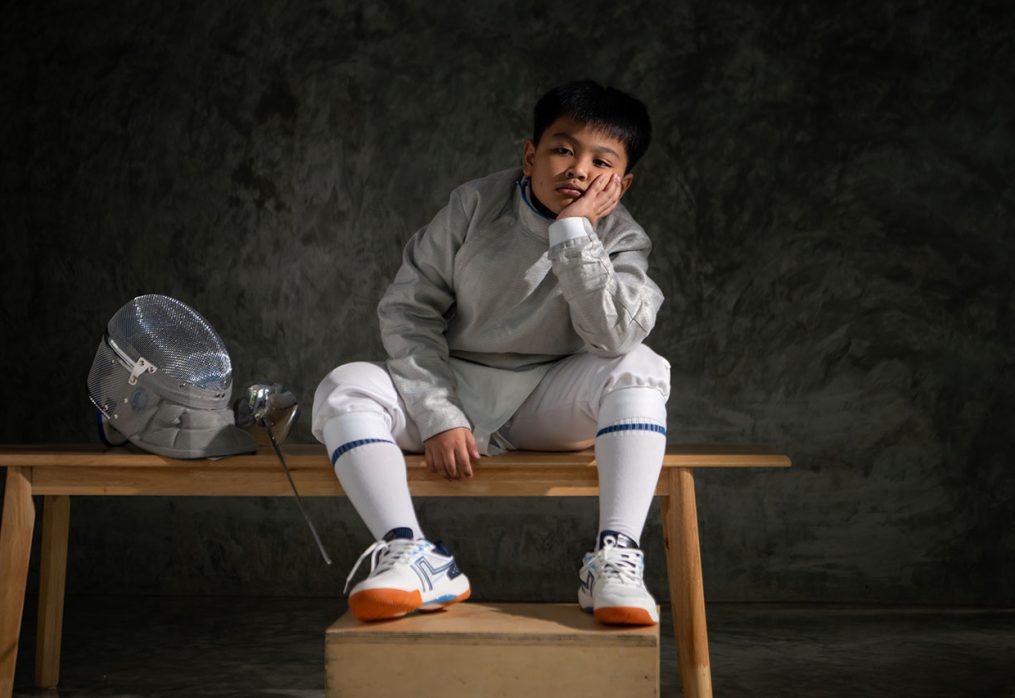

Why Your Child Quits Everything (And What To Do About It)
 Football for three weeks. Swimming for a month. Art class for two sessions. Karate, gymnastics, chess club. You have tried them all. Your child quits everything, usually right around the point where it starts to get hard, and you are left wondering whether you push harder, let them stop, or simply stop trying new things altogether.
You are not alone. This is one of the most common things parents talk to us about. And it is one of the most misunderstood, because the reasons a child quits everything are rarely what parents assume they are.
This article covers what is actually happening when a child quits everything, what the research says about persistence in children, and what parents can do, including choosing the right activity, to break the cycle.
Why a Child Quits Everything: The Real Reasons
When a child quits everything, the instinctive parental interpretation is that the child lacks grit, or that they are spoilt, or that they simply do not care about anything enough to stick at it. In most cases, none of these are accurate. The real reasons are more specific and more fixable.
They have not yet experienced what mastery feels like
Children quit activities most often at the point where the initial novelty fades and actual work begins. What they are avoiding is not the activity itself. It is the discomfort of being bad at something. A child who has never had the experience of working through that discomfort and coming out the other side with a real skill has no internal evidence that the effort is worth it. Every activity feels the same: fun at first, then hard, then not worth it.
The fix is not to force them through every activity regardless of fit. It is to find one activity where the conditions are right for them to experience mastery, perhaps for the first time, and let that experience become the new reference point.
They are afraid of failing publicly
Many children who quit everything are not quitting because they do not care. They are quitting because they care too much. The prospect of being seen to struggle, to be worse than other children, to make mistakes in front of a group, is more than they want to risk. Quitting before they fail feels safer than staying and risking public failure.
This is closely connected to confidence. A child who quits everything out of fear of failure is a child who does not yet have enough internal evidence of their own capability to tolerate visible struggle. We cover the foundations of this in our article on how to build confidence in a child, and understanding it properly changes how you approach the quitting problem entirely.
The activity does not suit how they learn
Not every child thrives in every environment. A child who is kinaesthetic and needs to learn by doing will struggle in an activity that is instruction-heavy and performance-based. A child who needs individual feedback will get lost in a large group class where the coach cannot give them personal attention. Sometimes when a child quits everything, what they are telling you is that the format does not suit them, not that they are incapable of commitment.
They have been rescued too many times
Research from the University of Pennsylvania found that children aged 4 to 7 persevere significantly longer when allowed to struggle through difficulty than when a parent steps in to help. The message a child receives when a parent intervenes at the first sign of frustration is: I do not think you can do this. Enough repetitions of that message, however well-intentioned, and the child starts to believe it. A child who has been consistently rescued has no experience of self-rescue, and so every new difficulty feels unsurvivable.
Screen time has reset their tolerance for difficulty
A child who spends significant time on screens is a child whose brain has been trained to expect immediate reward and constant stimulation. Activities that require patience, repetition, and slow progress feel, by comparison, almost unbearable. When a child quits everything after a few sessions, screen habits are worth examining. Not because screens are the whole problem, but because they raise the threshold for what counts as engaging. Our article on screen time vs martial arts explores this dynamic in detail.

When a Child Quits Everything: What Not to Do
Before we get to what works, it is worth being clear about what makes things worse, because most of the common responses to a child who quits everything are well-meaning but counterproductive.
Forcing them to finish regardless
There is a version of this advice that makes sense: teaching children that commitments matter and that they should honour what they have signed up for is genuinely valuable. The problem is that forcing a child to continue an activity that is genuinely wrong for them, wrong environment, wrong format, wrong timing, teaches them to endure misery rather than to develop persistence. Those are very different lessons. The goal is not to teach a child to stay in everything. It is to teach them to stay in the right things.
Bribing them to continue
Short-term, bribes work. A child who is offered a reward for finishing a term of swimming will usually finish a term of swimming. Long-term, external rewards undermine intrinsic motivation. Research by Carol Dweck and colleagues has consistently shown that rewarding children for activities they would otherwise do for internal reasons reduces their motivation once the reward is removed. A child who completes activities only when bribed has not developed persistence. They have learned to perform persistence for payment.
Making it about you
I have paid for this. We drove forty minutes to get here. I gave up my Saturday morning for this. All of these things may be true, and none of them are useful to say to a child who is struggling with an activity. They add guilt and pressure to a situation that already involves anxiety and discomfort. They also shift the child’s focus from their own experience of the activity to managing your feelings about it, which is not the frame you want them operating in.
What Actually Helps When a Child Quits Everything
The approaches that genuinely help when a child quits everything share something in common: they all involve building the child’s internal capacity for persistence rather than using external pressure to produce the appearance of it.
Find the right activity first
Not all activities are equally suited to building persistence in children. Activities that have very slow visible feedback, where a child cannot see their own progress for months, are harder to stick with than activities where progress is immediate and physical. Activities where the child is in a large group and rarely receives individual attention are harder than those where the coach knows their name and notices what they are working on.
Structured martial arts training, BJJ in particular, has several features that make it unusually good for children who quit everything. Feedback is immediate and physical: you can feel when something is working. Progress is visible: you are given new techniques to learn, you spar and improve. The coach-to-student ratio is manageable. And crucially, the culture of the mat makes failure normal. Every child fails in every session. Getting things wrong is part of the structure, not an exception to it. A child who quits everything because they cannot bear to fail publicly is in a very different environment on a mat than they are in a football team or a performance-based activity.
You can read more about how we structure the learning environment in our article on the 3D method, which explains the specific approach we use to keep children engaged across many months of training.
Set a minimum period before any quitting decision
One of the most practical things parents can do when a child quits everything is to establish a clear and consistent rule: we try new things for at least six to eight weeks before we decide. Not forever. Not indefinitely. Just long enough to get past the novelty phase and into the actual experience of the activity.
This is long enough to have a real opinion. It is also long enough, in a well-run programme, to start feeling the first traces of mastery, which is usually what shifts a child’s attitude from I want to stop to this is actually interesting. Tell the child the rule before you start. Make it about the agreement, not about you wanting them to continue. You said you would give it eight weeks, so we give it eight weeks. After that, we talk.
Praise the process, not the result
A child who quits everything is often a child who has been praised for being talented or clever rather than for working hard. Talent-based praise creates a child who needs to appear effortlessly good at things, because the moment they have to visibly struggle, their identity is at risk. Effort-based praise creates a child who values trying, adjusting, and persisting, because those are the things they have been told matter.
This is the core of Carol Dweck’s growth mindset research and it is relevant every time your child wants to stop something because they are not immediately good at it. Change the language: I noticed you kept trying even when it was hard. That is the thing worth naming.
Let them struggle without rescuing
This is perhaps the hardest one for parents to implement. When a child is frustrated and wants to stop, the parental impulse is to solve the problem. Resist it. Give them time. Ask questions: what would you try differently? What has worked so far? Be present without taking over. A child who works through a difficult moment and comes out the other side carries that experience forward. They now have evidence that struggle is survivable. The next time, it is a little easier to stay.
This connects directly to what we do on the mat. Our coaches are trained to support children through difficulty without removing it. We cover this in our article on why consistent training helps children behave better at school, which looks at the self-regulation skills that consistent training builds over time.
Address the confidence problem directly
When a child quits everything, you are often looking at a confidence problem wearing the costume of a quitting problem. The child is not fundamentally opposed to commitment. They are afraid of not being good enough. Addressing the quitting without addressing the confidence leaves the root cause untouched.
Our article on building confidence at home is a practical guide to the day-to-day things parents can do alongside structured training to build the internal sense of capability that makes persistence possible. The two things work together: what happens at home reinforces or undermines what children are building in class.
Why BJJ Works for a Child Who Quits Everything
We have worked with a lot of children who quit everything before they found BJJ. Parents come to us sometimes at the end of a long list of activities that have not stuck. They are a little sceptical. They have been here before.
What tends to be different about BJJ for these children is a combination of things. The social structure is non-competitive in the way that most team sports are. There is no bench. There is no first team and second team. Every child trains, every session. The feedback is private, between them and their training partner, rather than public in the way that scoring a goal or missing a shot is public. That distinction matters enormously for children who quit everything because of fear of public failure.
The progression system also helps. Stripes and belts in BJJ are earned slowly, through genuine demonstrated competence, not participation. A child who earns a stripe knows they earned it. That is the kind of evidence that changes a child’s relationship with effort, because it shows them, concretely, that working at something produces real results.
We also pay close attention to emotional experience on the mat. A child who trains with us gets coaches who notice when they are struggling, when they are not enjoying a session, when something is off. That individual attention is rare in large group activities and it is often what keeps children who would otherwise quit coming back. You can read about the emotional side of this in our article on how jiu jitsu builds emotional intelligence.
We structure our classes by age group specifically because the reasons a child quits everything at age 5 are different from the reasons at age 11. Our Penguins programme (ages 4 to 6) uses games and short challenges that build attention and tolerance for difficulty in age-appropriate ways. The Foxes programme (ages 7 to 9) introduces longer sequences and more genuine problem-solving. The Cranes programme (ages 10 to 12) and the Dragons programme (age 13 and above) work with children who are old enough to begin to understand their own patterns and make deliberate choices about how they respond to difficulty.
A Word on Realistic Expectations
A child who quits everything does not become a child who sticks at things after one term of BJJ. The pattern took years to form and it takes time to change. What we can say is that with the right environment, the right coaching, and parents who understand what is actually happening and why, most children who come to us with a history of quitting do eventually find their footing.
The first sign is usually not that they stop wanting to quit. It is that they start talking about class between sessions. They want to show someone a technique at home. They ask when the next class is. Those small things happen before the big shift, and they are worth noticing when they do. You can read more about what consistent attendance produces over time on our programmes page.
If you want to talk through whether our programme might suit your child, reach us on the contact page. We are used to this conversation, and we would rather spend ten minutes talking to you before your child starts than have them arrive at a class that is not the right fit.
When you are ready, book your child’s free trial here. There is no commitment, no pressure, and you are welcome to watch the full session before you decide anything.
Frequently Asked Questions: When a Child Quits Everything
Is it normal for a child to quit everything they try?
Yes, and it is more common than parents realise. Many children go through a phase of trying and leaving activities, particularly between ages 5 and 10. The reasons vary: fear of failure, activities that do not suit their learning style, a lack of prior experience with mastery, or simply not having found the right fit yet. It becomes a problem when the pattern persists into adolescence and prevents a child from developing any real depth of skill or experience in anything.
Should I force my child to finish what they have started?
It depends on the reason they want to stop. If they want to stop because something is genuinely wrong, the environment is unkind, the coach is not a good fit, the activity is causing real distress, then pushing them through is not building persistence, it is building the association that commitment leads to misery. If they want to stop because it is getting hard, because the novelty has worn off, because they are not immediately good at it, then a clear and fair minimum commitment period before they can make that decision is reasonable and usually helpful.
My child loved it at first and now wants to stop. Is that different from a child who quits everything immediately?
Yes. A child who loved an activity for several weeks and then hit a wall is usually dealing with what is sometimes called the second plateau, the point where the beginner’s progress slows and the harder work begins. This is the most common point at which children who will eventually become skilled at something want to stop. It is also the most important point to get through. If your child made it to this point, they are almost certainly capable of continuing. They just need support.
Could there be an underlying reason my child finds it hard to stick at things?
Possibly. Children with ADHD, anxiety, or sensory processing differences sometimes find commitment to structured activities harder than their peers for specific neurological reasons. If quitting is persistent, intense, and accompanied by other signs of difficulty with transitions or regulation, it is worth talking to your child’s GP or a child psychologist. That said, structured physical activity like BJJ is often particularly helpful for children with these profiles, and our coaches are experienced in adapting to individual needs.
How is BJJ different from other activities my child has already quit?
The main differences are in the feedback structure, the social environment, and the way failure is handled. BJJ provides immediate physical feedback. Progress is visible and felt, not abstract. Failure is normal and expected by everyone in the class, which removes the public shame element that often drives children to quit activities. Coaches work with small groups and can give individual attention. And the progression system rewards genuine effort over time. None of that guarantees your child will stick with it. But for children who have quit everything else, the structure is meaningfully different from most things they will have tried. Read our article on how jiu jitsu builds confidence in children for more on how the environment works.
How long before I know if it is working?
Give it at least eight weeks of consistent attendance before drawing any conclusions. The early weeks are often the hardest. Children who go on to train for years will tell you they wanted to stop in weeks three and four. The shift, when it comes, tends to be gradual: a bit more enthusiasm before class, a comment at home about something they figured out, a request to show you something. Watch for those signs. They come before the big changes and they tell you something real is happening.