

Does Martial Arts Make Kids Aggressive?
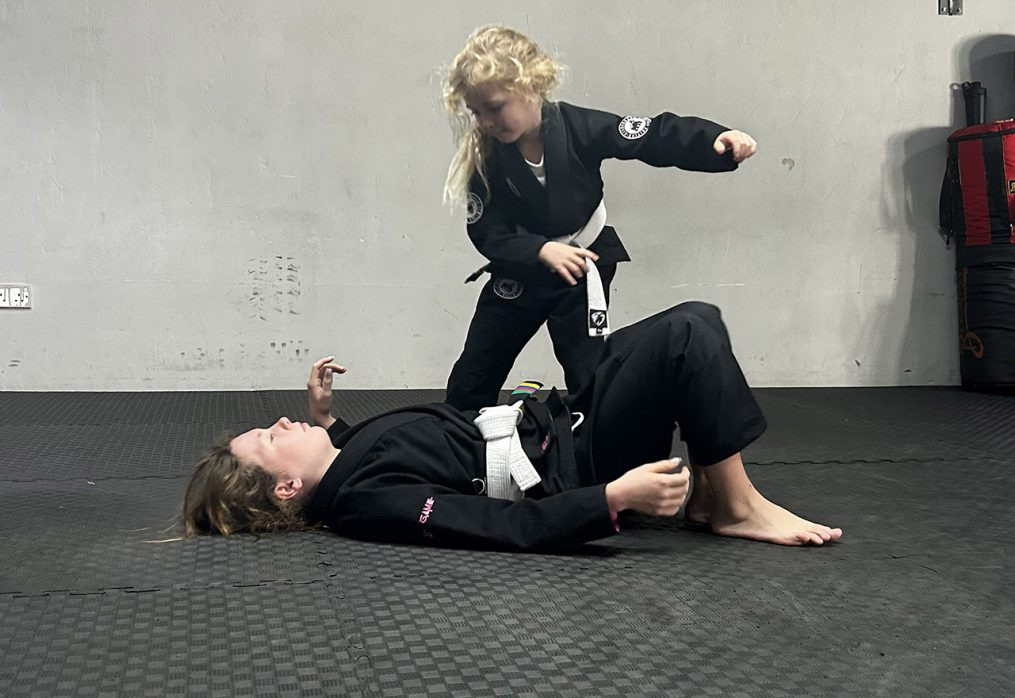
 It is one of the most common worries parents bring to us when they first walk through the door. They are interested in martial arts for their child. They have heard the benefits. But somewhere in the back of their mind sits a question they sometimes hesitate to ask: does martial arts make kids aggressive? Will my child come home from class throwing punches at their younger sibling? Will the training give them tools they then use the wrong way at school?
It is a fair concern, and parents who ask it are doing exactly what they should: thinking carefully about what they are putting their child into. The good news is that the question has been studied properly, and the evidence is reasonably clear. The slightly more complicated news is that the answer depends on a few specific factors that parents need to understand before they enrol their child anywhere.
This article walks through what the research actually shows when people ask does martial arts make kids aggressive, what the exceptions are, and how to choose an academy where the answer is reliably no.
What the Research Shows About Whether Martial Arts Makes Kids Aggressive
Let us start with the evidence. There is a reasonable body of research looking specifically at the question of whether martial arts makes kids aggressive, and the picture that emerges is more reassuring than many parents expect.
A meta-analysis by Anna Harwood and colleagues at Bar-Ilan University reviewed twelve controlled studies of martial arts interventions for children and adolescents. Of the twelve studies, eleven found that martial arts had a positive effect, meaning a reduction in aggression rather than an increase. The British Psychological Society’s coverage of this analysis summarised the finding plainly: martial arts reduce child and teen aggression, with significant reductions in physical aggression, verbal bullying, theft, and vandalism among participants.
A more recent systematic review and meta-analysis published in Adolescent Research Review in 2025 reached a similar conclusion. Across the studies analysed, martial arts interventions significantly enhanced prosocial behaviours and reduced aggressive behaviours in children. The strongest effects were seen in programmes running for at least 12 weeks with two or three sessions a week, which lines up exactly with the kind of consistent training schedule we recommend.
So when parents ask does martial arts make kids aggressive, the most direct answer based on the available research is no, and in most cases the opposite is true. Children who train in well-run martial arts programmes tend to show less aggression over time, not more.
Where Does the Worry Come From?
If the research is reasonably clear, why does the worry persist? A few reasons, and they are worth understanding.
The first is intuition. To a parent who has not trained themselves, it makes sense to assume that teaching a child to fight will make them more inclined to fight. The reasoning seems straightforward: give a child more capacity for violence and they will use it. The flaw in this reasoning is that it conflates physical capability with the desire to use it. The actual mechanism by which martial arts affects aggression is more nuanced, and we will get to it in a moment.
The second is media portrayal. Most depictions of martial arts in films and television show the dramatic, violent end of things. The Karate Kid, action films, MMA highlight reels. These create an impression of martial arts as fundamentally about combat. The day-to-day reality of a children’s BJJ class, lots of careful technique, supervised drilling, controlled exchanges, and very little that resembles a fight, looks almost nothing like that.
The third is one specific older study, occasionally cited, that found a small association between certain martial arts practices and antisocial behaviour. This study has been heavily criticised in subsequent research and has not been replicated. The weight of more recent and better-designed evidence points strongly in the other direction.
Why Martial Arts Reduces Rather Than Increases Aggression
It is worth understanding why the answer to does martial arts make kids aggressive is generally no. The reasons go beyond simple discipline and respect, and they tell us something useful about how children develop.
Children learn that aggression is not effective
This is perhaps the most important and least understood mechanism. In a real BJJ class, the child who tries to use aggression to win exchanges loses. They get tired faster. They make mistakes. They expose themselves to better technique. The training environment teaches children, viscerally and repeatedly, that staying calm and using technique works better than trying to be more aggressive. Over months and years, this changes how they relate to physical conflict in general. The aggressive response stops feeling like the obvious response, because they have direct experience of it not working.
They develop tools for managing big emotions
Children who lash out are usually children who have not yet learned how to manage difficult feelings. Frustration, embarrassment, anxiety, and anger are powerful and overwhelming for kids who have no internal tools for moving through them. Martial arts training, particularly grappling arts like BJJ, puts children in genuinely uncomfortable physical and emotional situations on a regular basis, and gives them practice in regulating themselves through it. Our article on how jiu jitsu builds emotional intelligence covers this mechanism in detail.
They build confidence and stop feeling threatened
Aggression often comes from a sense of threat. A child who feels insecure, who feels that they cannot defend themselves, who lives with low-grade fear of being picked on, may respond to perceived threats with disproportionate aggression. A child who has trained consistently knows, in a quiet, deep way, that they can handle themselves. That knowledge usually makes them less reactive, not more. They do not need to escalate because they are not afraid. We write about this dynamic in our piece on how jiu jitsu builds confidence in children.
The culture of the mat reinforces respect
A well-run martial arts academy has a culture in which respect is not just talked about but practised. Children bow on and off the mat. They tap when their partner gets the better of them. They thank their training partner after every round. These are not empty rituals. They build, over time, a habit of respect that transfers into other parts of a child’s life.
The Caveat: Not All Martial Arts Programmes Are Equal
Now for the more nuanced part. The research showing that martial arts reduces aggression is largely based on programmes that are well structured and well taught. The same research literature contains a smaller number of studies showing no effect, and very occasionally an increase in aggressive responses. When you dig into those studies, the pattern is clear: the programmes that produced negative or neutral results tended to be ones that emphasised competition over development, rewarded aggression in training, or lacked the thoughtful coaching that turns physical training into character development.
So the question of does martial arts make kids aggressive really becomes: does this specific martial arts programme make kids aggressive? And that is a question parents can investigate before they enrol.
Things that make a programme more likely to reduce aggression include experienced coaches who specialise in working with children, an emphasis on technique over force, a culture of mutual respect on the mat, age-appropriate curriculum, and a focus on development rather than winning. Our article on how to choose a jiu jitsu academy in Dubai covers what to look for in detail, and the principles apply equally to any martial art you are considering.
Things that should give parents pause include excessive emphasis on competition and ranking, coaches who shout or use intimidation, training cultures that valorise toughness over technique, and a lack of attention to the emotional state of the children in the room. If you visit an academy and the vibe feels combative rather than developmental, it probably is.

Why Grappling Arts Are Particularly Good for This Question
Among the various martial arts, grappling arts like BJJ have some specific features that make them less likely to produce aggressive behaviour. Striking arts, where the techniques involve hitting other people, naturally rehearse a particular kind of physical force. Good striking instructors work hard to teach control and restraint, and most do this well. But the underlying mechanic of the sport, generating power through striking, has a different psychological character to grappling.
BJJ removes striking entirely. Children learn to control, neutralise, and submit their training partner without hitting them. The skills they build are about leverage and patience, not about generating force. A child who has trained in BJJ for a year has spent zero time practising how to hit another person. They have spent hundreds of hours practising how to stay calm in physically difficult situations and how to use technique to solve problems.
This is one reason why, when parents specifically ask us does martial arts make kids aggressive, we are confident in our answer. Our experience of teaching BJJ to children in Dubai over years has been the opposite: children who train consistently with us become noticeably less reactive, not more. Our article on how jiu jitsu prevents bullying covers this directly, including how children who train tend to handle conflict more calmly than children who do not.
The School Behaviour Question
One specific concern parents raise is whether their child will come home from class and use what they have learned on a sibling, classmate, or friend. This is worth addressing directly.
In our experience, children who train consistently almost never use their techniques inappropriately at home or at school. The reason is not that we forbid it, although we do reinforce that techniques are for class and not for everyday life. The reason is that the training environment teaches them that there is a context for these skills, and that context is the mat with a willing training partner. Outside of class, the same rules of behaviour apply that always have. They cannot push their sister. They cannot grab another child at school. The training does not change this. If anything, it reinforces it, because children who train understand the seriousness of physical contact in a way that untrained children do not.
What parents tend to notice instead is that their child becomes calmer and more settled at school, not more disruptive. We cover the mechanism by which consistent training improves school behaviour in our article on why consistent training helps children behave better at school. The same processes that reduce aggression are also the ones that improve focus and conduct in the classroom.
What About Children Who Are Already Aggressive?
This is the version of the question that worries parents most: does martial arts make kids aggressive if their child already has a tendency to be aggressive? Will giving them training tools amplify what is already there?
The research is encouraging on this point as well. Several studies have specifically looked at children who present with externalising behaviours, things like physical aggression, oppositional behaviour, and conduct problems, and have found that martial arts training tends to reduce these behaviours rather than amplify them. In some cases, the effect is particularly strong precisely because martial arts gives children a structured, supervised outlet for energy and intensity that they otherwise express in unhelpful ways.
This does not mean martial arts is a substitute for proper psychological support if your child is dealing with significant behavioural challenges. It is not. But for most children whose aggression sits in the normal-to-elevated range and is connected to things like frustration, low confidence, or difficulty regulating emotions, structured training is far more likely to help than to hurt.
If your child is already showing aggressive tendencies, talk to the academy before enrolling. A good coach will want to know, will adapt their approach, and will keep an eye on how your child is engaging with training. Our article on building confidence at home also has practical suggestions for what parents can do alongside training to address the underlying drivers of aggressive behaviour.
Screen Time and the Aggression Question
Worth noting briefly: when parents worry about whether martial arts makes kids aggressive, they often do not consider the comparison. What is your child doing instead? For many children in Dubai, the alternative to structured physical activity is screen time, and the research on the relationship between certain types of screen content and child aggression is rather more concerning than anything in the martial arts literature.
This is not to suggest that screens are uniformly bad. But the question of what shapes a child’s behaviour is one of comparison. A child who trains twice a week and watches less is, on balance, almost certainly developing in healthier directions than a child who does the reverse. Our article on screen time vs martial arts looks at this comparison in more depth.
How to Choose an Academy Where Aggression Is Not a Concern
If you are weighing up the question does martial arts make kids aggressive in a specific context, what you really need to do is visit some academies and watch a class. Here is what to look for.
Watch how the coaches talk to the children. Are they patient? Are they explaining things or are they barking orders? Children pick up the emotional register of their coaches and carry it into how they interact with each other.
Watch how the older children treat the younger ones. In a healthy academy, more experienced students naturally help less experienced ones. They do not posture or dominate. If you see older students bullying or showing off, that is a red flag for the culture.
Watch what happens when a child is struggling or upset. Does the coach notice? Does the academy have a thoughtful response, or is the child left to manage on their own? The way an academy handles emotional difficulty tells you a great deal about whether training there will reduce or increase a child’s aggressive tendencies.
Look at the structure of the curriculum. Children should be grouped by age. Our own programmes separate children into the Penguins for ages 4 to 6, the Foxes for ages 7 to 9, the Cranes for ages 10 to 12, and the Dragons for ages 13 and above, because the developmental needs of each group are different and lumping them together undermines the careful coaching that prevents aggression from being reinforced.
Ask about the teaching philosophy. Our 3D method, for instance, is deliberately structured to develop self-regulation and reflection, not just technique. A coach who can articulate why they teach the way they do, beyond just we are going to learn this move, is usually a coach worth training with.
Getting Started
The best thing you can do if you are worried about whether martial arts will make your child aggressive is to come and watch a class. See for yourself how the coaches handle children, how the structure works, and how children leave the academy at the end of a session: usually tired, often smiling, and almost never riled up.
You can check our class times on the schedule page, see how we structure our programme on the programmes page, and reach us with specific questions on the contact page. We are happy to talk through your child’s situation before any trial, particularly if behaviour or aggression has been a concern at school or at home.
When you are ready, book your child’s free trial here. Watch the session yourself. We think you will find that the answer to does martial arts make kids aggressive looks very different once you have seen what a well-run class actually looks like.
Frequently Asked Questions: Does Martial Arts Make Kids Aggressive?
Does martial arts make kids aggressive in the short term, even if it reduces aggression long term?
This is a reasonable concern but the evidence does not support it. Studies tracking children over weeks and months tend to show steady reductions in aggressive behaviour, not initial spikes that then settle. If anything, the early sessions of training often produce calmer behaviour as children begin to channel their physical energy into something structured.
What if my child already has a temper?
In most cases, structured martial arts training is one of the better things you can do for a child with a temper, because it gives them practice in managing intense physical and emotional sensations in a controlled environment. Talk to the academy before enrolling so the coaches know what to look for, and pair the training with appropriate support at home or from a professional if the temper is causing real problems.
Are some martial arts more likely than others to make kids aggressive?
The evidence is mixed and the differences are smaller than many people assume. What matters most is the quality of the academy and the coaching philosophy, not the discipline itself. That said, grappling arts like BJJ, which remove striking entirely, naturally rehearse different physical behaviours than striking arts. We cover this comparison in more detail in our article on kids martial arts in Dubai: BJJ vs karate vs taekwondo.
Will my child use techniques on their siblings?
Almost never, in our experience. Children who train consistently develop a strong sense that techniques belong on the mat with a willing partner, not at home with a sibling. We reinforce this directly, but the main reason it does not happen is that the culture of the academy makes the boundary obvious. Children understand it without needing to be lectured.
What signs should I watch for that the training is making my child more aggressive rather than less?
If you genuinely notice an increase in aggressive behaviour, increased temper at home, more conflict at school, increased physical roughness with siblings, talk to the coaches. In most cases, the coach will have insight into what is happening on the mat and may suggest adjustments. If the academy’s response is dismissive or defensive, that itself is a sign you might be in the wrong place.
How long does it take to see whether training is having a positive effect?
Small shifts often appear within four to eight weeks of consistent attendance. More noticeable changes in temperament and behaviour usually emerge over three to six months. The key word is consistent. Occasional training does not produce the same effects as regular weekly attendance. Our article on why your child quits everything has more on the importance of staying with it long enough to see real change.