
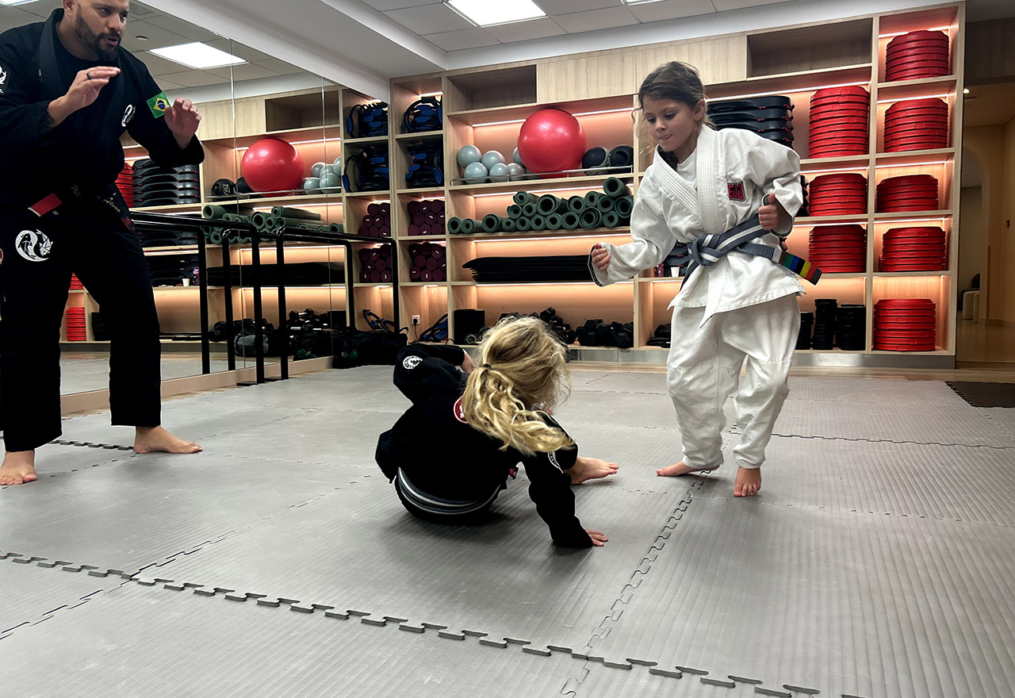

What Our Coaches Look for in the First Few Weeks of Training.
Drop your child off for their first few weeks of a new activity and you will probably ask the coach the same question most parents ask: how are they doing? The honest answer is rarely about technique. What coaches notice in new students in those early weeks has almost nothing to do with how neatly they can execute a move, and almost everything to do with a handful of quieter signals that tell us far more about how a child is likely to develop.
We get asked this a lot at The Origami Factory, usually by a parent standing at the edge of the mat trying to read their own child’s face. So it is worth setting out, plainly, what coaches notice in new students during those first sessions, why it matters more than the technique itself, and what you can do at home to support it.
What Coaches Notice in New Students in the First Few Weeks
New students are not being judged on skill. Nobody expects a six year old walking onto a mat for the first time to move well. What we are actually watching for is how a child responds when something is unfamiliar or a little bit hard. Does she try the move again after getting it wrong. Does he glance at a partner and copy rather than give up. Does she ask a question, or does she quietly step back and wait for someone else to go first.
These are the signals that make up what coaches notice in new students, and none of them require any prior experience with martial arts, sport, or anything physical at all. A child who has never thrown a punch or tried a takedown can still show us, within the first few sessions, whether they are the sort of person who leans into a challenge or leans away from it. That single observation tells us more about where to start with a child than any amount of raw natural ability would.
There are a few specific behaviours that come up again and again in what coaches notice in new students. How a child reacts to losing a small exchange, a point, a round, a simple game, is one of the clearest. So is how they respond the first time they have to tap out or admit something is not working. Neither of those moments is about skill. Both tell a coach an enormous amount about a child’s relationship with failure, which is precisely the sort of signal that matters far more than anything technical in the opening weeks.
The Discover Phase: Where the Watching Really Starts
Our whole approach runs on the 3D Method, Discover, Develop, Demonstrate, which is explained in more detail here. The first weeks of any new student’s time with us sit squarely inside Discover, and this is deliberate. Discover is not about teaching technique quickly. It is about giving a child room to try something new while a coach quietly notices how they approach it.
This is really where what coaches notice in new students becomes most useful. During Discover, a coach is not correcting every mistake. Instead they are watching how a child handles correction itself: whether feedback lands as useful information or as something to flinch away from. A child who takes a correction, tries again, and seems almost pleased to have something new to work on is telling us a great deal, and it usually has nothing to do with whether they are naturally coordinated.
Develop and Demonstrate, the two phases that follow, build directly on whatever a coach learns during those early weeks. A child who is shown early on to respond well to gentle correction gets coached differently, over time, from a child who needs more encouragement before feedback lands. That is really the whole point of paying such close attention at the start; what coaches notice in new students in week one quietly shapes how that child is coached for months afterwards, long after anyone is consciously thinking about first impressions.
Common Misconceptions Parents Have About the First Few Weeks
The biggest misconception is that the first few weeks are a tryout, and that a child needs to look promising early or they are falling behind. That is simply not how it works here, and it is not really what coaches notice in new students at all. We have written before about what to look for before you enrol your child, and one point we make there is worth repeating: a slow, hesitant start is not a red flag. It is completely ordinary.
The second misconception is that confidence has to arrive before a child starts trying. Parents often wait for a child to feel ready before signing up, when in our experience it usually works the other way round. Sport tends to build confidence rather than require it, and coaches see this pattern constantly: a quiet, uncertain child in week one is often a completely different, more settled child by week six, simply from repeated small experiences of trying something and surviving it.
The third misconception is that a child who seems bored or distracted in the first weeks is not interested. Sometimes that is true, but more often it is simply a child working out whether this is a safe place to be imperfect. This is exactly why what coaches notice in new students includes body language and eye contact as much as effort on the mat itself.
A fourth misconception, and one we hear from parents of siblings especially, is that one child’s early progress predicts how a younger brother or sister will do. It rarely does. Two children from the same family can show completely different signals in their first few weeks, and comparing them tends to do more harm than good. What coaches notice in new students is always about that particular child, in that particular moment, never a family pattern.

A Composite Example From the Mats
One example we see often, a composite of a few real students rather than any single child, is a Fox aged eight who joined us visibly reluctant, arms crossed, staying close to the wall during the first class. Nothing about that first session suggested a natural fit for BJJ. What our coach actually noticed, though, was that by the end of the class he had started mimicking a partner’s movements without being asked, even though he never volunteered to go first.
That small, easy to miss behaviour, quietly copying rather than withdrawing completely, is a textbook example of what coaches notice in new students that a parent watching from the sidelines might not clock as significant at all. Three weeks later he was asking to demonstrate a technique to the rest of the group. Nothing about his physical ability had changed dramatically in that time. What had changed was his sense that trying was safe.
A second, equally composite example involves a Penguin, just five years old, who cried at drop off for the first two sessions and clung to the doorway rather than joining the group. Her parents assumed BJJ was simply not for her. Her coach, watching closely, noticed something different: by the third class she was standing at the edge of the mat rather than at the door, and by the fifth she joined the warm up without being asked. That gradual shift, not a dramatic breakthrough, is a far more typical version of what coaches notice in new students than the sudden transformation parents sometimes hope for.
What This Looks Like at Each Age
What coaches notice in new students shifts by age, because what counts as a meaningful signal is different for a four year old than for a thirteen year old. With our Penguins (4 to 6), we are mostly watching whether a child can separate from a parent and follow a simple instruction from someone new, which is often the real test in those early weeks rather than anything physical.
With Foxes (7 to 9), we start watching for how a child handles being wrong in front of peers, since shy children in particular often reveal much more about themselves in how they recover from a mistake than in how they perform when things go well. Cranes (10 to 12) are old enough that we watch for something closer to self-awareness: do they know when they are getting frustrated, and what do they do about it. With our teenage Dragons (13 and above), what coaches notice in new students often centres on whether a teenager is there because they chose to be, which tends to show up quickly in how much initiative they take without being prompted.
Across every age group, one of the clearest early signals is attention. A child who cannot settle into the structure of a class in the first few sessions is often the same child who struggles to focus more generally, and that is useful information for us, not a problem to be solved before they can start.
It is also worth saying that what coaches notice in new students is rarely a single moment. It is a pattern built up across several sessions, which is one reason we discourage parents from reading too much into any one class, good or bad. A brilliant first session does not guarantee anything, and a rough one does not predict anything either. Consistency of attendance in those early weeks matters far more than how any single class goes.
What You Can Do at Home to Support This
You do not need to prepare your child for their first few weeks in any formal sense, but a few small things at home genuinely help. The most useful thing, by some distance, is how you talk about effort versus outcome. Research from the University of Chicago found that toddlers praised for effort rather than ability were more likely, five years later, to prefer challenging tasks and to believe ability can improve with practice, based on a study following 53 children from as young as one year old. That single finding lines up closely with what coaches notice in new students: children who have been praised for trying, not just for succeeding, tend to arrive already more willing to have a go.
So when your child comes home from an early session, resist the urge to ask whether they were good at it. Ask what they tried, or what felt hard. That framing quietly reinforces the exact behaviour that what coaches notice in new students is built around, without turning it into pressure.
If your child has a habit of giving up on new things quickly, it is worth reading our piece on why some children quit everything, since the pattern that shows up at home in week one of any new hobby is usually the same pattern a coach will notice on the mat.
Sleep and screen time in the hours before a session matter more than most parents expect too. A child who arrives overtired or wound up from a screen right before class is simply less able to engage with anything unfamiliar, which can muddy what coaches notice in new students in ways that have nothing to do with the child’s actual temperament. A calm half hour before a class, even something as simple as a quiet car ride, tends to make a noticeable difference to how a child shows up in those first few weeks.
How We Track What We See, Beyond the Belt
None of this observation is informal or left to memory. What coaches notice in new students during Discover feeds directly into how we measure character development, which tracks focus, resilience, confidence, discipline, and social skills across a term, not just technical progress toward the next belt or stripe. A child who is struggling technically but showing real growth in how they handle setbacks is, by our measure, doing exactly what they should be doing.
This tracking is also why we do not rush early weeks. The right age to start matters less than most parents assume, because the Discover phase is designed to meet a child wherever they are, rather than expecting a fixed starting point. If you want to see this in action before committing, our programmes page sets out what each age group actually covers, class by class.
We also make a point of sharing what we see with parents directly, rather than keeping it to ourselves. At pickup during those first few weeks, we would rather tell you that your child hesitated but tried again than simply say the class went well. That specific kind of feedback, grounded in what coaches notice in new students rather than a generic update, is usually far more useful to a parent trying to work out how their child is really doing.
Frequently Asked Questions
What do coaches actually look for in a child’s very first class?
Mostly how a child responds to something unfamiliar, not how well they perform it. That is the heart of what coaches notice in new students in a first session: willingness to try, ability to copy or follow instruction, and how a child reacts to getting something wrong in front of others.
My child seemed shy and withdrawn in their first few classes. Is that a problem?
No, and it is one of the most common things we see. A slow start is not what coaches notice in new students as a warning sign. Small shifts, like copying a partner or making eye contact with a coach, matter far more than confidence on day one.
How many weeks does it usually take before a child settles in?
Most children need three to six weeks of regular attendance before the class structure feels familiar rather than overwhelming. This is squarely within the Discover phase, and it is exactly the window where what coaches notice in new students tends to be most informative for us.
Should I tell the coach if my child is nervous about starting?
Yes. It helps us know what to expect and means we can watch for the right signals from the very first session. Nothing about what coaches notice in new students requires a child to arrive confident; it just helps us understand the starting point.
Do coaches compare new students to each other?
No. What coaches notice in new students is always about that child’s own starting point and how they move from it, never a comparison against other children in the class. Two children can be at completely different stages and both be doing exactly what we would hope to see.
What is the single most encouraging sign a coach can see in a new student’s first few weeks?
Trying again after getting something wrong. Of everything that makes up what coaches notice in new students, that one behaviour, more than natural ability or early confidence, predicts how well a child will settle in and grow with us.
If you are weighing up whether your child is ready to start, the truth is there is very little to prepare beyond showing up. What coaches notice in new students during those first weeks is exactly why we built the programme this way: to meet a child where they are, not where we expect them to be. Take a look at our programmes for Penguins, Foxes, Cranes and Dragons, and when you are ready, you can book an AED 99 trial class to see for yourself what those first few sessions actually look like.