

The Difference Between Discipline and Punishment (And Why It Matters).
You send your child to their room, or you take away the tablet, and for about ten minutes it feels like it worked. Then the same behaviour shows up again the next day, and you’re back where you started, just more tired and a bit more frustrated with yourself. If you’ve ever wondered whether what you’re doing counts as discipline or is really just punishment, you’re asking exactly the right question. Discipline vs punishment for children is not a wording debate. It’s the difference between a child who learns something and a child who just waits it out.
Most parents were disciplined the way their own parents were disciplined, so it’s rarely something anyone sits down and chooses on purpose. This guide walks through what actually separates the two, why punishment feels effective in the moment even when it isn’t doing much long term, and what a more useful approach looks like in your house this week. Getting clear on discipline vs punishment for children early on saves you a lot of trial and error later, and it’s worth ten minutes of reading before the next difficult moment arrives.
What Punishment Actually Teaches a Child
Punishment is built around making a behaviour unpleasant enough that a child stops doing it, right now, in front of you. Shouting, removing a privilege on the spot, a smack, a long time-out with no explanation. It’s reactive. It’s about the parent’s frustration finding an outlet as much as it’s about the child’s learning, and that’s usually where discipline vs punishment for children starts to pull apart without anyone quite noticing.
The trouble is that punishment mostly teaches a child how to avoid getting caught, not how to behave differently when nobody’s watching. A child sent to their room for hitting a sibling learns that hitting leads to being sent to their room. They don’t necessarily learn what to do with the anger that made them hit in the first place. That gap is exactly where the discipline vs punishment for children question starts to matter, because the two approaches aim at completely different targets.
There’s decent research behind this. A large Dutch cohort study published in PLoS ONE followed more than 4,000 children from age three to age six and found that harsh discipline, things like shouting, threatening, or name-calling, predicted higher behavioural problems later on, even after accounting for the child’s existing behaviour. The effect held up whether it was the mother or father doing the disciplining. You can read the full study on harsh parental discipline and children’s behavioural problems if you want the detail behind it. It’s one of the clearer pieces of evidence that the harsher end of the discipline vs punishment for children spectrum tends to backfire rather than build better behaviour.
Discipline vs Punishment for Children: What’s Actually Different
Discipline comes from the Latin word for teaching, and that’s the practical difference. Discipline is about building a skill or an understanding over time. Punishment is about stopping a behaviour in the moment. Both can look similar from the outside, a consequence follows a behaviour either way, but the intent and the follow-through are different, and that intent is really the whole question behind discipline vs punishment for children.
A disciplined consequence is connected to the behaviour, explained in language the child can understand, and consistent whether you’re tired or not. A punished consequence is often disconnected from the behaviour (no tablet for a week because you argued at dinner), delivered in anger, and inconsistent depending on your mood that day. Children notice inconsistency faster than adults expect, and inconsistency is often what makes discipline vs punishment for children feel like the same thing when it really isn’t.
Another useful marker: discipline usually involves the child in some way, even young children. A quick “what could you do instead next time” question turns a consequence into a discipline moment. Punishment rarely asks the child anything, which is another practical way to spot discipline vs punishment for children in your own house. It’s something done to them, not with them.
Why Punishment Feels Like It Works (And Why That’s Misleading)
Punishment often produces an immediate result. The child stops the behaviour, at least while you’re standing there. That immediate payoff is powerful, and it’s exactly why so many parents default to punishment under pressure, even ones who’d say in a calm moment that discipline vs punishment for children is a distinction they care about.
The problem is that “stopped in front of me” and “learned not to do it” are different outcomes, and punishment only reliably delivers the first one. This is the core of why discipline vs punishment for children keeps coming up in parenting research and in our own conversations with parents at the academy: the short-term win of punishment can quietly cost you the long-term goal, which is a child who makes better choices even when you’re not in the room.
We see this pattern constantly with students who are working through why they quit everything the moment it gets hard, and it’s often a discipline vs punishment for children pattern showing up in a different context. Often, harsh consequences at home have taught them that mistakes are dangerous rather than normal, so they avoid situations where they might make one. That’s punishment’s long game, and it’s rarely the one parents intended to play.

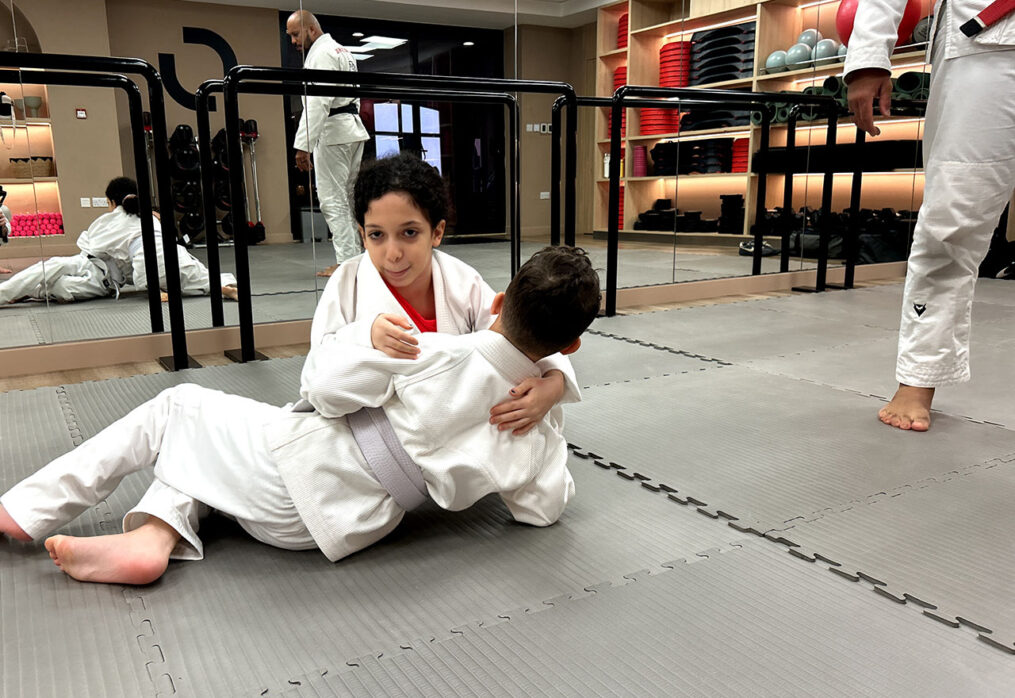
A Realistic Example From the Mat
One of our coaches describes a student we’ll call Sam, age nine, a composite of the Foxes and Cranes-aged kids we see most often, and a fairly typical example of what discipline vs punishment for children looks like once it reaches the mat. Sam’s parents had been using a fairly strict punishment system at home: lose a privilege for every mistake, no exceptions, no conversation. On the mat, Sam froze the moment he got a technique wrong. He’d stop mid-drill, apologise repeatedly, and wait to be told off.
Our coaches don’t punish mistakes in training, because mistakes are literally how BJJ is learned. Instead, a wrong move gets a quick correction and another go. Within a few weeks, Sam stopped apologising for errors and started asking questions about them instead, “why didn’t that work” rather than “sorry, sorry.” His parents noticed the shift carried home too, once they saw the same discipline vs punishment for children pattern working on the mat and started adjusting how they responded to mistakes at the dinner table.
This is a common shift, not a rare one. Once a child experiences a mistake being treated as information rather than a crime, the discipline vs punishment for children gap starts closing on its own, because the child stops needing to hide errors from you.
What Discipline Looks Like in Practice This Week
Start with connection before correction. A consequence lands better when a child feels the adult is on their side and not just angry at them. That doesn’t mean skipping consequences, it means delivering them calmly rather than as an outlet for your own frustration, which is a small habit that shifts discipline vs punishment for children more than most parents expect.
Make consequences related to the behaviour where you can. Broke a rule about screen time, lose screen time, not dessert. Related consequences teach cause and effect. Unrelated ones just teach that you’re upset, which a child already knew. This single shift does more to move discipline vs punishment for children in the right direction than almost anything else on this list.
Explain the reasoning, even briefly, even to a four-year-old. “We don’t hit because it hurts your brother and hurting people isn’t okay here” takes five seconds and teaches far more than silence or shouting. If your child is younger, our guide on whether praise helps or hurts children covers the flip side of this same idea, since how you respond to good behaviour shapes a child just as much as how you respond to mistakes, and it sits right alongside discipline vs punishment for children as a topic worth getting right early.
Stay consistent even when you’re exhausted. A rule that applies on Monday and gets ignored on Friday because you’re tired isn’t discipline, it’s just punishment that shows up unpredictably. Consistency is the single hardest part of the discipline vs punishment for children question to maintain and the single most important one.
How We Apply Discipline, Not Punishment, at The Origami Factory
Everything we do runs through the 3D Method: Discover, Develop, Demonstrate, a structure built specifically around the discipline vs punishment for children distinction we’ve been describing. In the Discover phase, a student is allowed to try something and get it wrong without any negative consequence attached to the mistake itself. In the Develop phase, coaches correct technique directly and immediately, connected to the specific error, not to the child’s character. In the Demonstrate phase, students show what they’ve built, and the whole structure is designed so that correction always happens in service of the next attempt, never as a punishment for the last one.
This is deliberate. We track character development, not just belt progress, and one of the clearest markers of that development is whether a student starts correcting their own mistakes before a coach has to step in, which is one of the more practical signs that discipline vs punishment for children is heading in the right direction at home too. That shift essentially never happens in a punishment-heavy environment, because a child who’s afraid of getting something wrong won’t experiment enough to improve. You can read more about how the 3D Method is structured across every age group.
We also see this play out differently by age. Younger students in Penguins and Foxes need very short, very concrete explanations tied to an immediate consequence. Older students in Cranes and Dragons can handle a longer conversation about why a rule exists, and often respond better to that than to any consequence at all. If your child has stopped engaging altogether, our piece on why teenagers disengage covers how years of mismatched discipline can build up into full withdrawal by the teenage years, and it connects closely with our article on what’s actually going on when a child has no motivation, since both often trace back to years of discipline vs punishment for children going unexamined.
Common Mistakes Parents Make When Trying to Discipline
Punishing in anger is the biggest one. A consequence decided in the heat of the moment is rarely proportionate and rarely consistent, and children can tell the difference between a calm boundary and an angry outburst even when the actual words are similar, which is often the fastest way to tell discipline vs punishment for children apart in a real household.
Over-explaining to a young child is a close second. A three-year-old doesn’t need a five-minute lecture, they need a short, clear reason and a consistent response. Save the longer conversations for when a child is old enough to actually process them, usually somewhere around seven or eight, which is roughly when the discipline vs punishment for children conversation can start to include the child directly.
Withdrawing affection as a consequence is another common trap, and it’s one of the clearest markers that discipline vs punishment for children has tipped toward the punishment side. Consequences should be about the behaviour, never about whether a child is loved or accepted, and children pick up on the difference faster than parents expect.
Finally, giving up on a boundary because enforcing it is exhausting. Inconsistent discipline is often worse than no boundary at all, because it teaches a child that rules are negotiable if they push hard enough or wait long enough, and it’s one of the quieter ways discipline vs punishment for children gets muddled in a busy household. If you’ve noticed your own child quitting on things the moment they get difficult, it’s worth reading about how to build resilience in children, since the two patterns are more connected than they first appear.
Frequently Asked Questions
What is the real difference between discipline and punishment?
Discipline teaches a skill or understanding over time and stays connected to the behaviour. Punishment stops a behaviour in the moment, often through fear or discomfort, without necessarily teaching the child what to do differently. The discipline vs punishment for children distinction really comes down to intent: are you teaching, or are you just reacting.
Is it ever okay to punish a child?
Occasional firm consequences aren’t the issue. The concern is a pattern of harsh, inconsistent, anger-driven responses used as the main tool for behaviour change. Research on discipline vs punishment for children consistently shows that harsh, punitive approaches are linked to more behavioural problems over time, not fewer.
How do I discipline a toddler who’s too young to reason with?
Keep it short and immediate. A firm, calm “no, that hurts” paired with removing the child from the situation teaches far more than a lecture they can’t process. Consistency matters more than complexity at this age, and this is one of the earliest points where discipline vs punishment for children starts to shape a child’s expectations.
My child seems to only respond to punishment. What am I missing?
This usually means the discipline being used isn’t consistent or isn’t connected closely enough to the behaviour. A child who’s only ever experienced punishment may need time to trust that a calmer, more consistent approach will still hold a boundary. Give it several weeks before assuming discipline vs punishment for children as a shift isn’t working.
Does discipline vs punishment for children look different at different ages?
Yes. Younger children need short, concrete, immediate responses. Older children and teenagers respond better to explanation and involvement in setting the consequence itself. What stays the same across every age is consistency and keeping the consequence connected to the actual behaviour.
How long does it take to see a difference after switching from punishment to discipline?
Most parents we talk to notice a shift within four to six weeks of consistent effort, though it can take longer if punishment has been the main approach for a long time. The discipline vs punishment for children shift is gradual, not instant, and consistency matters more than any single conversation.
Getting this right isn’t about being a softer parent, it’s about being a more effective one. The Origami Factory builds every class around teaching through mistakes rather than punishing them, using the 3D Method across every age group from Penguins to Dragons, with discipline vs punishment for children built into how every coach is trained to respond. You can see how our programmes for kids BJJ classes in Dubai are structured, or book a kids BJJ trial class in Dubai for AED 99 and see how your child responds to a coach who corrects without punishing.