

Does Praise Help or Hurt Children?
 Your child finishes something, a spelling test, a somersault, a hard week at school, and you say the thing every parent says: well done, you’re so clever. It feels supportive. It usually is. But if you’ve ever caught yourself wondering whether that instinct is actually helping, you’re asking a fair question: does praise help or hurt children? The honest answer is both, and it depends almost entirely on what you’re praising and how often you say it.
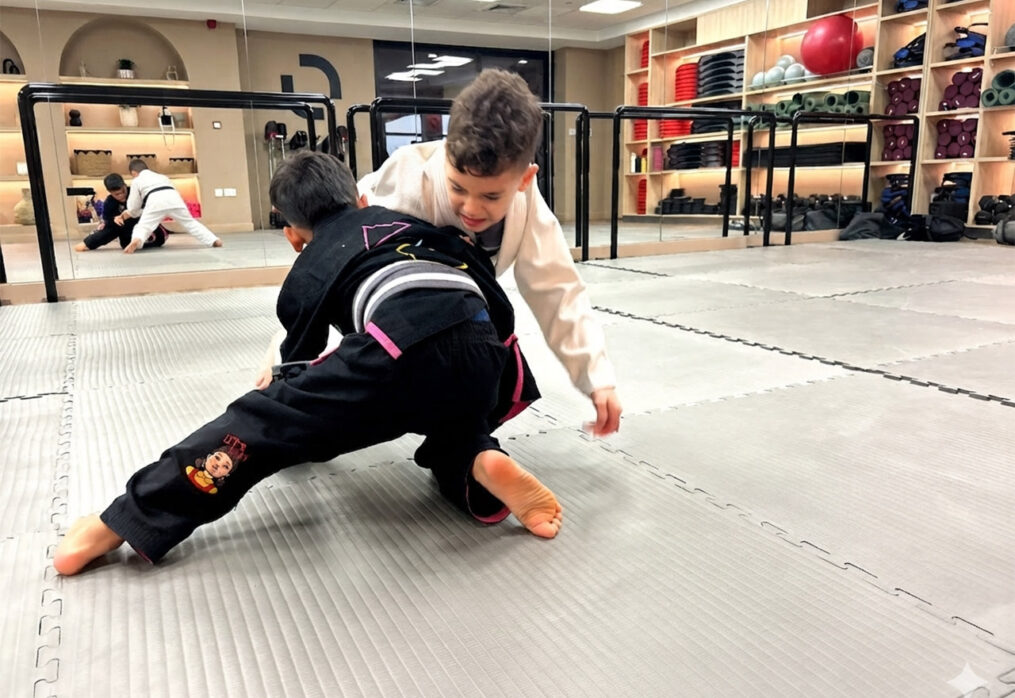
At The Origami Factory, we see this play out every week on the mat. Children who’ve grown up hearing constant praise for being “the smart one” or “a natural” often freeze the moment a technique doesn’t come easily.
Children praised for effort, for trying again, for working through frustration, tend to keep going. That gap isn’t about talent. It’s about the kind of praise a child has grown up hearing, and it’s exactly why the question of whether praise helps or hurts a child deserves more thought than most parents give it.
The Question Every Parent Asks: Does Praise Help or Hurt Children?
Most parents don’t set out to praise the wrong way. You want your child to feel good about themselves, so you tell them they’re brilliant, gifted, a natural at whatever they’ve just done. It’s an instinct built on love. But developmental psychologists have spent decades studying this exact instinct, and the findings are consistent: praise aimed at a child’s traits (smart, talented, a natural) behaves very differently from praise aimed at their process (effort, strategy, persistence).
Understanding does praise help or hurt children starts with separating those two categories, because they produce almost opposite results in how a child responds to difficulty. Parents rarely think about it this precisely, which is exactly why does praise help or hurt children remains such a common, and often misunderstood, question in our intake conversations with new families.
Trait praise tells a child something about who they are. Process praise tells a child something about what they did. The first feels good in the moment and often backfires later. The second takes a little more effort to deliver but builds something that lasts. If you want a genuinely useful answer to does praise help or hurt children, this distinction is the whole answer.
The Two Kinds of Praise, and Why the Difference Matters
Trait praise sounds like: “You’re so smart.” “You’re a natural athlete.” “You’re just gifted at this.” It attaches success to a fixed quality the child either has or doesn’t have. The problem shows up the first time that child hits something genuinely hard. If being smart is what earned the praise, then struggling suggests they aren’t smart after all. Many children respond by avoiding the challenge altogether, because avoiding it protects the identity the praise built.
Process praise sounds different: “You worked really hard on that.” “I noticed you kept trying different approaches.” “You didn’t give up when it got difficult.” This kind of praise attaches success to something the child controls and can repeat. When a child hits a wall, the lesson isn’t “I’m not talented enough,” it’s “I need to work harder or try a different strategy.” That’s a far more useful belief to carry into a maths exam, a friendship problem, or a tournament. That’s the practical, everyday version of does praise help or hurt children that we’d ask every parent to hold onto.
This is the practical core of does praise help or hurt children as a question. It rarely hurts to notice a child’s effort. It quite often hurts to tell them they’re special, gifted, or the best, particularly if you say it often and it becomes the main way they hear about themselves. Coaches and teachers who work with children daily tend to notice this pattern quickly, which is part of why does praise help or hurt children comes up so often in parent conversations at pickup.
What Happens When Praise Becomes the Point
There’s a second problem that has nothing to do with trait versus process, and it’s simply volume. Children who receive constant praise, for everything, regardless of effort or outcome, can become dependent on it. The praise itself becomes the goal rather than a side effect of doing something well. You’ll sometimes see this at home: a child who stops an activity and looks straight at a parent, waiting for the “well done” before continuing.
That pause is worth paying attention to. It suggests the child is doing the task partly to collect the praise, not purely because they’re absorbed in it. It’s a small, easy-to-miss signal, but it’s often the clearest real-world clue to does praise help or hurt children in a particular household.
This matters more than it sounds, and it’s worth repeating for anyone still deciding does praise help or hurt children in their own home. Motivation that depends on someone else clapping tends to disappear the moment the clapping stops, which is a shaky foundation heading into teenage years, when parents naturally step back and peers become the main audience.
A child who has learned to notice their own progress, rather than waiting for praise to confirm it, carries that motivation into rooms where you’re not there to supply it. That’s the deeper version of does praise help or hurt children: not just what kind of praise, but how much, and whether it’s created a child who needs an audience to keep going. We’d argue this volume question deserves just as much attention as the wording question when parents weigh up does praise help or hurt children at home.

A Story From the Mat
We had a student a while back, seven years old, who joined us after years of being told at home how naturally gifted she was at everything she tried. In her first few weeks in our Foxes class (ages 7-9), she was quick, coordinated, and picked up new movements fast. Coaches praised the technique, which was accurate, and for a while she thrived on it. It’s a familiar early stage for a lot of families weighing up does praise help or hurt children, because the praise looks like it’s working right up until the first real setback.
Then she hit a partner drill she genuinely struggled with. Instead of working through it, she sat out. When a coach asked why, she said, “I’m not good at this one.” Not “this one is hard,” which is a normal, healthy response to difficulty. “I’m not good at this one,” a statement about identity, not effort.
That’s the fixed-mindset trap that trait-based praise can quietly build, and it’s a live example of why does praise help or hurt children isn’t a hypothetical question for us. It’s something we watch happen in real time. Stories like hers are the reason our coaching staff take does praise help or hurt children seriously enough to train for it, rather than leaving it to instinct.
Her coaches shifted their language deliberately over the following weeks. Instead of “you’re so good at this,” it became “I saw you try that grip three different ways before it worked.” Within a term, she was choosing the harder drills in class rather than avoiding them; a small, specific, coachable behaviour change that came directly from changing the kind of praise she heard. It’s a genuinely practical example of how to help a shy child come out of their shell too, since the same specific, process-focused language works whether the child is holding back out of fear of failure or general shyness.
What the Research Actually Shows
This isn’t just anecdote. Stanford psychologist Carol Dweck’s research on praise and motivation found that children praised for their intelligence after a success became less resilient in the face of later difficulty, more likely to avoid challenging tasks, and, in some cases, more likely to misrepresent their scores to peers. Children praised for their process, their effort, strategies and persistence, stayed motivated, sought out harder challenges, and performed better over time.
Dweck’s team also tracked mothers’ praise style toward toddlers and followed up five years later: the more “process praise” a toddler received, the more likely they were to show a growth mindset and a preference for challenge in second grade. It’s about as close to a definitive answer to does praise help or hurt children as developmental psychology currently offers.
Her research also found something else worth flagging directly: too much praise, even the right kind, can create dependency. Students given constant praise became reliant on it and lost motivation once it stopped. So the fullest answer to does praise help or hurt children isn’t “praise is bad.” It’s that the right amount of the right kind of praise builds resilience, and the wrong kind, or simply too much of any kind, can undercut it. If you take one thing from the research on does praise help or hurt children, let it be that nuance rather than a blanket rule.
How We Handle Praise at The Origami Factory
Our whole programme is built around character development first, with BJJ as the vehicle we use to build it. We call it the 3D Method: Discover, Develop, Demonstrate. Praise sits inside that framework deliberately, not as a reflex, because how coaches talk to children in the moments after a struggle shapes far more than the moments after an easy win.
In practice, this means our coaches are trained to notice and name process, not just outcome. A child who lands a technique gets praised for the technique. A child who tries a technique five times and fails gets praised for trying it five times, because that’s the behaviour we actually want more of.
We track this through our character development framework alongside belt progress, which you can read more about in how we measure character development, rather than belt progress alone. It’s one of the clearest, most repeatable answers we can give parents to does praise help or hurt children: it depends entirely on what the coach, or the parent, chooses to notice out loud. It’s a live, practical answer to does praise help or hurt children that we can point to every single week on the mat, not just in a research paper.
This also shifts across our age cohorts. Penguins (ages 4-6) respond well to simple, immediate process praise tied to a specific action. Cranes (ages 10-12) and Dragons (13+) need something more specific and less general, because by that age children can tell the difference between genuine, specific feedback and empty encouragement, and they tend to trust the specific kind far more. Getting this right across four very different age groups is, honestly, most of the ongoing work behind answering does praise help or hurt children consistently as children grow.
Practical Praise Habits You Can Start This Week
You don’t need a psychology degree to change how you praise your child, you need a few concrete habits that hold up on a tired Tuesday evening. Here’s what we’d suggest trying this week if you’re still weighing up does praise help or hurt children in your own house. None of these habits require a big conversation or a change in personality, just a small shift in the words you reach for first.
Name the specific thing, not the general trait. Swap “you’re so clever” for “I noticed you kept trying different ways to solve that.” Specificity does most of the work.
Praise the attempt as much as the result. A child who tries something difficult and doesn’t succeed still deserves recognition for trying, arguably more than the child who succeeded without much effort at all.
Watch your praise-to-silence ratio. Not every action needs a comment. Letting a child finish a task without narrating it teaches them to notice their own satisfaction, rather than needing yours.
Ask questions instead of only praising. “What part of that felt hardest?” or “How did you figure that out?” gets a child reflecting on their own process, which builds the same resilience process praise builds, without you having to do all the talking.
Be honest about outcomes. If a piece of work genuinely wasn’t their best, saying so gently, paired with recognition of effort, teaches a child that your feedback can be trusted, which matters more long-term than a stream of unconditional positives. Taken together, these five habits are a genuinely workable, everyday answer to does praise help or hurt children, one you can start using tonight rather than next month.
Common Mistakes Parents Make With Praise
The most common mistake isn’t praising too much in a general sense, it’s praising the wrong thing too consistently. A parent who only ever comments on results (“you won!”, “you got an A!”) teaches a child that only the result matters, and that struggling toward a result that doesn’t arrive isn’t worth mentioning. This outcome-only habit is one of the more common ways does praise help or hurt children plays out badly without a parent ever intending it to.
A second common mistake is comparison-based praise: “you’re the best in your class,” “you’re better than your brother was at this age.” This kind of praise ties a child’s worth to beating other people, which is a fragile place to build confidence from, because there will always be someone faster, stronger, or further ahead.
Our article on confidence versus self-esteem in children goes into this distinction in more depth, and it’s closely tied to whether praise helps or hurts a child over time: confidence built on comparison is far less stable than confidence built on personal progress. It’s another reminder that does praise help or hurt children isn’t really about how much you say, it’s about what the praise is quietly teaching your child to value.
A third mistake, and one we see often with naturally quiet or cautious children, is over-praising to compensate for shyness. Parents worried about a shy child sometimes overcorrect with constant reassurance, which can unintentionally signal that the child needs rescuing rather than capable of working through discomfort themselves. If that sounds familiar, our guide on how to help a shy child come out of their shell covers gentler, more effective approaches. Even here, the underlying question is still does praise help or hurt children, just applied to a quieter, more cautious personality type.
Frequently Asked Questions
Does praise help or hurt children long term?
Both, depending on the type. Process praise (effort, strategy, persistence) supports long-term resilience and motivation. Trait praise (smart, talented, gifted), especially when it’s frequent, tends to make children more fragile in the face of difficulty. So does praise help or hurt children isn’t answered by “more or less,” it’s answered by “what kind.” Parents asking this question are usually already halfway to the answer, simply by noticing that not all praise works the same way.
Should I stop praising my child altogether?
No. The research doesn’t suggest withholding praise, it suggests redirecting it. A child who never hears encouragement isn’t better off than one who hears too much of the wrong kind. The goal is specific, honest, process-focused praise rather than no praise at all. If anything, this is the most reassuring part of does praise help or hurt children as a topic: the fix is a small adjustment, not an overhaul.
What’s the difference between praise and encouragement?
Praise usually judges an outcome after the fact (“that was great”). Encouragement supports someone through a process (“keep going, you’re getting closer”). Both have a place, but encouragement tends to be more useful in the middle of a hard task, and process praise more useful once it’s done.
Encouragement in the moment, followed by specific process praise afterward, is often the fastest way into building a child who keeps trying rather than one who gives up at the first sign of difficulty.
My child seems to need constant reassurance. Is that related to how I’ve praised them?
It can be. Children who’ve been praised heavily and generally, rather than specifically, sometimes develop a habit of checking in for approval before continuing a task. This isn’t a character flaw, it’s a learned pattern, and it can be gently unlearned by shifting toward the specific, process-based habits outlined above, which is really the whole practical answer to does praise help or hurt children once you strip away the theory.
How does this connect to BJJ specifically?
Martial arts naturally involves a lot of visible failure. Children try a technique, it doesn’t work, they try again. That repeated cycle of attempt and adjustment is an ideal environment for practising the kind of praise that actually builds resilience, which is one of the reasons we built our entire coaching approach around it rather than bolting character development on as an afterthought, and it’s a big part of our own working answer to does praise help or hurt children in a sport setting specifically.
At what age should I start being more deliberate about how I praise my child?
Earlier than most parents expect. Dweck’s research followed praise patterns from toddlerhood through to primary school outcomes years later. The habits you build when your child is three or four shape how they respond to challenge at seven, ten, and beyond, so there’s real value in getting this right early rather than waiting until confidence issues show up at school. Whether does praise help or hurt children ends up mattering in your house often comes down to habits set well before school even becomes a factor.
If you’ve read this far genuinely wondering does praise help or hurt children in your own home, the reassuring news is that this is entirely fixable, and it doesn’t require a complete personality overhaul, just a shift in what you choose to notice out loud.
Where This Fits Into Building Real Confidence
Praise is one lever among several. It sits alongside how a child is challenged, how failure is handled in the moment, and how consistently they’re given the chance to struggle with something before anyone steps in to help. Our pillar guide, how to build confidence in a child, covers the wider picture if praise is just one piece of what you’re trying to work out. If you’re also noticing your child avoids anything new or difficult, our piece on signs of low confidence in children is worth reading alongside this one, and our guide on how to build resilience in children goes further into the failure side of this same coin.
None of this needs to happen in a classroom or a therapist’s office. It can happen on a sports field, at a kitchen table, or on a mat. We’ve seen it happen consistently in BJJ specifically, partly because the sport itself is such an honest teacher: you cannot fake your way through a roll, and the process of trying, failing, adjusting, and trying again is built into every single class. Our comparison of BJJ and football for building confidence looks at why that structure tends to produce this effect more reliably than some other activities do.
If you’re still asking yourself does praise help or hurt children after everything above, the practical takeaway is simple: notice effort out loud, be specific, don’t over-praise every small thing, and be honest when something wasn’t your child’s best work. Those four habits, practised consistently, do more for a child’s real confidence than any amount of “you’re so clever” ever will. We’d rather parents leave this article with those four habits than with a firm verdict on does praise help or hurt children, because the honest answer was always going to depend on the details.
We built The Origami Factory around exactly this kind of thinking, character development through BJJ, tracked deliberately rather than left to chance. If you’d like to see how our coaches put this into practice, take a look at our programmes for children aged 4 to 13+, or come and see it for yourself with a AED 99 trial class in Dubai. We’d love to have your child on the mat.