

How to Teach a Child to Handle Failure.
Your child throws the controller down, rips up the drawing, or refuses to go back to training because they lost. You want to fix it fast, tell them it doesn’t matter, move on. But learning how to teach a child to handle failure is not about making the sting disappear. It is about what you do in the ten minutes after it happens, and what you do not do.
Most parents in Dubai raising a child through the primary school years hit this wall at some point. A child who was fine losing at five suddenly cannot cope with it at eight. A child who used to try new things now refuses anything they might not be good at straight away. If you are searching for how to teach a child to handle failure, you have probably already noticed this shift, and you are right to take it seriously.
Why Failure Feels Bigger to Kids Than It Actually Is
Children do not have the years of comparison adults have. An adult who fails a work presentation has a mental filing cabinet of other presentations that went fine. A child who loses a match, fails a spelling test, or gets left out of a game often has nothing to measure it against except the feeling itself, which can feel total and permanent in the moment. That is the real starting point for how to teach a child to handle failure: understanding that their distress is proportionate to their experience, not to the event.
We see this constantly at our BJJ programmes in Dubai. A child taps out in sparring for the first time and treats it like the end of the world, not because losing a round is actually a big deal, but because they have never built the internal reference point that says “this happens, and it is not a verdict on me.” Children who quit everything at the first sign of difficulty are often children who were never given the chance to sit with a small failure and come out the other side. Without that chance, they never actually learn how to teach a child to handle failure applies to them too, one small setback at a time.
The Difference Between Failing and Feeling Like a Failure
This is the part parents miss most often, and it is the crux of how to teach a child to handle failure well rather than just survive it. Failing is an event. Feeling like a failure is an identity. A child can fail a maths test and think “that test was hard, I need to revise differently.” Or they can fail the same test and think “I am bad at maths, I am bad at school, I am not smart.” Same event, completely different internal story.
Your job is not to prevent the event. It is to stop the event from becoming the story. Every time you rush in to fix things before your child feels the disappointment, you skip the part where they build the skill of separating what happened from who they are. Child psychologists who study frustration tolerance describe this as one of the most important, and most overlooked, parts of raising a resilient kid.
Dr. Amanda Mintzer, a clinical psychologist quoted by the Child Mind Institute, puts it plainly: the ability to tolerate imperfection is often more important for a child’s long-term success than mastering the actual content of what they are learning. That single idea reframes how to teach a child to handle failure. You are not teaching them to lose gracefully as a nice-to-have. You are teaching them a life skill that outlasts the test, the match, or the audition.
How to Teach a Child to Handle Failure at Home
There is no single script, but there is a reliable order of operations, and it starts with empathy before advice.
First, name the feeling before you name the fix. “You’re really frustrated you didn’t get picked” lands very differently to a child than “it’s fine, there’s always next time.” The second response, however well meant, tells your child their feelings are an inconvenience to be managed quickly. The first tells them their feelings are real and survivable. This single swap is, in practice, the fastest way into how to teach a child to handle failure without them shutting down on you.
Second, resist the urge to hover. If you are always one step ahead, smoothing the path, checking the homework before it is handed in, having a quiet word with the coach, your child never actually gets the rep of failing and recovering. That rep is not optional. It is the entire mechanism by which resilience gets built. Building resilience in children is not a talk you give once. It is dozens of small, unglamorous moments where you let something go wrong and let your child feel the discomfort of it.
Third, model your own failures out loud. Children rarely see adults fail because we are careful to manage our image in front of them. Tell your child about the time you missed a deadline, burnt dinner, or lost a client. Show them what it looks like to be disappointed and still get up the next day. This is a practical example of how to teach a child to handle failure that costs you nothing but a bit of honesty.
Fourth, once the emotion has settled, and only then, make it a teachable moment. Ask what they think went wrong. Ask what they might try differently. Resist giving the answer immediately, even when you can see it clearly. A child who works out their own adjustment remembers it. A child who is handed the answer forgets it by the following week.

What This Looks Like on the Mat
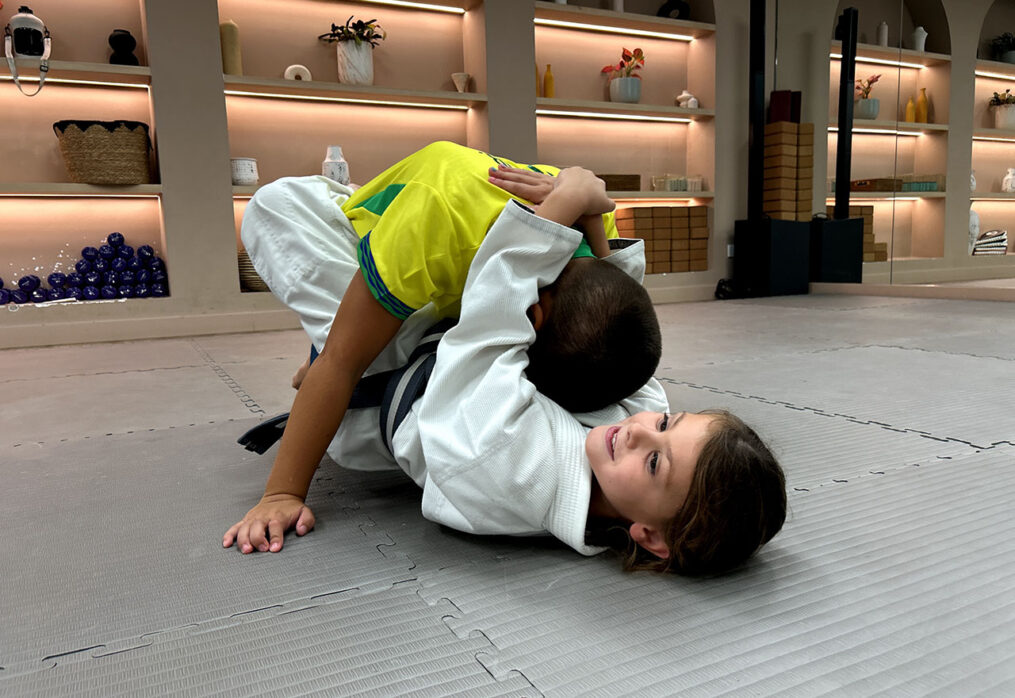
BJJ is, frankly, one of the most efficient tools we have found for how to teach a child to handle failure, because failure is built into the sport at every level. You get tapped. You lose position. You try a technique and it does not work. There is no way to train BJJ without failing repeatedly, often in front of your peers, often within the same ten-minute round.
Take a composite example we see often in our Cranes group, ages 10 to 12. A child joins with a background in individual sports where they were used to winning. Their first few weeks of live sparring are humbling. They get caught in the same submission three times in a row. Some children quit at this point, which is exactly why understanding how to teach a child to handle failure matters before they ever step on the mat, not after they have already decided the sport, or the classroom, or the team, is not for them.
The ones who stay usually go through a recognisable arc. Frustration in week one. A flicker of “wait, I see what I did wrong” by week three. By week eight or so, they are asking their partner what they did to catch them, instead of getting annoyed about it. That shift, from taking failure personally to treating it as information, is the whole point. It is also transferable. A child who works out how to handle failure on the mat starts applying the same instinct to a hard maths problem or a friendship disagreement, because the underlying skill behind how to teach a child to handle failure is identical everywhere it shows up.
Our 3D Method Turns Failure Into Data, Not Verdict
Everything above is easier to apply consistently when there is a framework underneath it, which is why our 3D Method, Discover, Develop, Demonstrate, treats every setback as information rather than judgement. In the Discover phase, a coach is watching for how a child responds the first time something does not go their way, not just whether they can do the technique. In Develop, we deliberately put children in positions where they will not succeed immediately, because that struggle is where the actual growth happens. Demonstrate is not about winning. It is about a child being able to show they have taken a piece of feedback and applied it, whether or not the outcome that day was a win. Built this way, the whole framework is really a structured answer to how to teach a child to handle failure without it ever feeling like a lecture.
This is also how we track character development rather than just belt progress. A child who handled a tough sparring round with composure, even if they lost every exchange, is progressing on the metrics that matter most. Parents who understand this stop asking “did you win?” at pickup and start asking “what did you work on today?” That question alone changes how a child relates to failure over time, and it is a small but real part of how to teach a child to handle failure without ever saying those words out loud.
Age Changes What Failure Looks Like
How to teach a child to handle failure is not a one-size answer, because failure lands differently depending on age and stage.
Penguins, our 4 to 6 year olds, mostly need co-regulation. At this age a meltdown after losing a game is developmentally normal, not a character flaw. The job here is simply staying calm yourself and narrating the feeling: “you’re upset because you wanted to win, that makes sense.” Do not expect logic to land yet. Presence matters more than words, and at this age it is most of how to teach a child to handle failure in practice.
Foxes, ages 7 to 9, are old enough to start reflecting, but they still need heavy scaffolding. This is the age where how you praise matters enormously. Praising effort and problem-solving rather than outcome teaches a Fox that trying hard at something difficult is the actual goal, which is foundational to how to teach a child to handle failure before the pressure of secondary school arrives.
Cranes, 10 to 12, are old enough to compare themselves to peers constantly, which is exactly when failure starts to sting in a more socially loaded way. This is often tangled up with confidence and self-esteem, and it is where a child either quietly decides they are “not a maths person” or “not sporty,” or learns that a bad result is temporary and specific. Getting how to teach a child to handle failure right at this stage has an outsized effect on the story they carry into their teenage years.
Dragons, 13 and up, need something closer to a peer conversation than a lecture. Teenagers who have not built failure tolerance earlier often disengage entirely rather than risk trying and falling short in front of others, which is exactly why how to teach a child to handle failure works best started young rather than fixed at fifteen. If that sounds familiar, it is worth reading how it connects to a child who has lost motivation more broadly, because the two are usually linked.
Common Mistakes Well-Meaning Parents Make
The most common mistake is rescuing too fast. Fixing the argument with a sibling, redoing the school project that was going wrong, stepping in with the referee. Every rescue removes a rep your child needed, and reps are most of how to teach a child to handle failure in the long run.
The second is over-praising to soften the blow. Telling a child they were “the best out there” after a rough match, when they clearly were not, teaches them not to trust your feedback. It also teaches them that failure needs to be immediately covered up rather than examined. Sport genuinely can build a child’s confidence, but only when the wins and losses are both treated honestly, which is really the whole test of whether you have got how to teach a child to handle failure right.
The third is comparing siblings or classmates in the moment of failure. “Your brother never struggled with this” is possibly the fastest way to turn a single setback into a fixed belief about ability. Avoid it entirely, even when frustrated yourself; comparison undoes almost everything else you are doing right around how to teach a child to handle failure.
The fourth, and possibly the most common, is avoiding situations where failure is likely in the first place. Choosing only activities where a child is already strong might protect their mood short term, but it quietly removes every opportunity to practise how to teach a child to handle failure in a low-stakes setting, before the stakes get higher in secondary school, exams, or first jobs.
Frequently Asked Questions
What age should I start teaching my child to handle failure?
Earlier than most parents think. Even Penguins, aged 4 to 6, benefit from small, safe doses of failure, like losing a board game fairly rather than always letting them win. The goal at this age is not lessons in resilience, it is simply exposure without rescue. Starting this early is genuinely the easiest version of how to teach a child to handle failure you will ever get.
My child cries or has a meltdown every time they lose. Is that normal?
At younger ages, yes, this is developmentally typical and not a sign anything is wrong. What matters is your response. Stay calm, name the feeling, and resist over-explaining in the moment. If the intensity is not softening at all by around age 8 or 9, that is worth watching and possibly discussing with a professional, but a single upset reaction is not cause for concern; how to teach a child to handle failure is a gradual process, not a one-conversation fix.
Should I let my child lose on purpose to teach them a lesson?
You do not need to engineer failure. Life, sport, and school provide plenty of it naturally. What you should avoid doing is engineering constant wins to protect them from it. Genuine, unmanipulated failure, in a safe context like training, is far more useful than a lesson you staged, and it is the version of how to teach a child to handle failure that actually sticks.
How is BJJ different from other activities for building this specific skill?
Because failure in BJJ is immediate, physical, and impossible to avoid, a child cannot get through a single class without losing a position or being tapped at some point. That constant, low-stakes exposure is exactly why so many parents come to us specifically wanting to know how to teach a child to handle failure, and leave with a child who tolerates it far better across school and friendships too.
What do I say right after my child fails at something in front of others?
Keep it short and private if possible. “That was tough, I saw how hard you tried” is enough in the moment. Save the debrief and problem-solving conversation for later, once the embarrassment has faded. Doing it immediately, especially in front of peers, usually backfires; timing is an underrated part of how to teach a child to handle failure well.
Is it bad for my child to see me fail at something?
No, the opposite. Children who never see adults fail assume adults simply do not, which makes their own failures feel abnormal by comparison. Narrating your own small setbacks, calmly and without drama, is one of the most effective and least talked about parts of how to teach a child to handle failure at home.
Learning how to teach a child to handle failure is not about lowering your expectations or protecting your child from disappointment. It is about giving them enough safe repetitions that failure stops feeling like a verdict and starts feeling like information they can use. That is exactly what we build into every session at The Origami Factory, through our programmes for ages 4 to 13 and up. If you want to see how your child responds to a bit of healthy struggle in a supportive environment, book a trial class with us and come see the 3D Method in action.