

5 Alternatives to Screen Time for Kids
It is 5pm, the homework is not done, and your child is glued to a tablet again. You have already tried the usual line, “twenty more minutes,” and you both know it will not be twenty minutes. If you are hunting for real alternatives to screen time for kids, not just a stricter timer, you are in the right place. The good news is that the pull of a screen is not magic. It is a specific kind of feedback, quick, easy, and endlessly renewing, and once you understand what that feedback is doing, you can find other activities that offer the same hit without the downsides.
We see this at the mat every week. Parents tell us their child will sit through forty minutes of a game but cannot get through five minutes of a maths worksheet. That is not a discipline problem. It is a design problem, and it points straight to the kind of alternatives to screen time for kids that actually work, ones built around the same ingredients that make screens so sticky: quick feedback, visible progress, and a bit of challenge.
Why “just limit the screen time” rarely works
Most advice on this topic stops at restriction. Put the phone in a drawer. Set a router timer. Use an app blocker. These tools have their place, but on their own they treat the symptom, not the cause. A child who is bored, understimulated, or lacking a rewarding alternative will simply fight the restriction, negotiate around it, or sneak more time in later. Restriction alone is not one of the alternatives to screen time for kids that holds up over months, only weeks. We have had that conversation with dozens of families, and it is one reason we wrote about how to reduce your child’s screen time without turning it into a daily battle.
The more useful question is not “how do I take the screen away,” but “what am I giving my child instead.” Genuine alternatives to screen time for kids need to deliver something close to what the screen was delivering: fast feedback loops, a sense of mastery, and social connection. Miss any of those three and the activity will feel like a consolation prize rather than a replacement.
A common misconception: any activity will do
Parents often assume that any offline activity counts as a win. Colouring in is calm and screen-free, so it must be a good substitute. Sometimes it is. But if your child is chasing stimulation and challenge, a quiet, low-feedback activity will not hold their attention for long, and you will be back at the tablet within the hour. This is one of the most common mistakes we see when parents look for alternatives to screen time for kids: they choose the calmest option rather than the most engaging one.
The activities that actually compete with a screen tend to share three features. First, they give feedback in seconds, not hours, so your child can see whether they are improving right now. Second, they have a difficulty level that adjusts, so your child is never bored and never overwhelmed. Third, they usually involve another person, whether that is a coach, a sibling, or a training partner, because social feedback is one of the most powerful reward signals a child’s brain responds to. Keep these three features in mind and you will find it much easier to spot genuine alternatives to screen time for kids among the dozens of suggestions floating around parenting forums, most of which miss at least one of them.
What the research actually says
Screen time research has moved on from simple hour-counting. The American Academy of Pediatrics now focuses less on a hard number of minutes and more on what screen use is crowding out, particularly sleep and physical activity. That shift matters, because it points directly toward the kind of alternatives to screen time for kids worth pursuing: ones that put movement and connection back into the day rather than just taking a device away.
On the physical activity side, the guidance is more specific. The Centers for Disease Control and Prevention recommends that children and adolescents aged 6 to 17 get at least 60 minutes of moderate-to-vigorous physical activity every day, and it notes that regular movement supports attention, memory, and the kind of executive function skills, like self-control and cognitive flexibility, that children need for school and for life. That is a strong argument for treating movement-based alternatives to screen time for kids as the default option rather than an afterthought. We covered some of this ground in our piece on why your child can’t focus and what actually helps, and the two topics overlap more than most parents expect.

Five activities that give the same hit as screens, without the downsides
These are the five alternatives to screen time for kids we recommend most often to the families in our programme, roughly in order of how quickly they work for a reluctant child.
1. Rough-and-tumble grappling games
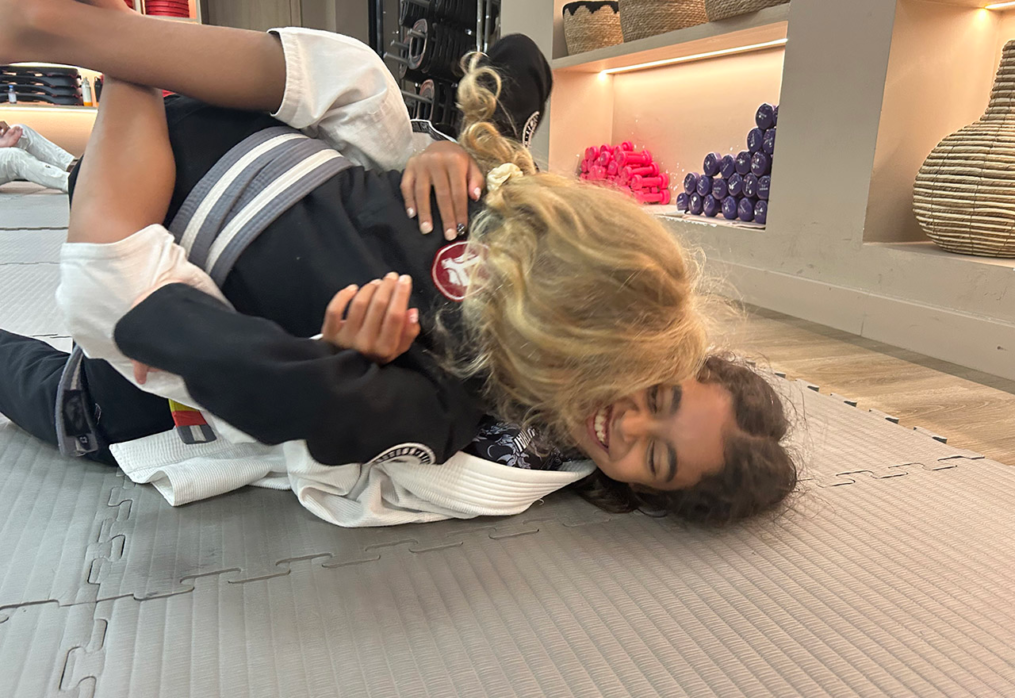
Wrestling-style games, the kind children do on a mat under supervision, deliver instant feedback (did I get the position or not), a built-in difficulty curve (a bigger or smaller partner changes everything), and constant social contact. This is precisely why BJJ works so well as one of the more effective alternatives to screen time for kids: the “win” is immediate and physical, not delayed like a school grade.
2. Obstacle courses and timed challenges
A stopwatch and a simple course through the living room or garden, crawl under the table, jump the cushion, balance along a line, gives a child the same “beat my score” pull as a video game level. It costs nothing and can be rebuilt in minutes when the old course gets boring, which makes it one of the cheapest alternatives to screen time for kids you will find on this list.
3. Building and construction play
Lego, blocks, or cardboard construction give a child a visible, physical version of “levelling up.” Each stage of a build is a small win they can see and touch, which is exactly the kind of feedback loop that makes screens compelling in the first place. For a child who likes to build and create, this is often the most natural of all the alternatives to screen time for kids, since it barely feels like a substitute at all.
4. Outdoor scavenger hunts
A list of ten things to find in the garden or local park turns a simple walk into a game with a scoreboard. It is a low-effort way to add structure and challenge to time outdoors, and it is one of the easier alternatives to screen time for kids to set up on a tired weekday afternoon.
5. Partner and team games
Tag, capture the flag, or any game that needs another player brings in the social reward that screens can only fake. Multiplayer games feel rewarding partly because of the people on the other end; real partner games deliver that same connection directly, with none of the algorithm behind it. Of all the alternatives to screen time for kids on this list, this is the one parents underestimate most, largely because it requires another human being to show up and play.
Why this matters beyond the tablet itself
Parents often frame this as a screen problem, but the knock-on effects reach further than the hour a child spends on a device. Late-evening screen use pushes back bedtime, and a tired child the next day struggles more with focus, mood, and patience, which then makes the following evening’s screen battle even harder. Breaking that cycle is one of the quieter benefits of introducing real alternatives to screen time for kids: better sleep, which supports better focus, which makes the next evening’s swap easier again. It compounds in the right direction once it gets going.
There is also a confidence angle that is easy to miss. A child who spends most of their free time consuming content rarely gets the chance to feel genuinely good at something physical. Structured alternatives to screen time for kids, particularly ones with visible progress like a new BJJ position or a faster obstacle course time, hand a child something screens cannot: a real, earned sense of “I am getting better at this.” We go into this in more detail in 10 signs your child lacks confidence and what they are really telling you, which covers some of the same warning signs parents notice around excessive screen use.
What this looks like with a real child
Reading about alternatives to screen time for kids in the abstract only goes so far, so here is what it actually looked like for one family. One parent in our Foxes group (ages 7 to 9) told us her son would only agree to “five more minutes” that never stayed at five. We suggested she swap the after-school tablet slot for a twenty-minute grappling game with her husband before dinner, framed as “who can hold the position longest.” Within two weeks, the boy was asking for the game before she had to ask him. He was not more disciplined. He had simply been handed one of the alternatives to screen time for kids that matched what he was actually looking for: fast feedback and a bit of competition, just delivered through movement instead of a screen.
How to introduce this in your house this week
Start small. Pick one screen slot, ideally the one that causes the most arguments, and replace it with a single activity from the list above. Do not try to overhaul the whole day at once; that is the fastest way to abandon the plan by day three. Tell your child what is happening and why, in simple terms: “we are trying something instead of the tablet at five o’clock.” Children cope far better with a swap they understand than with a rule that just appears.
Keep score of some kind, even informally. A whiteboard tally, a sticker chart, or simply saying “you beat your time from yesterday” gives the activity the same visible progress that a screen provides. This single step is often what turns a nice idea into one of the alternatives to screen time for kids that actually sticks past the first week.
Expect resistance on day one. That is normal and does not mean the activity has failed. It usually means the old habit is strong, not that the new one is wrong. Most families see the resistance fade within a week or two once one of these alternatives to screen time for kids earns its place in the daily routine.
How The Origami Factory builds this into our programme
This is not just theory for us; it is the structure of every class. Our 3D Method, Discover, Develop, Demonstrate, is built around exactly the feedback loop that makes an activity stick. Children discover a new skill on the mat, develop it over weeks of repetition, and then demonstrate it in front of their peers and coaches, so progress is visible and immediate rather than an abstract idea. You can read more about how the 3D Method works if you want the full picture.
We also track more than belts. Coaches log confidence, focus, discipline, and social development for every child, cohort by cohort, from our youngest Penguins (ages 4 to 6) through Foxes (7 to 9), Cranes (10 to 12), and Dragons (13 and up). That tracking is exactly what turns a single class into one of the more durable alternatives to screen time for kids, because your child is not just moving instead of scrolling, they are building character skills that show up at school and at home. We explain this in more depth in how we measure character development, not just belt progress.
If your child’s issue is more about motivation than attention specifically, it is worth reading our piece on what’s actually going on when a child has no motivation, since the two often travel together. And if confidence is the bigger worry in your house, our article on whether sport really builds a child’s confidence covers the research in detail. Building resilience matters here too; see how to build resilience in children for a practical guide parents can use at home.
What to expect in the first few weeks
If you bring your child to try one of our classes, you are not signing up for a lecture about screens. You are putting them in a room built around the same feedback loops that make screens appealing, just pointed at something that also builds discipline, focus, and social confidence. Most parents tell us the change in evening behaviour, less negotiating, less arguing over the tablet, shows up faster than the change in BJJ technique. That is by design. Our programmes for children aged 4 to 13 are structured specifically around these age-appropriate cohorts, so your child is working alongside peers at a similar stage.
You can read exactly what happens at a kids BJJ trial class in Dubai before you book, so there are no surprises on the day. Most families tell us the first class alone reframes how they think about alternatives to screen time for kids, simply because they can see their child engaged, sweaty, and smiling within the first twenty minutes, something a tablet rarely produces.
Frequently Asked Questions
What are the best alternatives to screen time for kids who resist everything else?
Start with movement-based options that include another person, such as a partner game or a grappling game with a parent. Solo, quiet activities rarely compete with a screen for a child who is used to constant stimulation, so the fastest wins usually come from options with built-in social feedback.
How much physical activity should replace screen time each day?
The CDC recommends 60 minutes or more of moderate-to-vigorous activity daily for children aged 6 to 17. You do not need to hit that in one block; several shorter bursts of movement, including the kind of alternatives to screen time for kids listed above, add up across the day.
My child says these activities are “boring” compared to their tablet. What do I do?
This usually means the activity does not yet have enough feedback or challenge built in. Add a scoreboard, a timer, or a “beat yesterday” element. Boredom is often a signal that the difficulty level or feedback speed needs adjusting, not that the activity itself is wrong, and it is the single most common reason parents give up on alternatives to screen time for kids too early.
Is it realistic to remove screens completely?
For most families, no, and we would not recommend it. The goal with alternatives to screen time for kids is not zero screens; it is a better balance, where movement, social play, and structured activities like BJJ take up more of the day than they currently do.
What age should I start introducing these alternatives?
Earlier is easier. Children in our Penguins group (ages 4 to 6) adapt to movement-based alternatives very quickly, since screen habits are less entrenched. That said, we regularly see older children in the Cranes and Dragons groups (ages 10 and up) make the switch too, it just takes a little more patience in the first few weeks, and slightly more thought about which alternatives to screen time for kids will actually appeal to a teenager rather than a younger sibling.
Does BJJ specifically help with screen time habits, or is any sport enough?
Any activity with fast feedback and social connection helps. We are naturally biased toward BJJ because it combines both in a single session, plus the structured character tracking of our 3D Method, but team sports and other martial arts can offer similar benefits if they include the same ingredients. The label matters far less than whether the activity itself qualifies as one of the genuine alternatives to screen time for kids we described earlier, fast feedback, adjustable challenge, and another person in the room.
If you want to see this in action rather than just read about it, the easiest next step is to bring your child in for a class. You can book a trial class for AED 99 and watch how quickly a room built around feedback and challenge can compete with a tablet. Our programmes page has the full schedule by age group if you would like to see where your child fits before you book, and it remains one of the simplest alternatives to screen time for kids you can start this week rather than someday.