

How to Reduce Your Child’s Screen Time Without a Daily Battle
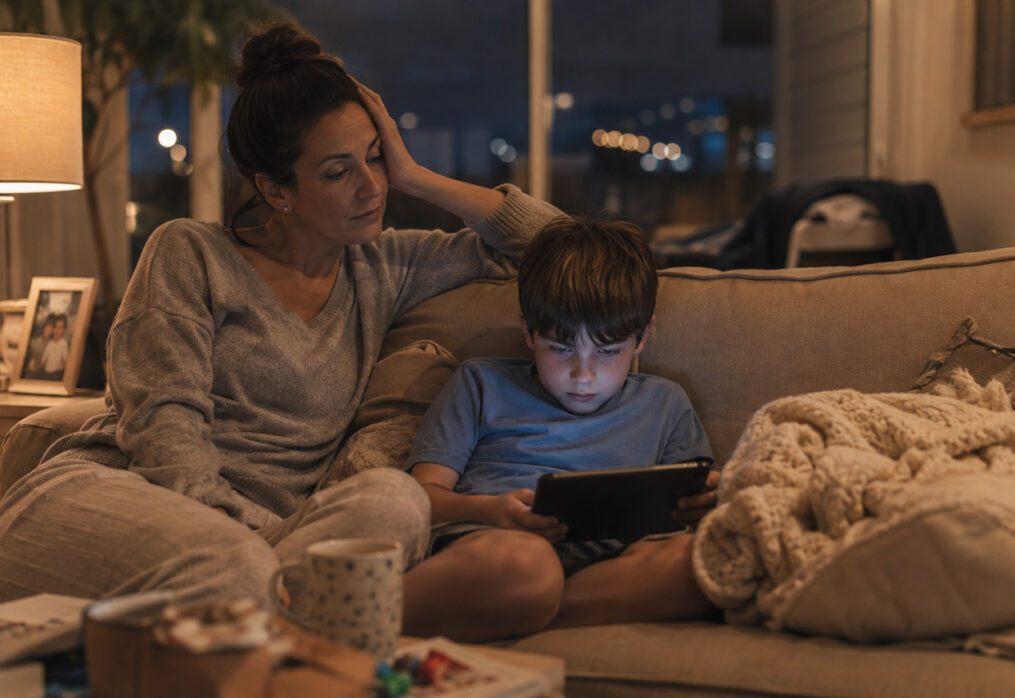
 Every parent has been through some version of this scene. You ask your child to come off the tablet. They negotiate. You give them five more minutes. Five turns into fifteen. When you finally take it away, there are tears, tantrums, or the sullen silence of a child who has decided you are the enemy for the rest of the afternoon.
You know you should reduce your child’s screen time. You have read the research. You have seen the way they behave when they are on the iPad too long. But the practical reality of getting there feels impossible. Every attempt seems to end in conflict, and after a while you stop trying because the fight is worse than the screen use.
This article is about how to reduce your child’s screen time without turning your home into a battleground. There are strategies that actually work, and most of them are less about willpower and more about setting up the right structures so that willpower is not required.
Why It Is Worth Trying to Reduce Your Child’s Screen Time
Before we get into the how, a brief word on the why. The World Health Organization’s guidelines on physical activity, sedentary behaviour and sleep for children under 5 recommend zero screen time for children under 1, no more than an hour a day for children aged 2 to 4, and encourage significantly reduced screen time across the board.
For older children, the picture is more nuanced. Some educational screen use is fine. What the research consistently flags is the passive, recreational, algorithm-driven kind of use, short-form video, mobile games, social media, that has documented effects on attention, mood, sleep, and behaviour. Our article on screen time and your child’s attention span covers the research in more depth if you want the full picture.
The reason to reduce your child’s screen time is not that screens are evil. It is that the time and energy they consume tend to crowd out the things that build focus, resilience, and social confidence. Reduce your child’s screen time thoughtfully, and you make space for the things that actually help them grow.
Why It Feels So Hard to Reduce Your Child’s Screen Time
Understanding why it is difficult is the first step. Children resist reducing screen time for reasons that go beyond simple stubbornness.
Screens are designed to be difficult to leave. The apps and games your child is using were built by teams of engineers whose job is to maximise the time users spend engaged. Autoplay, endless feeds, notifications, reward loops. Your child is not weak-willed for finding it hard to stop. They are experiencing exactly what the design was intended to produce.
Screens have become a coping tool. For many children, the tablet is not just entertainment. It is how they wind down after school, how they manage boredom, how they escape from difficult feelings. Taking that away without replacing it leaves a gap the child does not know how to fill.
The battle itself is exhausting. Even parents with the best intentions often give up because the daily energy of enforcing limits exceeds the perceived benefit. This is where structure beats willpower.
The Big Mistake Most Parents Make
The most common approach to reducing screen time is to set a daily time limit. “You get one hour a day.” “No screens after six.” “Two episodes and then off.”
Time limits are not wrong, exactly. But they are usually not enough on their own, and they often produce the exact battle they were meant to prevent. Here is why. Every time the limit is enforced, it becomes a moment of negotiation. Every day, the same debate happens. The child asks for more time. You either concede (which weakens the limit) or refuse (which produces conflict). Over weeks, the enforcement of the limit becomes emotionally draining, and eventually most parents drift back to letting screens fill more time than they intended.
Structural approaches work better. If you want to reduce your child’s screen time in a way that actually holds over time, focus less on the daily minute-by-minute negotiation and more on the underlying architecture of when and where screens are used.
The Strategies That Actually Work
The following strategies are the ones that have the strongest evidence behind them and produce the least conflict in practice. Not all of them will apply to your family. Pick the two or three that fit your situation and start with those.
Screen-free zones
Instead of limiting time, restrict location. No screens at the dinner table. No screens in bedrooms. No screens in the car on trips under an hour. When there is a clear rule tied to a place, the child does not have to negotiate every time. The rule is the rule. Bedrooms in particular are worth protecting. Research consistently shows that children who have screens in their bedrooms sleep less, sleep worse, and use screens more overall.
Screen-free times
Similar principle, applied to the clock rather than to place. The first hour of the day is screen-free. The last hour before bed is screen-free. During homework time. During family meals. These non-negotiable windows create structure without requiring you to police every moment.
Replace, do not just remove
One of the most reliable ways to reduce your child’s screen time is to introduce something else that competes for the same time and attention. A child who has structured physical activity two or three times a week, a hobby they enjoy, or a book series they are engaged with does not have as much unfilled time for screens to occupy. This is one of the reasons we see BJJ have such a strong effect on the children who train with us. It is not just that the time on the mat is time not on screens. It is that the child develops a different relationship with their own time and starts filling it differently. Our article on why your child quits everything covers what to do if your child has struggled to stick with alternative activities.
Model the behaviour
This is uncomfortable but worth stating clearly. If you are on your phone at the dinner table, at the school gate, in bed, and in front of your child during downtime, your child receives a very clear message about how much a screen matters. The research on children’s screen use consistently identifies parental modelling as one of the strongest predictors of children’s own habits. If you want to reduce your child’s screen time meaningfully, you probably need to reduce your own too. Not to zero. Just visibly.
Give them ownership
Older children respond much better to being included in the decision than to having limits imposed on them. Sit down with them. Show them what the research says. Ask them how they think screens affect them. Involve them in setting the rules. A child who has helped design the family screen policy is much more likely to abide by it than a child who feels the policy was imposed on them.
Address the underlying need
If your child is using screens to manage boredom, anxiety, or social difficulty, taking away the screens without addressing the underlying need is going to produce misery. Look at what the screens are actually doing for them. If they are coping with social anxiety, our article on how to help a child who struggles socially may be useful. If they are struggling with confidence or motivation, our article on how to build confidence in a child and our article on my child has no motivation cover the underlying dynamics.

What to Say When You Get Pushback
When you try to reduce your child’s screen time, pushback is inevitable. The way you handle those moments matters a great deal. A few things worth having ready.
Acknowledge without arguing. “I can see you’re really enjoying that. I know it’s frustrating to have to stop. That’s why we agreed the rule together, so we don’t have to negotiate every time.” You do not need to justify the rule every time. Once is enough.
Stay calm even when they escalate. Children in tantrum mode are looking for a fight because a fight often produces a concession. If you stay calm, do not raise your voice, and do not give in, the tantrum has nowhere to go. It burns itself out. This is much easier said than done, but consistency here changes the whole pattern over time.
Avoid moralising. Do not lecture your child about why screens are bad. They tune out. The rules are the rules because you have decided they are the rules, not because screens are inherently sinful. The less moral weight you attach to the whole thing, the less battleground energy the topic generates.
Do not use screens as a reward or punishment. This is one of the more subtle mistakes parents make. If good behaviour earns screen time, screens become the most important currency in your household. If bad behaviour loses screen time, screens become the axis around which discipline revolves. Both approaches inflate the perceived value of screens and make it harder to reduce your child’s screen time overall.
How to Reduce Your Child’s Screen Time Gradually
Cold turkey rarely works, particularly for children who are heavy users. A more sustainable approach is gradual reduction over several weeks.
Start by mapping the current use. For a week, just observe. How much screen time is your child actually getting? Not what you think they are getting, what they are actually getting. Most parents underestimate their child’s screen time by a factor of two or three.
Pick one specific reduction. Do not try to fix everything at once. If your child currently uses screens for three hours a day, aim for two and a half hours over the next month. Small, sustainable reductions are more effective than dramatic ones.
Introduce a competing activity in the same time slot. If your child usually watches YouTube for an hour after school, replace that hour with something else. Structured activity works particularly well because it creates a genuine reason not to be on screens.
Reassess after four weeks. What has worked? What has not? Adjust and continue. The families who successfully reduce their child’s screen time are the ones who keep iterating rather than expecting the first attempt to work perfectly.
The Dubai Context: Why Screens Are Particularly Sticky Here
Living in Dubai adds some specific challenges to the effort to reduce your child’s screen time. Worth naming them.
The climate. Six months of the year, outdoor play is genuinely difficult. This drives many families indoors, and screens tend to fill the gap. If you want to reduce your child’s screen time in Dubai, you need to have realistic alternatives for hot afternoons that are not the tablet.
The compound and villa culture. Many children in Dubai do not have the kind of unsupervised outdoor social play that would naturally reduce screen time in other contexts. They are often either at home with the family, at a structured activity, or on a screen. Making sure the structured activities are engaging and consistent is one way to shift this balance.
The wider social norms. Children in Dubai often see other children on screens everywhere: restaurants, cars, waiting rooms. It is genuinely harder to set unusual expectations for your own family when the visible norm around you is different. This is not a reason to give up. It is a reason to be clear-eyed about the challenge.
The good news is that Dubai also has excellent options for structured indoor activity. Our article on kids martial arts in Dubai: BJJ vs karate vs taekwondo covers what is available for children specifically.
How Structured Activity Helps You Reduce Your Child’s Screen Time
We keep coming back to the point that structured physical activity is one of the most effective ways to reduce your child’s screen time. Worth explaining why in more detail.
It fills the time. This is the obvious one. Two hours a week at BJJ is two hours not on a screen. Over a year, that is a hundred hours.
It changes the child’s baseline energy. Children who exercise regularly tend to sleep better, eat better, and have more balanced moods. All of these reduce the pull towards screens as a coping mechanism.
It gives them something to think about that is not a screen. Children who train BJJ often think about what they learned in class, look forward to the next session, replay techniques in their heads. This mental engagement with something offline reduces the perceived need to be constantly stimulated by screens.
It builds the underlying capacities that screens erode. Focus. Patience. Tolerance for slow progress. All of these are trained on the mat and all of them make screens less compulsively appealing over time. Our article on how jiu jitsu builds confidence in children and our article on why consistent training helps children behave better at school cover this transfer effect in more depth.
Our programmes are structured by age. If your child is between 4 and 6, our Penguins programme offers age-appropriate physical activity that competes directly with screen time for their attention. The Foxes programme for ages 7 to 9, the Cranes programme for ages 10 to 12, and the Dragons programme for ages 13 and above extend the same principle up through adolescence.
What to Expect in the First Month
Setting realistic expectations for what happens when you reduce your child’s screen time matters. Here is what typically unfolds.
Week one is often the hardest. Your child is testing the new rules. They ask for screens more often, not less. They complain of boredom in dramatic terms. They may become tearful or angry when limits are enforced. Hold steady. This is normal.
Week two often sees a slight shift. The complaining is still there but less intense. Your child starts filling the gaps with other activities, sometimes reluctantly. There are moments where they play or read or engage with something offline for longer than they had been previously.
Weeks three and four begin to show real change. The battles diminish. Your child adapts to the new normal. You may notice sleep improving, mood evening out, or behaviour at school shifting slightly. Nothing dramatic, but the direction of travel is clear.
By month three, the new pattern is often stable. The screens have their place, but that place is smaller than it was. The daily fight is gone. Your child has other things they care about and other ways to spend their time.
If you do not see this pattern, do not panic. Some families take longer. Some children need more support. If the process is not working after a few months of genuine effort, consider whether there is something deeper going on. Our article on 10 signs of low confidence in children and our article on my child has no friends cover some of the underlying issues that can make screens harder to reduce.
Where to Start
If you want to reduce your child’s screen time and are looking for one concrete first step, here is what we would suggest. Pick one screen-free zone or time and hold it consistently for a month. Just one. The dinner table. The first hour of the day. Bedrooms. Whatever fits your family. Do that one thing consistently and see what happens.
If you also want to add a structured activity that competes with screens for your child’s time and attention, we would be happy to help. You can see our programmes on our programmes page, check class times on the schedule page, and reach us on the contact page if you want to talk through your specific situation.
When you are ready, book your child’s free trial here.
Frequently Asked Questions: How to Reduce Your Child’s Screen Time
How much screen time is too much?
There is no single number that fits every child. WHO guidelines recommend under an hour for children aged 2 to 4 and reduced use overall. For older children, quality of use matters as much as quantity. A child using screens for two hours of educational content is in a different position than a child using two hours of short-form video.
What is the best age to start reducing screen time?
Earlier is easier. Habits set in early childhood are much harder to reshape once they have become entrenched. But it is never too late. Even teenagers can meaningfully reduce screen time with the right approach.
Should I take screens away completely?
Usually no. Complete removal often produces intense conflict and does not teach your child to develop a healthy relationship with technology, which is what they will need long-term. Better to reduce and structure than to eliminate.
What if my child uses screens for school?
Educational use is different from recreational use, and both the research and most sensible screen time policies distinguish between them. If your child is doing homework on a laptop, that is fine. The screen time you want to focus on reducing is the recreational, algorithm-driven kind.
How do I handle a child who becomes upset every time I try to reduce their screen time?
Expect it and stay calm. The intensity of the reaction usually reflects how central screens have become to your child’s daily coping. As you consistently maintain limits and introduce alternatives, the intensity fades. What feels like a wall in week one is usually more like a hedge by week four.
Does adding an activity actually help reduce screen time?
Yes. Multiple studies show that children who participate in structured activities consistently have lower recreational screen time, better sleep, and better overall mental health. Adding a good activity is one of the more effective indirect ways to reduce your child’s screen time. Our article on what happens at a kids BJJ trial class in Dubai covers what a typical first session looks like.