
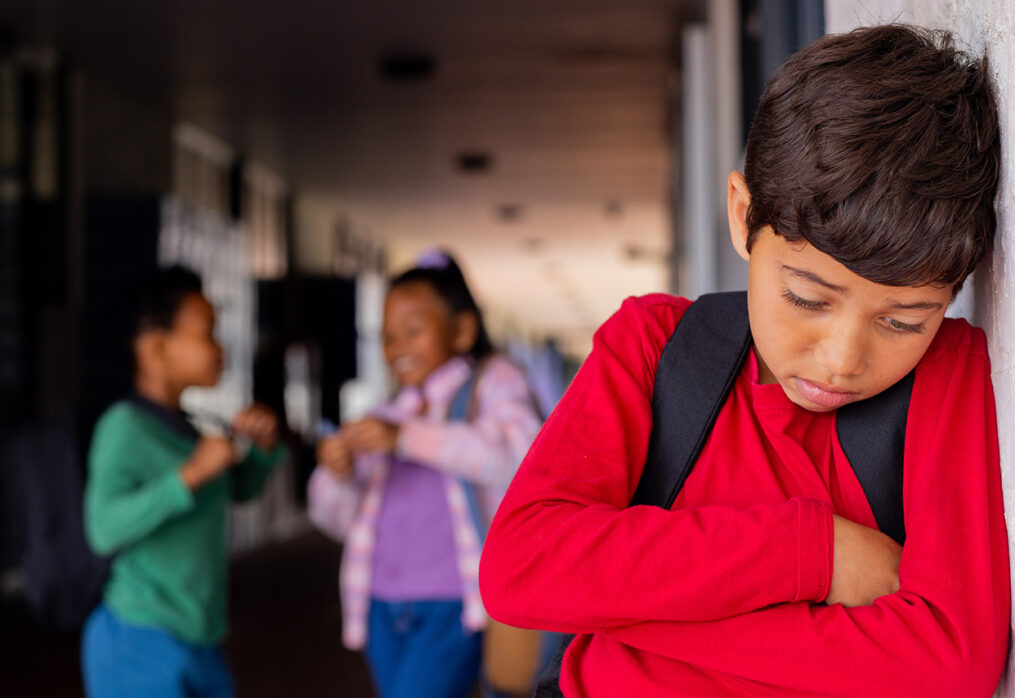

What to Do if My Child Is Being Bullied?
 Your child comes home quiet. They pick at dinner, they don’t want to talk about school, and when you finally get one sentence out of them, it stops you cold. Working out what to do if my child is being bullied is probably the question you are sitting with right now, and it deserves a clear, practical answer rather than another list of vague reassurances.
We work with children in Dubai every week who are dealing with exactly this, so we see the pattern often. The good news is that there is a proven order of steps that actually helps, and most parents skip at least one of them the first time round. This guide walks through what to do if my child is being bullied from the first conversation through to working with the school, plus what we have learned from building confidence and social skill in children through the 3D Method here at The Origami Factory.
How to Tell If It’s Really Bullying (Or Something Else)
Not every hard day at school is bullying, and knowing the difference changes what to do if my child is being bullied versus what to do if they have simply fallen out with a friend. This distinction is usually the very first thing worth sorting out before anything else. Bullying has three features that a one-off argument does not: it is repeated, it involves a power imbalance, and it is intended to hurt or control. Getting this definition right is the foundation of what to do if my child is being bullied, since the right response depends entirely on which situation you’re actually in. A single unkind comment stings but usually isn’t bullying. The same comment, from the same child, every day for three weeks, aimed at someone smaller or less popular, is.
Watch for the quieter signs too, not just the obvious ones. A child who suddenly hates a subject they used to enjoy, who asks to be dropped off early or picked up late to avoid the crowd, who loses items “by accident” repeatedly, or who has started sleeping badly, may be signalling something they can’t yet put into words. These often line up with the signs of low confidence we talk about elsewhere, because bullying and confidence collapse tend to arrive together. Spotting that overlap early is often the real starting point for how to work out what to do if my child is being bullied, well before you’ve even had the full conversation.
The First Conversation: What to Say When Your Child Tells You
How you respond in the first sixty seconds matters more than almost anything else you’ll do. Children rehearse telling a parent about bullying for days before they actually do it, and a badly handled first reaction can shut the conversation down for months. Working out what to do if my child is being bullied genuinely starts here, not with the school, not with the other parent, but with how you receive the news.
Stay calm, even if you don’t feel calm. Say thank you for telling me, rather than jumping straight to questions or, worse, straight to anger. Ask open questions: what happened, when, who else was there, has it happened before. Resist the urge to problem-solve in that first conversation. Most children need to feel heard before they’re ready to hear a plan, and pushing straight to solutions can make them feel like the conversation is about you fixing things rather than them being safe.
Parents often ask us how to help a child open up if they’ve gone quiet on the subject altogether. Try low-pressure moments, in the car, during a walk, rather than a sit-down interrogation at the kitchen table. A gentler entry point into what to do if my child is being bullied is sometimes simply “you’ve seemed a bit quiet lately, want to tell me about it,” rather than a direct question about bullying itself.
What to Do If My Child Is Being Bullied: The Practical Steps
Once you understand what’s happened, here is the order we’d recommend for what to do if my child is being bullied, based on what tends to work and what tends to backfire.
Document everything first. Dates, what was said or done, who witnessed it, and how your child responded. This matters more than parents expect; schools and academies (including us) act faster and more decisively when there’s a clear record rather than a single vague complaint. This one step alone answers a good chunk of what to do if my child is being bullied, because it turns a messy, emotional situation into something a school can actually act on.
Coach your child on simple, calm responses they can use in the moment, things like “stop” said firmly, walking away, or finding an adult. This is not the same as “toughen up” advice, which rarely works and can make a child feel blamed for what’s being done to them. Practical scripts, rehearsed at home when things are calm, give a child something to reach for when things are not, and they’re a surprisingly effective piece of what to do if my child is being bullied that costs nothing and takes ten minutes at the dinner table.
Talk to the school before you talk to the other child’s parents. Going straight to another family, however tempting, tends to escalate things and puts you outside the systems the school actually has for handling it. Ask for a meeting, bring your documentation, and ask specifically what the school’s anti-bullying policy says will happen next. This step alone is where most of what to do if my child is being bullied actually plays out, so it’s worth doing properly rather than rushing it.
Keep your child’s routine as normal as possible outside school. Pulling a child out of every activity “to be safe” often removes the very things that are rebuilding their confidence. This is one reason we see so many parents keep their child in BJJ training even mid-crisis; it’s one part of the week that still feels like theirs. If your child has also gone quiet with friends generally, it’s worth reading our guide on what to do when a child has no friends alongside this one, since the two issues often travel together and the fix overlaps considerably.
Common Mistakes Well-Meaning Parents Make
We see the same handful of missteps repeatedly, usually from parents who are doing their absolute best under a lot of stress while trying to work out what to do if my child is being bullied on very little sleep.
Telling a child to “just fight back” is one of the most common instincts when parents are figuring out what to do if my child is being bullied, but it sounds decisive far more than it actually helps, and can turn a bullying incident into a disciplinary one for your own child. Minimising it (“kids will be kids”) teaches a child that their discomfort doesn’t count, which quietly erodes the trust that got them to tell you in the first place. And taking over completely, contacting every parent and teacher without involving your child in the plan, can leave them feeling more powerless, not less, at exactly the moment they need to feel some agency again.
The better path sits between doing nothing and doing everything for them: you handle the adult-to-adult parts, and your child handles the parts within their control, with your coaching. That balance is really what to do if my child is being bullied comes down to in practice, not one dramatic intervention but a series of steady, proportionate ones. Children who are given some agency in the plan also tend to behave better at school more broadly once things settle, which is a pattern we’ve written about in more depth in why consistent training helps children behave better at school.

Building the Skills That Make Bullying Less Likely to Stick
A less obvious part of what to do if my child is being bullied is understanding why some children get targeted repeatedly and others don’t. Bullies, by and large, target children who read as easy: uncertain body language, a reluctance to speak up, a tendency to freeze rather than respond. None of this is the victim’s fault, but it does mean that building resilience and assertiveness genuinely changes the odds going forward, alongside everything above rather than instead of it.
This is where character development work, the kind we do daily on the mat, earns its place in any answer to what to do if my child is being bullied. A child who has practised holding their ground physically, who has been in uncomfortable positions and worked their way out calmly rather than panicking, tends to carry that same steadiness into a hallway confrontation. It isn’t about becoming tougher in a fighting sense. It’s about becoming someone who doesn’t broadcast “safe target” without saying a word.
We see this most clearly in a shy child who has spent months earning small wins on the mat. Their shoulders come back. They make eye contact more easily. That shift shows up everywhere, not just in training, and it’s a genuinely practical answer to what to do if my child is being bullied for parents looking beyond the immediate crisis toward prevention.
More broadly, children who struggle socially, whether that shows up as being bullied, being excluded, or simply finding groups hard, tend to respond to the same underlying work. We go into this in more detail in our guide on how to help a child who struggles socially, which sits alongside this one as a broader look at the same problem from a different angle.
How the 3D Method Helps Long After the Immediate Crisis
At The Origami Factory, everything we do runs through our 3D Method: Discover, Develop, Demonstrate. A child discovers a challenge appropriate to their level, whether that’s a physical position on the mat or, just as often, a social one like speaking up when something feels wrong. They develop the skill through repetition, with coaching that adjusts to Penguins aged four to six, Foxes aged seven to nine, Cranes aged ten to twelve, or Dragons aged thirteen and up. Then they demonstrate it, in front of teammates, in a way that builds real, earned confidence rather than empty praise.
For a child who has been targeted by a bully, this structure matters because it rebuilds competence in small, visible steps rather than asking them to simply “feel more confident,” which nobody can do on command. We track this progress deliberately rather than leaving it to chance; you can read more about how we measure character development if you want the fuller picture of how that tracking works in practice. For families working through what to do if my child is being bullied, having a visible, trackable measure of progress, rather than just hoping things get better, tends to be reassuring in itself.
Parents sometimes ask whether combat sport is the wrong direction for a child who’s already been on the receiving end of aggression. We understand the instinct, and it’s a fair question; we’ve addressed it directly in our piece on whether martial arts makes kids more aggressive. In practice, structured training under close coaching tends to do the opposite: it teaches control, not aggression, which is precisely what a child rebuilding their confidence after bullying needs most. It also builds emotional regulation more broadly, something we’ve explored in how jiu jitsu builds emotional intelligence, and that steadiness carries directly into how a child handles conflict outside the academy too.
When to Escalate: Working With the School
Most bullying situations resolve, at least partially, at the classroom and playground level once a school is properly looped in. But some don’t, and knowing when to push harder is part of any complete answer to what to do if my child is being bullied, and it’s the stage where parents most often either give up too soon or wait too long.
Escalate if the behaviour continues after the school has been informed and given a reasonable window to act, typically two to three weeks. Escalate immediately, without waiting, if there’s any physical harm, if the bullying moves online and your child can’t escape it even at home, or if your child shows signs of depression, anxiety, or talks about not wanting to be here. In the UAE, schools are required to have anti-bullying policies and a documented process; ask for it in writing, and ask what the escalation path looks like if the first intervention doesn’t work.
Federal data on bullying, drawn from national school surveys, gives useful context here too. According to research compiled by StopBullying.gov, roughly one in five students aged 12 to 18 reported experiencing bullying in the most recent school year measured, and about two in three of those who were bullied reported it happening on multiple days rather than as a single incident. In other words, if you’re wrestling with what to do if my child is being bullied, you are dealing with something common, measurable, and well understood, not something unusual or something your child somehow invited.
A Realistic Example From the Mat
A composite of what we see often, drawn from a few real families, is worth sharing as a picture of what to do if my child is being bullied in practice. One of our coaches recently worked with a nine-year-old, part of our Foxes group, whose mother came to us mid-way through a difficult school term. Her son had been targeted by an older student over lunch for several weeks; small things individually, a shove in the queue, items knocked off his tray, but relentless in pattern. He’d stopped wanting to go to school at all.
His mother had already done the right first steps: documented incidents, met with the school, coached him on calm responses, essentially working through what to do if my child is being bullied in exactly the order we’ve laid out here. What she added was consistency in training, three sessions a week, not as a distraction but as a place where he was, unambiguously, good at something and where his coach noticed and named his progress out loud. Within two months, his posture had changed noticeably, on and off the mat. He started speaking up in class again. The bullying itself stopped roughly a month in, once the school intervened properly, but the confidence work kept building well past that point. It’s a useful reminder that what to do if my child is being bullied isn’t a single fix; it’s the combination of firm, prompt adult action and steady work on the child’s own sense of themselves.
What Coaches and Teachers Notice Before Parents Sometimes Do
Coaches and teachers are often the first to notice, which matters for anyone still working out what to do if my child is being bullied before a confirmed incident. Because we see children in a group setting several times a week, coaches often notice shifts in confidence or social standing before a parent does at home, where a child may be putting on a brave face. A child who used to partner up easily and suddenly hangs back, who flinches more than usual during light contact drills, or who goes quiet around one specific peer, is telling us something worth a conversation with their parents.
This is part of why we think seriously about what to look for before you enrol your child anywhere, whether that’s with us or elsewhere: an environment where coaches are trained to notice these shifts, not just teach technique, is worth far more during a hard term than one that isn’t. If you’re actively working through what to do if my child is being bullied, ask any programme you’re considering how their staff are trained to spot exactly this kind of change.
It’s also worth asking how a programme handles children who quit or disengage suddenly, since that’s often an early signal worth catching. We’ve written more on this in why some children quit everything, which covers some of the same withdrawal patterns that show up when a child is being bullied and hasn’t yet told anyone.
Frequently Asked Questions
What should I do first if my child tells me they’re being bullied?
Thank them for telling you, stay calm, and listen fully before jumping to a plan. That first response shapes whether they keep talking to you, which matters more long term than moving fast. Once you’ve listened, start documenting what happened; it’s the practical first step in most good answers to what to do if my child is being bullied, and it sets the tone for everything that follows.
Should I contact the other child’s parents directly?
Generally, no, not as a first step. Go to the school first, with documentation, and let their process run before approaching another family directly. Parent-to-parent confrontations tend to escalate rather than resolve things, and can put the school’s own procedures at a disadvantage. This is one of the more common mistakes we see parents make when they’re still working out what to do if my child is being bullied under pressure.
How long should I wait before escalating to the school again?
Give a reasonable window, around two to three weeks, after the first report. If nothing has changed, or the behaviour continues, escalate again in writing and ask for the specific next step in their policy. Any physical harm or signs of real distress should be escalated immediately, without waiting out that window. Timing this well is a small but important part of what to do if my child is being bullied that many parents get wrong in either direction.
Can activities like BJJ actually help a child who’s being bullied?
They can, though not as a replacement for the direct steps above. Structured training builds the physical composure and steady confidence that make a child read as less of an easy target, and gives them a place each week where they’re visibly improving at something. It’s a supporting answer to what to do if my child is being bullied, not the whole answer on its own.
What if my child doesn’t want me to do anything about it?
This is common and understandable; children often fear that adult involvement will make things worse socially. Involve them in the plan rather than acting entirely behind their back, explain what you’re going to do and why, and reassure them that adults handling adult problems isn’t the same as them being unable to cope. Ignoring it isn’t a safe option, even if it feels like the path of least resistance in the moment, and it’s usually not what to do if my child is being bullied even when it feels like the easier route in the short term.
How do I know if the bullying is actually getting better?
Look for both the absence of new incidents over several weeks and the return of things that had disappeared: appetite, sleep, willingness to talk about school, interest in things they used to enjoy. Confidence rebuilds more slowly than incidents stop, so give it time even after the behaviour itself has ended. That slower confidence timeline is honestly the part of what to do if my child is being bullied that catches most parents by surprise.
If you’re working through what to do if my child is being bullied right now, you don’t have to figure out the confidence-building side of it alone. We built the 3D Method specifically to help children rebuild steadiness, social confidence and self-belief in a structured, coached environment, and it’s something we watch closely in every one of our kids BJJ classes in Dubai. If you’d like to see how it works in person, you can book a trial class for AED 99 and we’ll take it from there together. Whatever you decide, working through what to do if my child is being bullied one steady step at a time, rather than all at once, is what actually gets results.